Quality Control and Inspection for CNC Machined Parts
For custom machined parts, release confidence comes from more than machining accuracy alone. Strong CNC machining quality control depends on the drawing review, material verification, first article checks, in-process control and final release documents staying connected from RFQ to shipment. That is the core of buyer-facing CNC machining inspection and quality control for machined parts.
This CNC machining quality assurance path is structured for tolerance-critical, traceability-sensitive and document-heavy orders where the drawing, material route, measurement plan and release documents need to stay connected. It is designed for machined parts quality control where buyers already know the critical dimensions, report scope or material-cert requirements and want to move directly into our RFQ upload workflow.
Inspection planning starts before the first part is cut
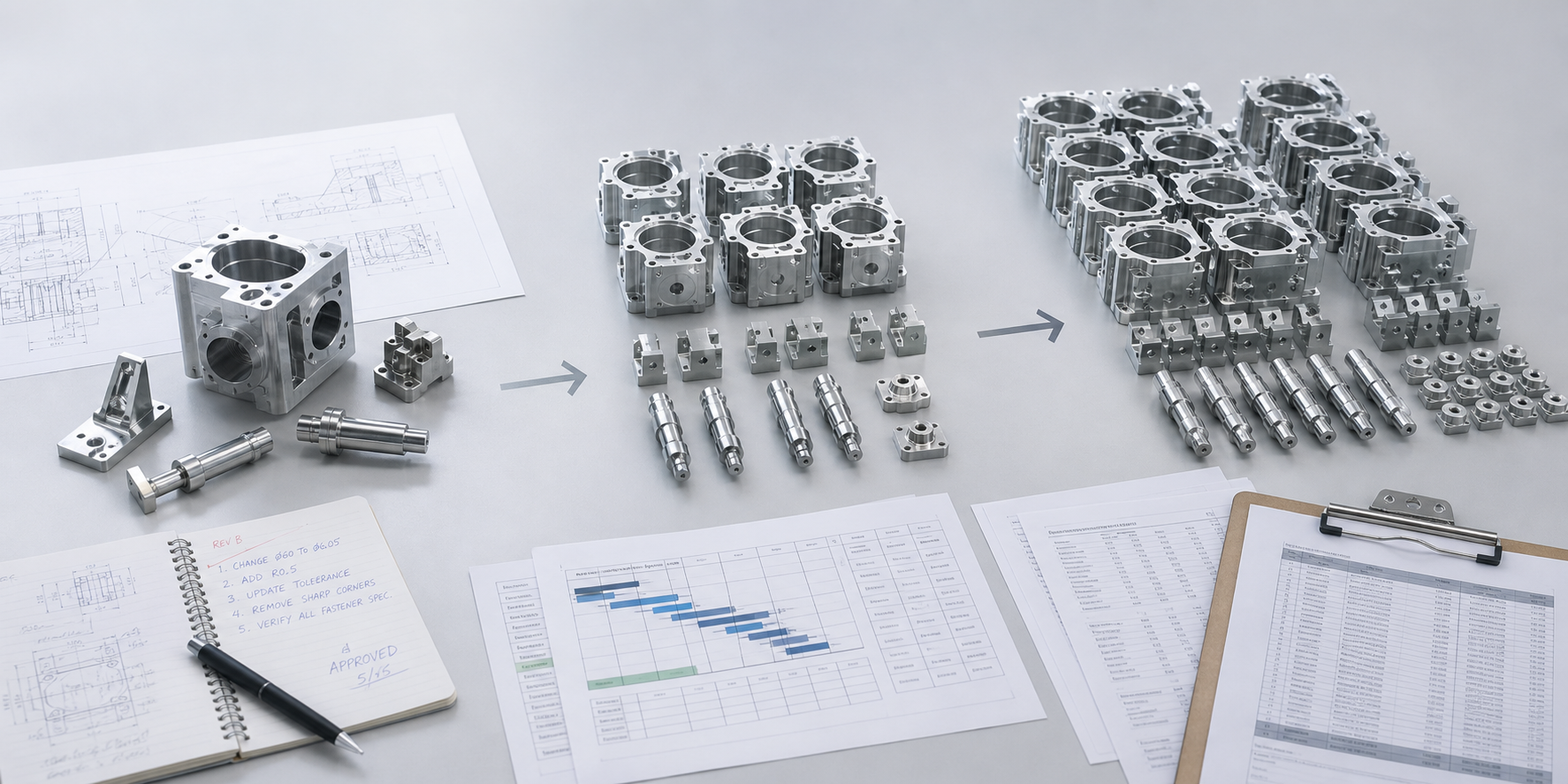
A reliable machining release path links the RFQ package, the approved material route, the measurement plan and the shipment record. That is especially important when the order includes tolerance-critical bores, threaded features, mating interfaces, cosmetic surfaces or downstream compliance paperwork. Early tolerance review helps the quality plan stay aligned with what the drawing actually requires.
If your project depends on tighter dimensional stability, connect the inspection scope with precision CNC machining planning early. If finish or appearance is also important, align it with the relevant surface finishing workflow at quote stage rather than after the lot is complete.
Control points
Drawing review, material check, first piece inspection, in-process inspection and final release documentation.
Buyer outcome
Clear acceptance path for machined parts that need report-backed release, lot traceability or controlled packaging.
Inspection flow from RFQ review to shipment release
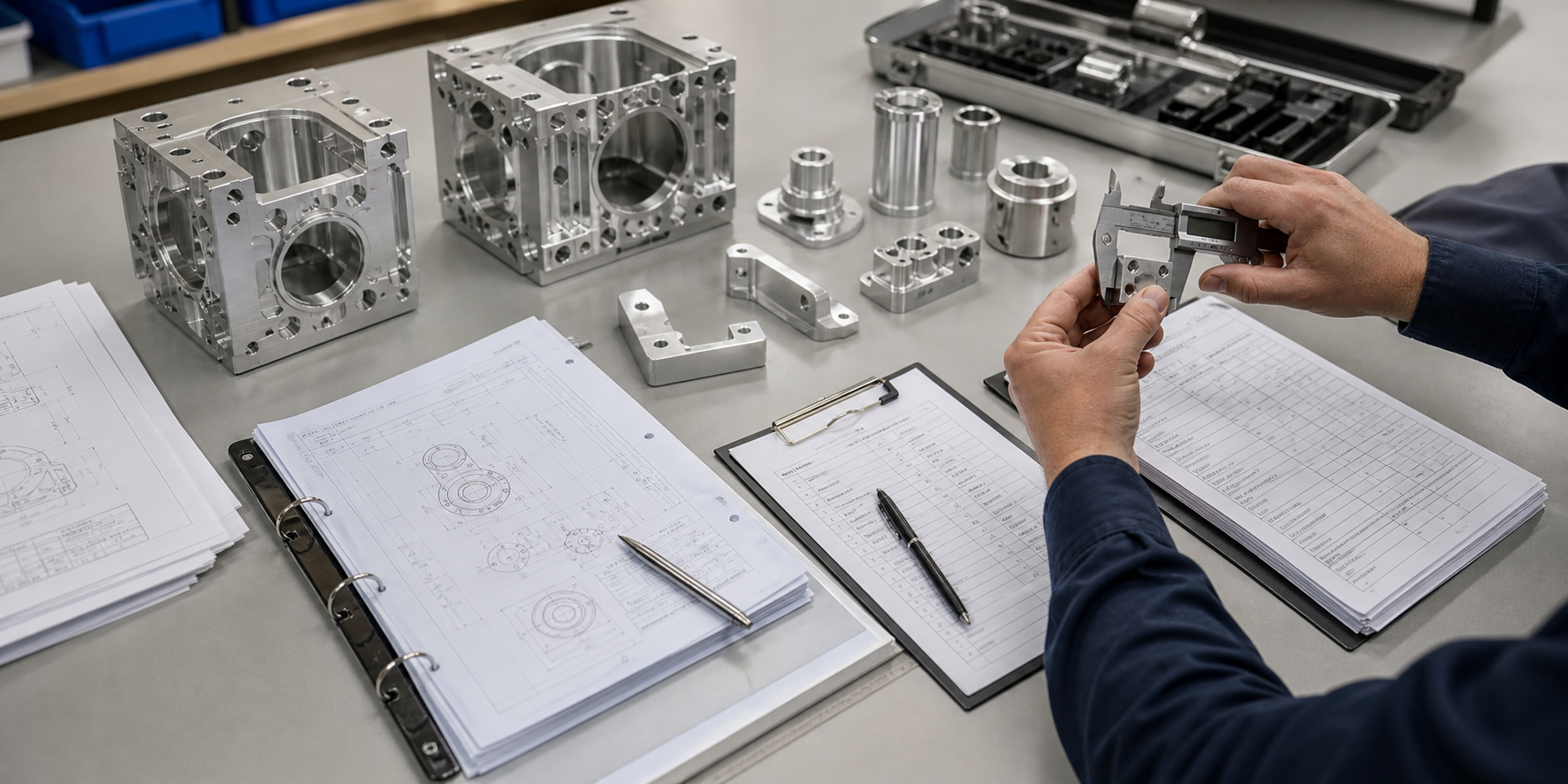
When the control chain is defined early, the supplier can align machining, measurement and release records around the same part revision and acceptance criteria. This is also where first article inspection CNC machining requests and lot-based release planning are defined before production accelerates.
RFQ and drawing review
Critical dimensions, GD&T datum structure, finish notes, mating features, report requests and packaging controls are reviewed before routing is locked.
Material verification
Requested alloy, lot reference and any certificate requirement are tied to the order package before machining begins so material lot traceability is preserved with the release file.
First piece confirmation
Initial geometry, threads, bore locations and high-risk features are checked before the run advances to full quantity.
In-process inspection
Repeat checks keep critical dimensions, thread fit, cosmetic faces and finish-sensitive features inside the intended acceptance window.
Final inspection and documents
Released parts are matched with the requested dimensional report, material cert, COC, FAI output or compliance statement.
Packaging and traceable release
Lot separation, shipment labeling and packing release help keep the delivered parts tied to the approved work order and document package.
CNC machining inspection methods and what each one controls
| Inspection control | Typical use on machined parts | Usual release output |
|---|---|---|
| CMM-style dimensional review | Complex profiles, bore relationships, datum-based features, coordinate-sensitive housings and multi-feature plates that need dimensional inspection machined parts teams can release with confidence | Dimensional report or first article result set |
| Calipers, micrometers and height gauge checks | Thickness, diameter, shoulder length, slot width, height and other repeatable linear checks during machining and final release | In-process or final inspection record |
| Thread gauges and fit checks | Tapped holes, male threads, inserts and mating interfaces where assembly fit matters | Thread acceptance confirmation in the release package |
| Surface finish check and visual inspection | Visible faces, burr edges, bead-blasted or anodized surfaces and finish-critical presentation areas | Visual release note and finish confirmation |
| Material verification | Aluminum, stainless steel, brass and other custom metal parts requiring grade-linked traceability | Material certificate or linked lot reference when requested |
Orders that combine tight tolerances with high cosmetic requirements should define both the dimensional controls and the finish path during RFQ review.
Requested documents and when they matter
Document scope should be defined by the part risk, the downstream customer requirement and the release decision the buyer needs to make. Buyers asking for an inspection report CNC machining package or a material certificate CNC machining package should define that scope before release planning starts.
| Document | Usually requested when |
|---|---|
| Material certificate | The order requires alloy confirmation, lot traceability or downstream customer paperwork |
| Dimensional report | Critical features, mating surfaces or tight-tolerance acceptance must be documented feature by feature |
| Certificate of conformance | The buyer wants shipment release tied to the approved drawing, material route and requested controls |
| First article inspection | New part introduction, drawing revision change or higher-risk geometry needs an early approval gate |
| RoHS/REACH statement | Import, customer compliance or regulated downstream assembly requires supporting paperwork |
| Packaging checklist | Lot separation, label control or shipment condition needs to be tied to final release |
If the order already needs stronger document control, note the exact report package in the RFQ submission so it is planned before production release.
What to include when you request tighter inspection control
- Name the critical dimensions, datums or features that must be reported
- List the required documents such as material cert, dimensional report, COC or FAI
- Flag finish-sensitive faces, cosmetic zones and any post-finish dimensions
- Identify threads, assembly fits or mating interfaces that need dedicated checks
- Add destination-country or compliance-document needs when relevant
That structure reduces RFQ back-and-forth and helps the release package reflect the real acceptance criteria for the part.
Traceability and secure drawing handling
On custom machined parts, quality control and document control are closely linked. The part revision, material reference, inspection output and shipment release all need to stay aligned through the same order path. That alignment is what turns general quality claims into usable CNC machining quality control for a real production order.
- Drawing revision and work order should stay matched during production
- Requested material references should stay tied to the release package
- Inspection outputs should follow the critical features defined in the RFQ
- Shipment labels and packing release should support lot-level traceability
- NDA or controlled-upload needs should be declared before the order is routed
If secure drawing handling is a major concern, use the secure CAD upload and NDA workflow so the machining, documentation and release path stay aligned from the start.
Projects that often need a stronger quality package
Frequently asked questions
What inspection reports can be requested with CNC machined parts?
Common requests include dimensional reports, first article outputs, material certificates, certificates of conformance and compliance statements tied to the order package.
When should first article inspection be requested?
FAI is most useful on new parts, revised drawings, tolerance-critical assemblies and projects where one approved sample controls the rest of the lot.
How are critical dimensions usually checked?
Complex location-sensitive features often need CMM-style review, while simpler linear and diameter checks can be handled with calipers, micrometers and gauges during in-process and final inspection.
Can material certificates be supplied with machined parts?
Yes, when the RFQ package defines the material grade and the requested certificate scope early enough for the release package to be planned around it.
Does surface finishing change the inspection plan?
Yes. Anodizing, passivation, powder coating and cosmetic finishing can change which features need masking, re-checking or appearance review before release.
How should buyers prepare an RFQ for tighter quality control?
Upload the model and drawing, identify the critical features, list the requested documents, specify material and finish, and note any NDA or compliance requirements in the order notes.