CNC Machined Aluminum Housings and Enclosures
Custom machined housings are usually sourced for more than shape. Buyers care about pocket depth, connector openings, cover alignment, sealing faces, wall thickness, threaded features, appearance and how the CNC machined enclosure will assemble around the electronics or mechanical core.
Review quote-ready machined housings and enclosures for electronics, automation modules, controls, sensors and industrial devices. Buyers comparing a machined enclosure supplier often need to judge custom aluminum enclosure machining, precision machined housing requirements and whether the program is closer to a machined electronics housing or a broader custom machined metal enclosure. For broader support, connect with custom metal parts, CNC machining services and aluminum CNC machining.
Enclosure RFQ essentials
- Body only or full enclosure set: body, cover, panel or mounting plate
- Internal cavity size, critical wall areas and any weight target
- Connector cutouts, threaded features, mounting bosses and cover fastener pattern
- Any O-ring or gasket groove, flat mating face or cosmetic exterior requirement
- Material, finish and quantity stage: prototype, pilot run or repeat supply
- Any need for FAI, dimensional report or inspection support
| Primary CTA | Quote similar housing |
| Best fit | Electronics, automation, instrumentation and industrial device buyers looking for CNC machined aluminum housing programs |
| Related pages | Aluminum machining, finishing, inspection support and CAD upload |
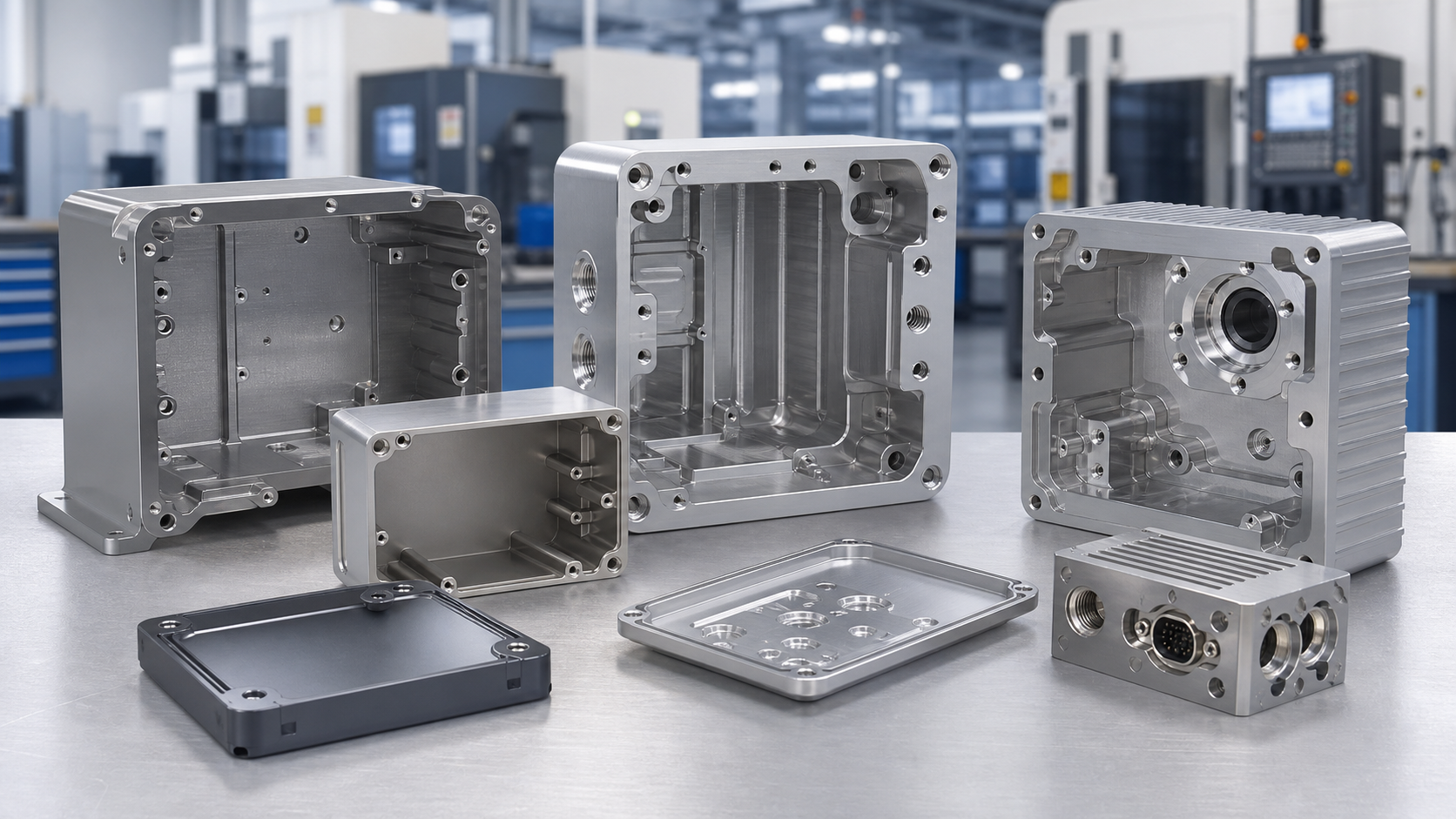
A machined enclosure is usually chosen when the housing itself carries function
Enclosure buyers usually need a tighter answer than a general machining capability statement. CNC machined housings are often selected when the part has to do more than contain electronics. The housing may need to locate connector cutouts, support boards, hold inserts, manage heat, protect sealing faces or maintain accurate cover alignment. That is why many buyers search specifically for a CNC machined aluminum housing instead of a broad machining vendor.
That changes the quoting logic. The buyer is not just buying a box. They are buying a part with cavity depth, wall behavior, fastener access, mounting geometry and finish expectations that all affect assembly and appearance.
- Pocketed enclosure bodies often need flat internal floors and controlled wall sections
- Covers and mating faces depend on repeat fastener pattern and clean sealing geometry
- Connector-panel features, mounting bosses and interface cutouts drive tool access, corner radii and cosmetic edge quality
- Exterior finish requirements often matter as much as the internal machining strategy
Typical machined housing and enclosure feature families
Buyers usually need to map their housing to a feature family quickly before they decide what to upload and which surfaces, cavities or interfaces deserve extra attention. This is especially useful when a machined electronics housing, a custom machined metal enclosure and a general CNC part might otherwise be confused.
| Feature family | Typical role | Common materials | Key machining concern |
|---|---|---|---|
| Pocketed housing bodies | Hold electronics, modules or mechanical subassemblies inside a rigid cavity | Aluminum, stainless steel, selected engineering alloys | Cavity depth, wall thickness consistency, floor flatness and tool reach |
| Covers and mating lids | Close the housing and protect internal assemblies | Aluminum and stainless steel | Fastener pattern repeatability, flat sealing surfaces and cover alignment |
| Connector and interface panels | Provide access for cable ports, displays, switches or fittings | Aluminum, stainless steel, plated metals | Cutout quality, thread placement, edge appearance and assembly clearance |
| Sealing and gasket features | Protect against dust, splash or environmental exposure | Mostly aluminum and stainless steel housings | Groove geometry, surface flatness and mating-face stability after finishing |
| Heat-managing enclosure sections | Use the housing itself for thermal mass or finned heat dissipation | Aluminum, especially heat-friendly grades | Fin geometry, flat mounting interfaces and distortion control across larger faces |
When CNC machined enclosures are usually preferred
Not every enclosure should be machined. Buyers usually choose CNC machined housings when geometry, fit or development speed matter more than the lower unit economics of a simpler formed part.
Material and finish logic for machined housings
Competitor pages usually mention aluminum first, and that is usually right. But enclosure buyers still need to know why the material and finish were chosen.
- Aluminum CNC machining is often preferred for lightweight housings, good machinability, cosmetic finishing and thermal performance
- Stainless steel machining fits enclosure programs that need stronger corrosion resistance or a more rugged environment-facing body
- Surface finishing for CNC parts should be selected based on appearance, wear, conductivity, corrosion exposure and whether the mating faces or threads need masking attention
- Anodizing, bead blasting, powder coating or passivation should be judged against enclosure use, not added as a default finish line item
If the enclosure includes conductive interfaces, sealing faces or fine fastener threads, note those areas clearly before finish is selected.
What drives enclosure cost and manufacturability
- Deep cavity ratios and thin walls that reduce tool access and increase cycle time
- Large exterior cosmetic faces that require cleaner toolpath planning
- Many threaded features, boss heights or connector openings across several sides
- Cover alignment and sealing features that need tighter relationship control
- Multiple parts in the enclosure set: body, cover, panel, bracket or insert carrier
- Inspection requirements such as first article inspection, dimensional reports or material certificates
If the drawing already has critical cosmetic sides, gasket features or connector datums, identify them at RFQ stage so the quote matches the real build priorities.
Sample machined housing and enclosure applications
These are shown as sample application patterns so buyers can match their own enclosure programs quickly.
Related part families and engineering paths
Housing projects often connect to brackets, shafts, fixtures, heat-sink parts, materials and surface finishing. Use these paths when the enclosure package includes mating hardware or related machined components.
Frequently asked questions
What types of housings are commonly CNC machined?
Common examples include electronics housings, enclosure bodies, mating covers, connector panels, sensor housings, control-module boxes and thermal enclosure parts with internal cavities.
Why is aluminum so common for machined enclosures?
Aluminum is often chosen because it balances machinability, weight, finish quality and thermal behavior well for many enclosure programs.
When is a machined enclosure preferred over sheet metal?
Machined enclosures are often preferred when the part needs deeper cavities, tighter connector geometry, integrated bosses, sealing grooves, better exterior finish control or faster prototype changes.
Which features usually increase enclosure machining cost?
Deep pockets, thin walls, multi-side machining, many threaded holes, cosmetic outer faces and sealing-related features usually add the most cost and process attention.
What should be uploaded for a machined housing RFQ?
Upload the CAD file or drawing together with material, finish, quantity, critical cosmetic sides, sealing requirements, connector interfaces and any inspection-document needs.
Do machined enclosure programs usually need FAI or inspection reports?
Many do, especially when the enclosure includes critical mating faces, sealing geometry, connector alignment or cosmetic requirements that must be checked before repeat supply.
Upload the enclosure drawing with the assembly context
Machined housings should be quoted with cavity intent, cover relationship, finish requirement and inspection context. Use the RFQ page to submit the enclosure package so machining, finishing and quality checks can be aligned from the start.