DFM planning resource
Sheet Metal Design Guide for Prototype and Low-Volume Fabrication
Good sheet metal parts are usually won or lost before the quote is sent. Bend radius, flange length, feature spacing, relief details and hardware planning all affect whether the part can be formed cleanly and priced without revision loops.
This guide is built for engineers and OEM buyers preparing brackets, covers, trays, chassis and enclosure parts for sheet metal fabrication services. Use it to tighten the drawing package, reduce manufacturability questions and route cleaner RFQs into laser cutting, forming, finishing and inspection review.
Five checks before release
- Match the material grade and thickness to the part’s stiffness and finish needs
- Set bend radius and flange geometry that can actually form without conflict
- Keep holes, slots and cutouts far enough from bends and edges
- Plan reliefs, corners and PEM hardware before the flat pattern is locked
- Send the drawing with finish, cosmetic-face and inspection notes already defined
| Best fit | Prototype and low-volume sheet metal brackets, covers, trays, chassis and enclosure parts |
| Primary CTA | Request DFM review |
| Related pages | sheet metal fabrication, custom metal brackets, housings and enclosures, surface finishing, quality control |
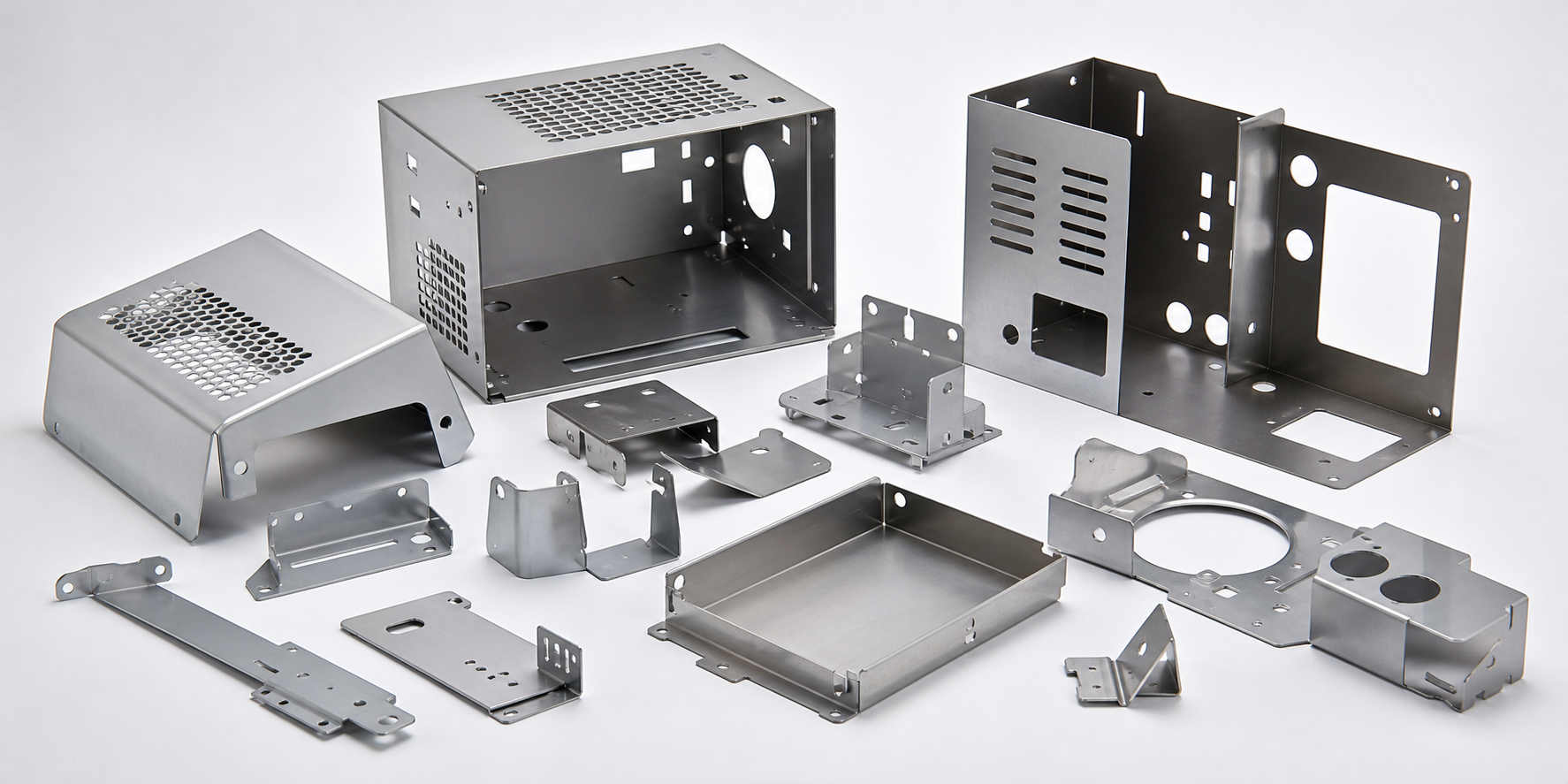
Choose sheet metal when the design depends on folds, shells and hardware-ready geometry
Sheet metal is usually the better route when the part family is driven by flat patterns, bends, returns, vent arrays, mounting tabs, cosmetic covers or lightweight enclosures. A machining route is stronger when the part needs thick sections, deep pockets, tight bores or precision interfaces cut from solid stock.
That boundary matters because engineers and buyers need a design-preparation guide before they enter a supplier quote workflow. If the part is already clearly a formed-sheet design, use the checklist to clean up the drawing before moving into RFQ submission. If the part is still process-borderline, compare it with CNC machining services before freezing the design.
- Best for brackets, panels, covers, trays, chassis and enclosure shells
- Supports bends, cutouts, louvers, tabs, slots and self-clinching hardware
- Pairs well with powder coating, brushing and other finishes when appearance matters
- Creates a cleaner handoff into prototype and repeat low-volume fabrication
Sheet metal design rule matrix
The fastest way to improve a sheet metal RFQ is to connect each feature rule to the manufacturing risk it controls. This matrix keeps the page practical instead of generic.
| Design area | What to control | Why it matters | What to show in the RFQ |
|---|---|---|---|
| Material and thickness | Pick a grade and gauge that match stiffness, corrosion and finish needs | Thickness influences bend behavior, hardware fit and final weight | Material grade, thickness and any preferred finish route |
| Inside bend radius | Avoid extremely sharp bends for the selected thickness and alloy | Too-tight bends raise cracking and dimensional risk | Critical bend notes, angle tolerance and cosmetic-face concerns |
| Holes and slots near bends | Keep features away from bend lines and edges when possible | Crowded features can distort after forming or weaken the flange | Mark critical feature locations and note any non-negotiable datums |
| Reliefs and corners | Use bend relief or corner relief where flange geometry closes tightly | Reliefs reduce tearing, bulging and material overlap | Detail relief geometry or let the supplier propose DFM adjustments |
| Hardware planning | Define PEM nuts, studs, standoffs and insertion side early | Hardware choice changes hole prep, spacing and assembly access | Hardware list, installation side and any keep-out zones |
| Finish and cosmetic faces | State visible faces, masking needs and finish expectations | Finish can change appearance, edge condition and some fit-critical surfaces | Finish type, color or texture, visible side and masking notes |
Bend, flange and relief rules that prevent avoidable rework
Bend-driven geometry is where many drawings break down. The drawing may still look clean on screen, but a flange can become too short to form well, a return can crowd a nearby hole, or a closed corner can need relief that was never defined.
Use a radius that suits the material and thickness instead of pushing every bend to a sharp edge condition.
Very short flanges can become difficult to form consistently, especially when paired with nearby features.
Bend relief and corner relief should be designed where closed geometry would otherwise tear, bulge or overlap.
For parts that later need cosmetic finishing, bend decisions also affect visible edge lines and coating consistency. If the part will move into powder coating or another visible finish, note the cosmetic face and masking needs before quote release.

Plan holes, slots and hardware with the formed part in mind
Flat-pattern features should not be reviewed in isolation. A slot that looks fine before forming may sit too close to a bend after the part folds, and a hardware hole may interfere with tooling or assembly access once adjacent flanges are added.
| Feature type | Common design risk | Design response | Related handoff |
|---|---|---|---|
| Holes near bends | Distortion or weakened material around the bend zone | Move the feature farther from the bend line or review alternatives during DFM | Mark critical hole locations and function on the drawing |
| Slots and vent arrays | Reduced stiffness or visual inconsistency after forming | Check remaining web strength and visible-face priorities | Flag cosmetic and airflow-sensitive areas in the RFQ notes |
| PEM nuts and standoffs | Late hardware additions can conflict with bends or assembly clearances | Choose hardware type early and define insertion side | Include hardware schedule and installation direction |
| Countersinks and formed features | Feature depth can exceed what the sheet route supports well | Confirm whether the feature belongs in sheet metal or in a machined insert | Route borderline features to machining review when needed |
Sheet metal versus machining: when to choose each route
Some parts sit between fabrication and machining. The right route depends on whether the design value comes from folded geometry, thin-wall structures and hardware-ready tabs, or from solid-stock precision features such as bores, pockets and tight interfaces.
| Decision factor | Sheet metal route | Machining route |
|---|---|---|
| Geometry style | Flat blanks, folds, shell forms, tabs and lightweight panels | Deep pockets, thick walls, precision bores and solid interfaces |
| Material efficiency | Usually better for broad thin-wall parts and enclosure families | Often better for compact solid components with high local precision |
| Assembly features | Strong for flanges, vent patterns, tabs and hardware-ready structures | Strong for threaded bores, datum-critical faces and bearing fits |
| Next step | Route into sheet metal fabrication or laser cutting services | Route into precision CNC machining or general machining review |
Design handoff priorities
- Use sheet metal when the folded geometry is the real product logic
- Use machining when critical interfaces dominate the part function
- Split assemblies when a formed shell needs a machined insert or base feature
- Call out what is cosmetic, what is functional and what is datum-critical
What to include in a sheet metal RFQ package
The strongest guide pages do not stop at design theory. They help the buyer release a package that can actually be quoted without repeated clarification.
- Current drawing and model with revision level clearly shown
- Material grade, thickness and preferred finish or coating requirement
- Bend-critical views, flat-pattern notes or formed intent where needed
- Hardware schedule for PEM nuts, studs, standoffs and insertion direction
- Visible-face notes, weld expectations and requested inspection focus points
If the part family includes similar mounting forms, support brackets or enclosure details, linking the RFQ to related examples such as custom metal brackets or machined housings and enclosures can reduce ambiguity during review.
RFQ checklist
| Files | Model, drawing, revision level and any flat-pattern or bend notes |
| Build scope | Prototype or low-volume run, quantity range and target lead time |
| Technical scope | Material grade, thickness, bends, hardware, finish and cosmetic-face notes |
| Quality scope | Critical dimensions, formed datums, fit-sensitive holes and requested documents |
| Submission path | Upload the RFQ package here with notes for DFM, finish and inspection review |
Frequently asked questions
Release the RFQ with bends, hardware and finish notes already defined
Sheet metal projects quote faster when the drawing package already explains how the part should be formed, where hardware belongs, which faces are cosmetic and which dimensions drive inspection. Send the package through the RFQ page for sheet metal fabrication review.