METAL MATERIAL SELECTION GUIDE
Metal Material Selection Guide for CNC Machined Custom Parts
Use this guide to narrow the right metal family before the RFQ is locked. It is built for buyers and engineers comparing aluminum, stainless steel, steel, brass, copper, titanium, magnesium and high-performance alloys for machined housings, brackets, shafts, fittings, heat-transfer parts and structural hardware.
The goal is not to turn material choice into a datasheet exercise. It is to connect function, environment, machinability, finish route and budget so the drawing package reaches the right supplier page faster. Once a candidate metal family is clear, continue into our aluminum CNC machining, stainless steel CNC machining, steel CNC machining, titanium CNC machining or request a quote path.
Best Fit for This Guide
- RFQs where the part geometry is defined but the metal is still under review
- Programs comparing lightweight, corrosion resistance, conductivity or high-heat performance
- Buyers choosing between aluminum, stainless, steel, brass, copper, titanium, magnesium or specialty alloys
- Prototype and low-volume parts where machinability affects cost and lead time
- Projects that need finish compatibility checked before quoting
Send the part function, operating environment, target quantity, finish needs and any candidate metals together for faster selection support.
Strength
Structural load, yield, hardness and wear expectations shape the first shortlist.
Weight
Aluminum, magnesium and titanium matter when mass reduction is tied to product function.
Corrosion
Humidity, outdoor use, chemicals and washdown environments can remove low-cost options early.
Machinability
Some metals quote cleanly, while others drive tool wear, cycle time and fixture risk.
Finish Route
Anodizing, passivation, plating or powder coating can change the right base metal choice.
Why Metal Choice Changes More Than Part Strength
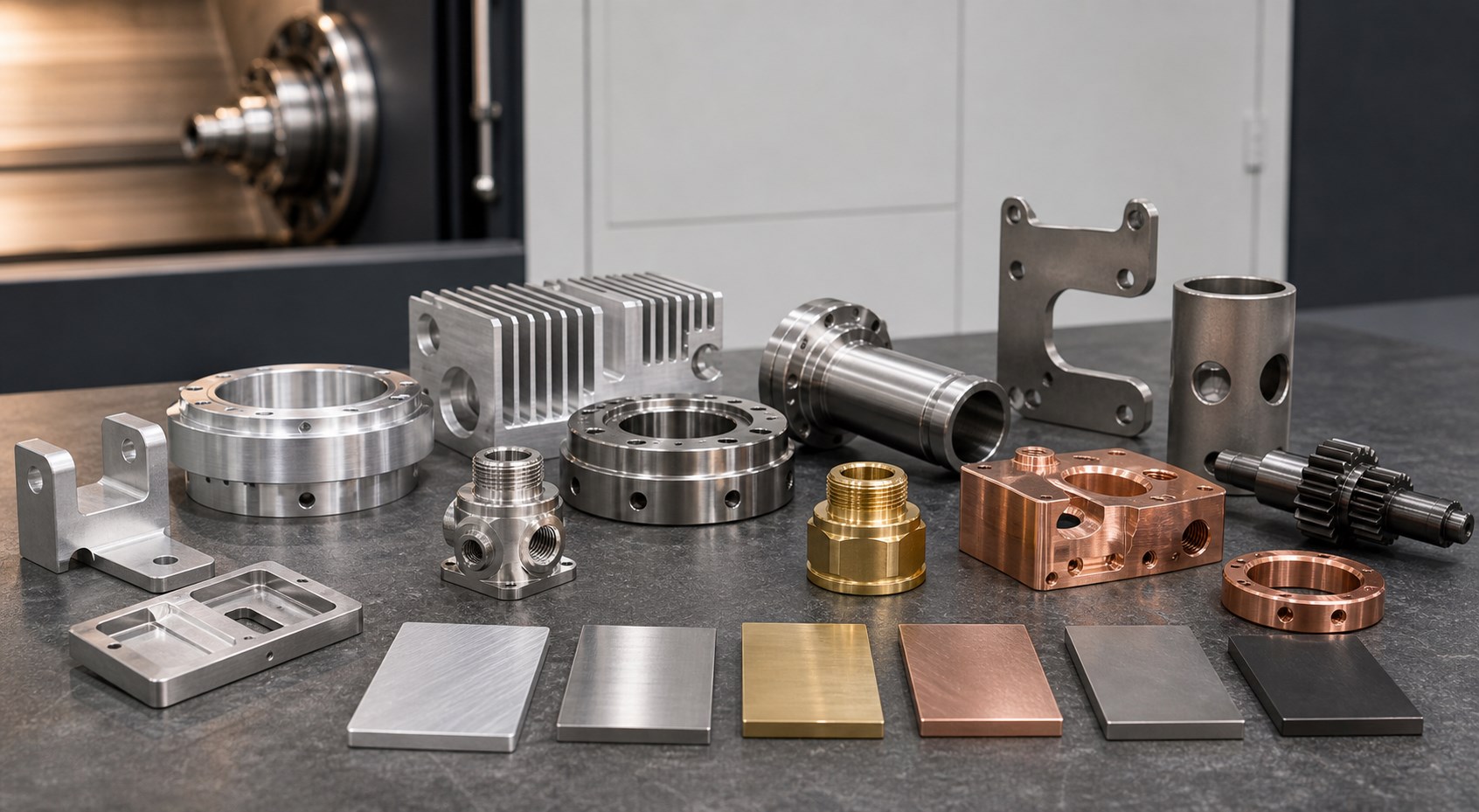
Material selection affects the whole manufacturing path. The metal family changes raw stock cost, machining speed, surface-finish options, corrosion behavior, heat performance, electrical behavior, shipping weight and even how the part should be inspected. That is why the right comparison question is rarely just “which metal is stronger.”
For example, a lightweight bracket may move toward aluminum for cost and machinability, a corrosion-exposed fitting may move toward stainless or brass, an electrical contact may point toward copper, and a high-heat fastener or ring may force the project into titanium or specialty alloy machining. If the finish is fixed, that can narrow the list even faster than the environment does.
Performance-led choice
Use environment, load, weight and conductivity first to remove poor-fit metals early.
Manufacturing-led choice
Use machinability, finish route, quantity and cost pressure to narrow the realistic shortlist.
Core Metal Family Comparison Matrix
Use the comparison below to narrow a shortlist before deeper grade selection starts. It compares the most common metal families used for machined custom parts, not every available alloy.
| Metal family | Best fit | Strength / weight direction | Corrosion / environment | Machining and quote effect |
|---|---|---|---|---|
| Aluminum | Lightweight housings, brackets, plates, heat-sensitive geometry and general structural parts | Strong weight advantage with broad performance range across common grades | Good in many environments, especially when paired with anodizing | Usually one of the easier and more cost-friendly machining routes |
| Stainless steel | Corrosion-exposed fittings, shafts, hardware, enclosures and washdown components | Heavier than aluminum but strong and durable in service | Often chosen where corrosion resistance matters more than low weight | Common route for machined parts, though usually slower and costlier than aluminum |
| Carbon and alloy steel | Structural hardware, wear-driven parts, tooling and shafts | Strong mechanical route where weight is less critical | Needs more attention in corrosive environments unless protected by finish | Often practical for robust parts, but finish and corrosion planning matter early |
| Brass | Precision fittings, connectors, valve parts and cosmetic hardware | Moderate structural route with strong machinability advantages | Often selected for corrosion-friendly precision components and good machinability | Usually machines cleanly and supports strong detail quality |
| Copper | Electrical, thermal and conductive hardware such as bus bars and heat-transfer parts | Selected for conductivity rather than lowest cost or highest stiffness | Good fit where conductivity dominates the selection | Machining route depends strongly on copper family and feature detail |
| Titanium | High-performance lightweight parts for aerospace, medical and harsh service | High strength relative to weight with premium cost position | Strong corrosion performance in demanding applications | Machining is more demanding than common metals and usually raises quote sensitivity |
| Magnesium | Ultra-lightweight structural parts where mass reduction is the leading requirement | Very light route with lower density than aluminum | Needs more attention to corrosion protection and finish strategy | Useful where extreme weight savings justify the narrower route |
| Inconel and specialty alloys | High-heat, corrosion-driven and severe-environment hardware | Selected for performance under extreme conditions rather than general efficiency | Strong route for demanding temperature and corrosion applications | Usually the most machining-sensitive and cost-intensive route in this guide |
Choose the Metal by Part Priority, Not by Habit
Lowest weight
Start with aluminum for broad practicality, then compare magnesium or titanium if the design pushes for more aggressive weight reduction.
Best corrosion resistance
Review stainless steel first, then brass, titanium or specialty alloy routes depending on the actual environment and cost tolerance.
Best conductivity or heat transfer
Copper usually leads when electrical or thermal performance dominates, while aluminum can be the better system-level balance for lighter heat-transfer parts.
Higher structural value at moderate cost
Steel or stainless often makes more sense than exotic alloys when the part needs strength without a premium material route.
Best machinability for detail-rich parts
Aluminum and brass usually quote more smoothly for complex geometry, cosmetic surfaces and fine features than harder or hotter-running metals.
High heat or severe environment
Move into titanium or specialty alloy machining only when the service condition truly demands it, because the cost and machining route usually step up fast.
If the part is already narrowed to two candidate families, compare the specific material pages instead of staying in a broad guide. The most common next jumps are aluminum CNC machining, stainless steel CNC machining, brass CNC machining, copper CNC machining and Inconel machining.
Finish Compatibility Can Eliminate the Wrong Metal Early
Many material mistakes happen because the finish is treated as a late decision. If the drawing already expects anodizing, passivation, powder coating, brushing, plating or black oxide, the base metal family should be reviewed with that route in mind from the start.
| Finish route | Common metal fit | Selection note |
|---|---|---|
| Anodizing | Aluminum | If anodizing is the required finish, aluminum often becomes the natural first-route review. |
| Passivation | Stainless steel | Useful where corrosion protection and clean stainless presentation matter. |
| Powder coating | Aluminum and steel | Good route when visible color and broad protective coverage matter more than raw metallic appearance. |
| Bead blasting or brushing | Aluminum, stainless steel, brass | Best when the appearance target is controlled texture rather than a coated finish. |
| Plating or black oxide | Steel and selected copper-alloy routes | Useful where corrosion protection, conductivity or appearance needs a plated route. |
If finish choice is the leading variable, move through our surface finishing guide before finalizing the metal family.
Typical Part Families and Better Material Directions
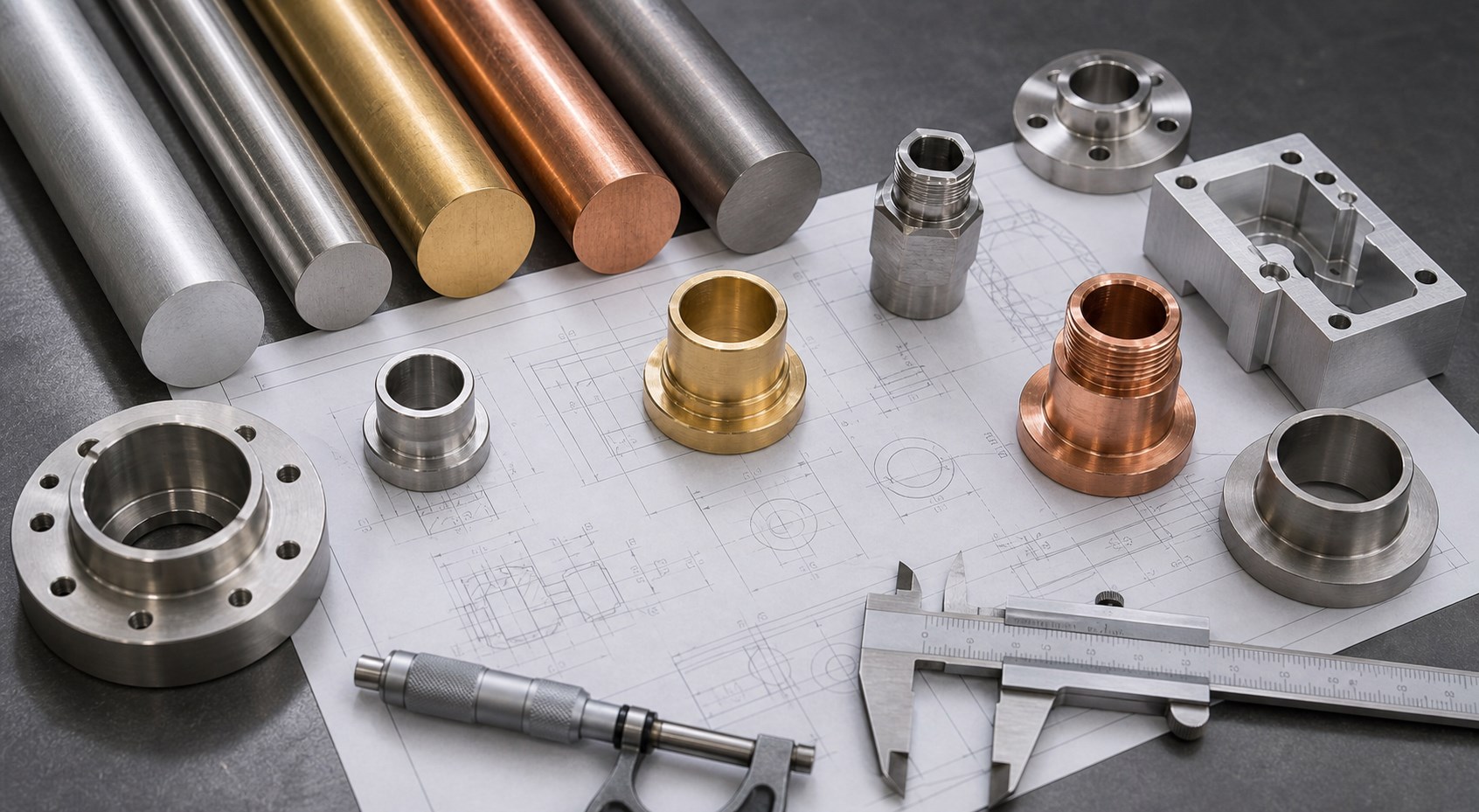
| Part family | Common selection drivers | Likely starting material direction |
|---|---|---|
| Housings and enclosures | Weight, appearance, corrosion, threads, cosmetic finish | Aluminum first, then stainless if environment is harsher |
| Brackets and mounting plates | Load path, weight, finish, cost and quantity | Aluminum or steel depending on mass target and strength needs |
| Shafts, pins and wear hardware | Strength, wear, fit surfaces and corrosion | Steel or stainless first, depending on environment |
| Fittings, manifolds and valve bodies | Ports, sealing faces, media exposure, conductivity or corrosion | Brass, stainless or aluminum depending on service media and finish need |
| Heat sinks and conductive hardware | Thermal path, conductivity, weight and feature detail | Aluminum first for balance, copper when conductivity dominates |
| High-heat rings, fasteners or severe-environment parts | Temperature, oxidation, corrosion and high-performance duty | Titanium or specialty alloy review, including Inconel where needed |
If the drawing still has multiple acceptable metals, keeping two candidate routes in the RFQ can be useful. That gives the supplier a chance to compare manufacturability instead of pricing a poor-fit material by default.
RFQ Checklist When the Metal Is Not Final Yet
| RFQ input | What to include |
|---|---|
| CAD model and drawing | Include the full geometry, critical bores, threads, sealing faces, datums and cosmetic surfaces. |
| Part function | Explain what the part does so material tradeoffs can be reviewed in context rather than by grade name alone. |
| Operating environment | State temperature, moisture, chemicals, outdoor use, conductivity or wear exposure if any of those drive the design. |
| Candidate metals | List the current shortlist if it already exists, such as aluminum vs stainless or copper vs brass. |
| Finish requirement | Call out anodizing, passivation, powder coating, plating, brushing or other finish constraints early. |
| Quantity and cost pressure | Share whether the project is prototype, bridge or repeat production so the material route can be matched to the real business target. |
| Document needs | Add any material cert, dimensional report or inspection request in the first RFQ. |
If the project is already ready for pricing, send the shortlist through our quote page. If the metal is the main unknown, mark that in the notes so the review starts with material logic instead of just geometry.
Metal Material Selection FAQ
How do I choose the right metal for a machined part?
Start with the part function, environment, weight target, finish requirement and quantity. That usually narrows the list faster than comparing grades in isolation.
What is usually the easiest metal to machine?
Aluminum and many brass routes are often easier to machine than stainless, titanium or high-temperature alloys, which can reduce cost and shorten cycle time for complex geometry.
When should I choose stainless steel instead of aluminum?
Stainless is often the better route when corrosion resistance, durability and harsher service environments matter more than low weight.
When does copper make more sense than aluminum?
Copper usually enters the lead when electrical or thermal conductivity is the main driver, while aluminum is often the better balance for lighter and more cost-sensitive parts.
How do finishes affect metal selection?
Some finishes naturally align with certain metals. Anodizing points strongly toward aluminum, passivation toward stainless, and plating or black oxide may favor steel or copper-alloy routes.
What should I send if I still have two metal options?
Send the drawing, function, environment, finish needs, quantity and both candidate metals. That gives the supplier enough context to compare manufacturability and quote fit.