COLOR AND PROTECTION FINISH
Powder Coating Metal Parts
Powder coating adds a durable colored finish to machined and fabricated metal parts when buyers need corrosion protection, better exterior durability and a cleaner cosmetic result than raw metal. It is commonly selected for brackets, housings, sheet metal covers and welded assemblies that need a tougher protective finish.
Engineers and buyers can use this finish guide to decide whether powder coating fits the part better than anodizing or wet paint. It covers coating thickness, masking, thread protection, color selection, material fit and the finish notes that should be included before quote review. Related engineering paths include surface finishing for CNC parts, sheet metal fabrication, custom metal brackets, machined housings and enclosures and Request a Quote.
Fast finish check
- Choose powder coating when the part needs color, exterior durability and stronger chip resistance than raw metal
- Review masking on threads, bores, grounding faces and fit-critical features before release
- Use anodizing instead when the part is aluminum and dimensional change must stay minimal
- Include color, gloss, texture and any masking note in the RFQ so finish review is faster
| Primary CTA | Quote coated parts |
| Best fit | Brackets, covers, enclosures, fabricated frames and appearance-facing metal parts |
| Key decisions | Material, color, texture, exterior exposure, masking and acceptable coating build on critical geometry |

Why buyers specify powder coating on custom metal parts
Powder coating is usually selected when the part needs both functional protection and a stable production appearance. It creates a tougher finish than raw metal and is often preferred for parts that will be handled, mounted outdoors, exposed to moderate abrasion or shipped as finished assemblies.
That is why it is common on sheet metal enclosures, brackets, equipment covers, mounting plates, welded frames and similar parts where buyers care about corrosion protection, touch durability and consistent color. It is less ideal for precision mating faces, threads and bores unless those areas are masked or the design already allows for coating build.
- Good fit for color, texture and exterior-facing part appearance
- Common on steel and aluminum fabricated parts, as well as selected machined components
- Needs early review when threads, press fits or grounding surfaces are present
- Usually specified with color, texture, gloss and any masking requirement
Powder coating vs anodizing vs wet paint for metal parts
This comparison is written for drawing review and finish selection, not just finish terminology.
| Decision factor | Powder coating | Anodizing | Wet paint |
|---|---|---|---|
| Primary purpose | Add durable color and protective finish to metal parts | Create an oxide-based finish on aluminum for wear, corrosion and appearance | Add cosmetic color or coating flexibility when film build and process variety matter |
| Material fit | Common on steel, aluminum and some stainless assemblies | Primarily aluminum and selected nonferrous alloys | Broad material range with primer and coating-system variation |
| Dimensional effect | Coating build is meaningful and must be reviewed on fit-critical features | Usually preferred when lower dimensional impact is needed on aluminum | Film build varies and can also affect edges and tolerance-critical areas |
| Appearance range | Strong color, texture and gloss options | Color and finish options on aluminum, but different visual character than powder coating | Flexible color system, often useful for touch-up or lower-bake requirements |
| Best fit | Brackets, housings, covers, frames and fabricated exterior parts | Aluminum machined parts needing wear and corrosion improvement with tighter fit control | Projects needing flexible coating systems, repairability or legacy paint spec alignment |
| RFQ implication | Call out color, gloss, texture, masking and critical uncoated faces | Call out anodize type, color, masking and alloy grade | Call out paint system, color, cure limits and any cosmetic inspection standard |
Thickness, masking and geometry should be reviewed before release
The main engineering tradeoff in powder coating is that protective film build improves durability but can also interfere with tight fits, threads and conductive contact points. That is why the finish should be reviewed while the drawing is still flexible rather than after fabrication is complete.
Mask these features when needed
Threads, bearing bores, press-fit diameters, gasket lands, electrical grounding faces and any face that must stay metal-to-metal.
Watch edge build and corners
Geometry with sharp edges, deep recesses or mixed wall density may show different coating behavior, so cosmetic expectations should be aligned early.
Write coating notes clearly
State color, texture, gloss, any sample-match requirement and which surfaces must stay uncoated so inspection and masking can be planned correctly.
Which part types and materials are most often powder coated
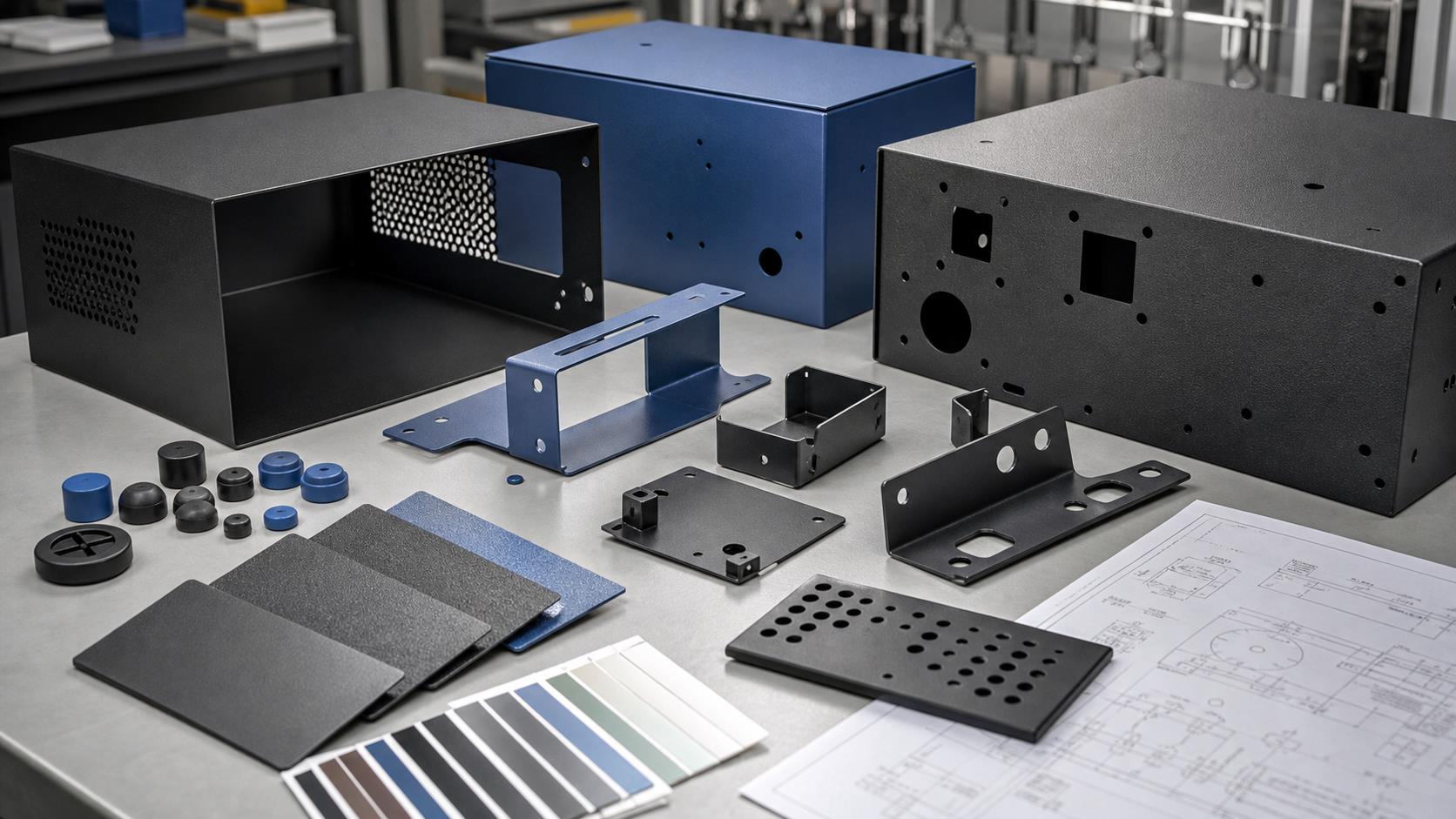
Powder coating is most often reviewed on parts that are visible in the final assembly or need a stronger protective surface for handling and field use. It is especially common on fabricated and appearance-facing parts rather than very tight tolerance internals.
| Material or part type | Typical powder coating fit | Examples | Review note |
|---|---|---|---|
| Carbon steel fabricated parts | Strong common fit for protective exterior finish | Brackets, frames, guards, machine covers | Pretreatment and corrosion environment matter |
| Aluminum sheet metal and housings | Used when color and exterior durability matter more than anodized metal look | Enclosures, panels, covers, electronics frames | Compare against aluminum anodizing for fit-sensitive aluminum parts |
| Custom brackets and mounts | Very common because appearance and edge protection both matter | Mounting brackets, support arms, covers | Mask mounting faces or threaded inserts when needed |
| Machined components | Selective fit only when geometry tolerates build | Visible plates, covers, simple housings | Avoid assuming powder coating fits all precision bores and threads |
For part route decisions before coating selection, connect with sheet metal fabrication, custom metal brackets, machined housings and enclosures and quality control and inspection.
What to include in a powder coating RFQ
- Part drawing and CAD with coated and uncoated surfaces clearly identified
- Material and process route, such as fabricated steel or machined aluminum housing
- Color reference such as RAL or approved visual target
- Texture and gloss expectation, especially for cosmetic parts
- Masking notes for threads, bores, gasket lands, ground points or mating faces
- Environment and use case, such as indoor equipment or outdoor exposure
If the part is aluminum and tight fit is more important than color range, ask whether anodizing is the stronger route before release.
Frequently asked questions
Is powder coating a good finish for custom metal parts?
Yes, especially for brackets, housings, covers and fabricated assemblies where color, corrosion protection and handling durability matter. It should still be reviewed against fit-sensitive features before release.
Does powder coating affect threads and critical holes?
It can. Threads, bores, press-fit diameters and conductive faces often need masking or a different finish choice because coating build is meaningful on critical geometry.
How is powder coating different from anodizing?
Powder coating adds a colored film on the surface, while anodizing forms an oxide layer on aluminum. Powder coating offers broader color and texture range, while anodizing is often better for aluminum parts with tighter dimensional needs.
Can aluminum and steel both be powder coated?
Yes, both are commonly powder coated. The correct pretreatment and finish route still depend on the material, environment and whether the part is mostly cosmetic, structural or precision-fit.
What should be written on the drawing or RFQ?
Call out the color reference, gloss or texture, any masking requirement, the environment the part will see and whether appearance inspection or other documents should be included.
When is wet paint the better option?
Wet paint may be the better route when the project needs a specific paint system, lower cure constraints, field repair flexibility or an existing paint specification that should be matched.
Add Color, Texture and Masking Notes Before the Quote Review Starts
If powder coating is part of the build, send the drawing package with the finish note, color target and any critical uncoated surfaces already marked. Use the RFQ page to connect finish review with quality control, surface finishing and the final quote path.