PLATING AND BLACK OXIDE
Black Oxide Metal Parts vs Black Zinc Plating for Steel CNC Components
When a steel part needs a dark finish and the RFQ is still open between black oxide and a plated black route, buyers and engineers can compare corrosion fit, dimensional change, material limits and appearance risk for machined brackets, shafts, housings, threaded hardware and other CNC components.
The key decision is not only color. It is whether a low-build conversion finish is enough for the environment, whether threads and mating features must stay close to nominal, and whether the part should move to a plated route for stronger corrosion protection. For broader finish planning, connect the finish choice with our surface finishing, steel CNC machining, precision CNC machining and quality control pages.
Best Fit for These Finish Choices
- Carbon steel and alloy steel parts that need a dark protective appearance
- Threads, bores or mating features where finish build-up may affect fit
- Indoor hardware, brackets and turned parts that may or may not need plated corrosion margin
- Programs deciding between black oxide, black zinc plating or another dark route
- RFQs that need finish callout, oil or sealer notes, and exposure environment defined early
Send the CAD file, part material, exposure environment, thread sensitivity and finish preference together for faster review.
Corrosion Route
Black oxide relies on post-oil or sealer and is often chosen when moderate protection is enough. Plating is often chosen when the environment is harsher.
Dimensional Change
Black oxide adds very little build-up. Plated routes can protect better but may need more fit review around threads and close mating features.
Material Fit
Black oxide is most often evaluated for steel parts. Material and downstream use still need to be checked before release.
RFQ Risk
Exposure environment, oil or sealer expectation, no-finish areas and thread sensitivity should be called out before quoting starts.
What Black Oxide Changes on a Machined Steel Part
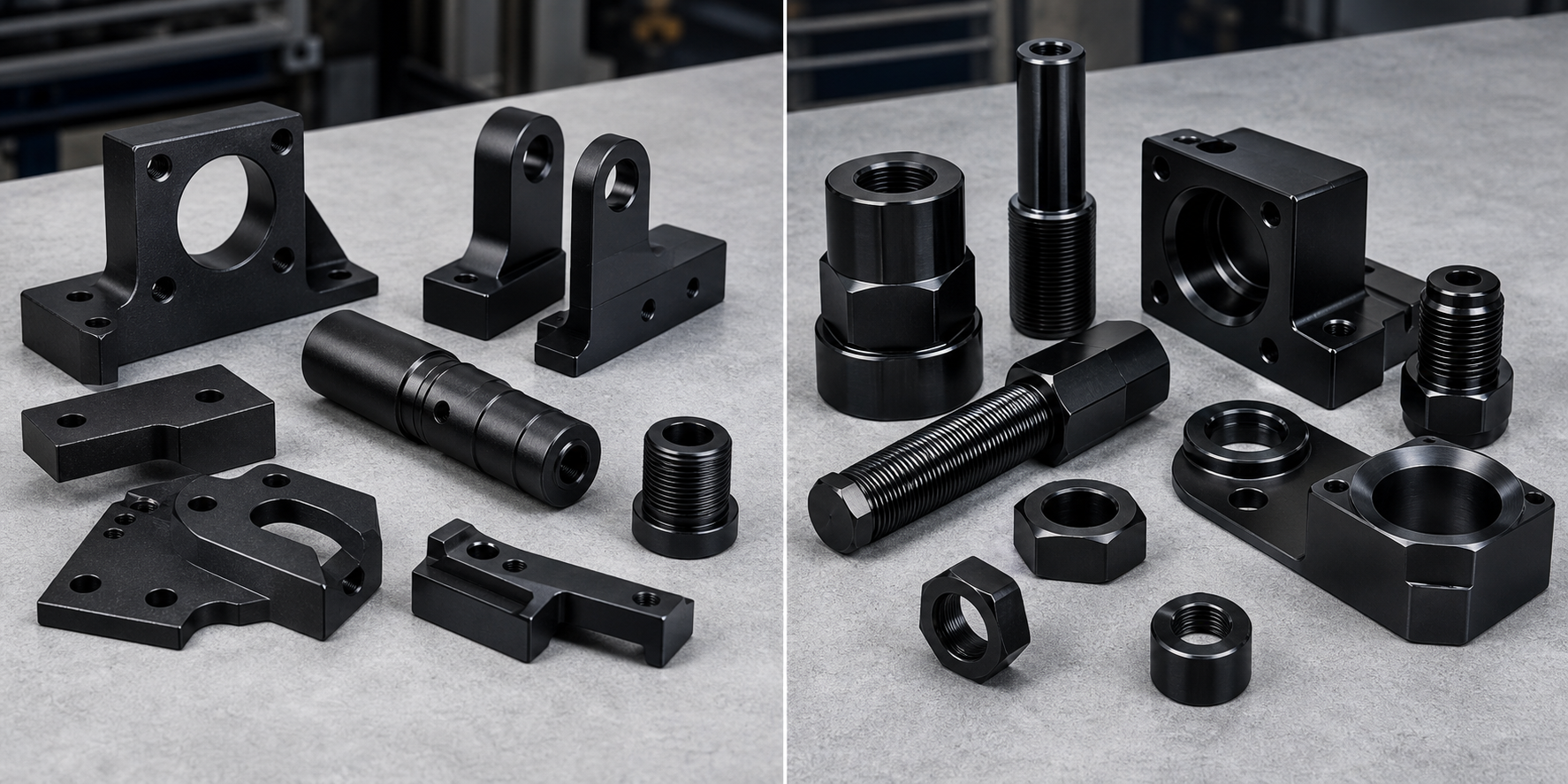
Black oxide is usually selected when the part needs a dark appearance without much dimensional build-up. That makes it useful for steel hardware, brackets, shafts and threaded parts where finish thickness matters. But it should not be treated as a universal substitute for plated corrosion protection.
That difference matters in real RFQs. If the part lives indoors, is handled carefully and needs a low-glare black finish with minimal change to fit, black oxide may be a practical route. If the part is heading into a wetter, rougher or more corrosive environment, buyers often need a stronger plated system or another finish route instead of assuming black oxide alone is enough.
Black oxide direction
Best when low build-up, dark appearance and controlled fit matter more than maximum corrosion margin.
Black plating direction
Best when the environment is more demanding and the part needs a stronger protective route even if finish build-up needs more review.
Black Oxide vs Black Zinc Plating Comparison Matrix
This matrix is built for CNC steel parts where dark appearance and corrosion expectations both affect the buying decision.
| Comparison point | Black oxide | Black zinc plating |
|---|---|---|
| Finish route | Conversion-style black finish often paired with oil or sealer | Plated protective route with black appearance layer |
| Dimensional impact | Usually very low build-up and useful where fit sensitivity matters | Can offer more corrosion margin but should be reviewed on threads and tight-fit features |
| Best part types | Indoor hardware, shafts, brackets and machined steel parts needing dark low-glare finish | Steel hardware and machined parts that need a darker appearance plus stronger environmental protection |
| Material fit | Usually evaluated for carbon steel and alloy steel programs | Typically chosen where plated protection is preferred for steel hardware and components |
| Corrosion expectation | Depends strongly on oil or sealer and the use environment | Often chosen when black oxide feels too light for the environment |
| Drawing notes that matter | Call out black oxide, post-oil or sealer need, no-finish threads and exposure class | Call out plated black route, thread sensitivity, masking zones and corrosion requirement |
When Black Oxide Is Enough and When Plating Is Safer
Choose black oxide when
The part is steel, the finish needs to stay close to nominal, the appearance should be dark and low-glare, and the environment does not demand a heavier protective route.
Choose black plating when
The part needs stronger corrosion margin, the environment is more exposed, or the project already prefers plated hardware and surface protection standards.
Be cautious with black oxide when
Outdoor exposure, repeated moisture, aggressive handling or long corrosion-life expectations are driving the RFQ.
Be cautious with plating when
Threads, gauged features, close sliding fits or tight mating bores may be sensitive to added finish thickness.
If the finish choice is still open between oxide, plating and broader cosmetic or corrosion routes, compare the finish route with our surface finish comparison and surface finishing guides before finalizing the callout.
Material Fit, Oil, Sealer and Tolerance Notes
- Material fit matters: black oxide discussions usually center on steel parts, not every metal in the quote package.
- Oil or sealer matters: buyers should not treat the dark color alone as the corrosion answer. Post-treatment expectation needs to be defined early.
- Thread sensitivity matters: black oxide is often attractive where low build-up helps preserve thread feel and mating fit.
- Environment matters: indoor protected hardware and exposed outdoor hardware should not default to the same finish route.
- Cosmetic face definition matters: call out visible faces, handling surfaces and any no-finish or masked areas rather than assuming every face gets the same route.
| RFQ note | Why it matters |
|---|---|
| Exposure environment | Separates finish choice for protected indoor use from harsher service conditions. |
| Post-oil or sealer expectation | Clarifies the intended corrosion route for black oxide parts. |
| Thread or fit sensitivity | Helps determine whether low-build black oxide is preferred over plating. |
| No-finish faces | Protects datums, gauged bores, sealing surfaces and critical mating areas. |
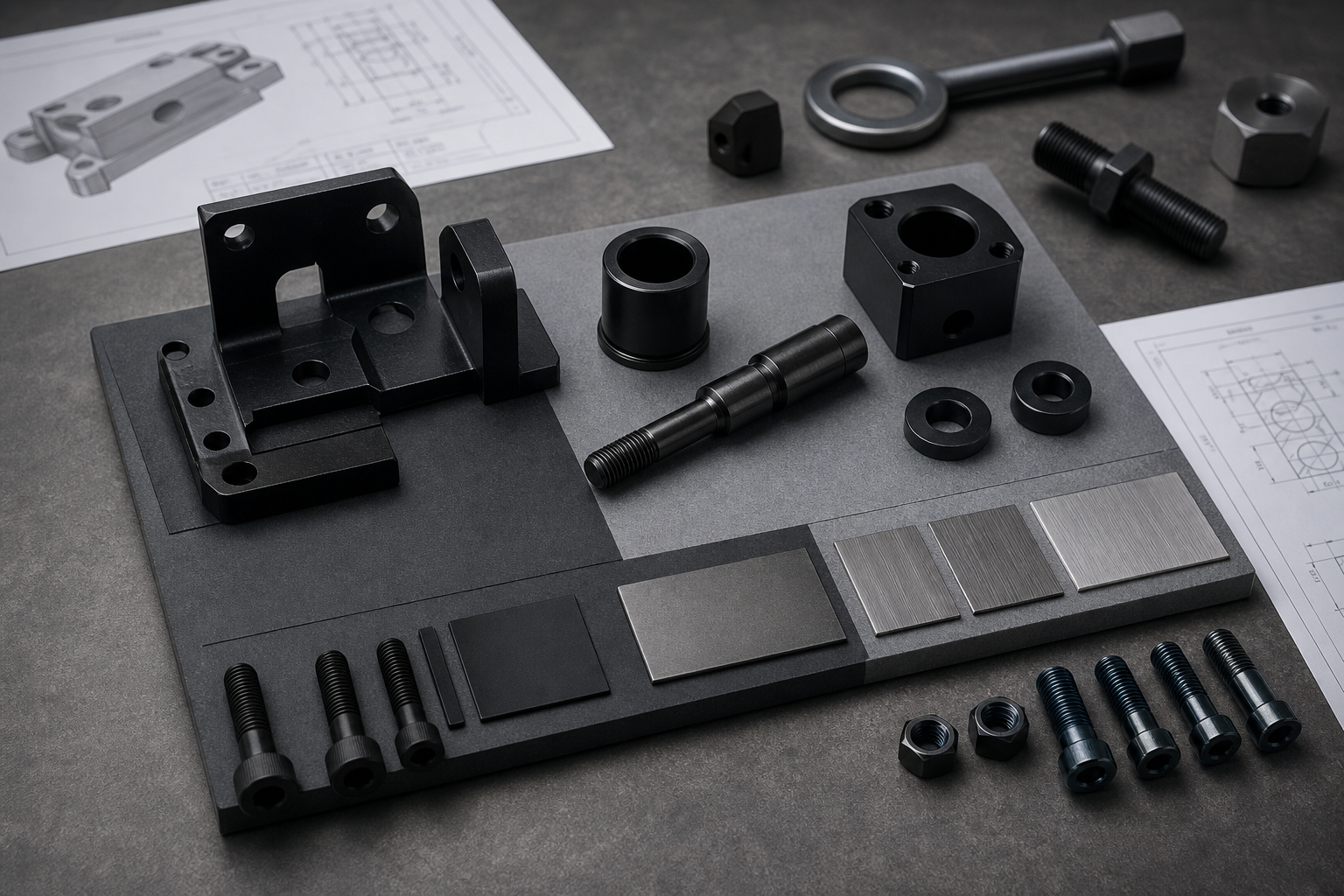
Typical Part Families and Better Finish Direction
| Part family | Common finish concern | Likely better finish direction |
|---|---|---|
| Threaded hardware and screws | Thread feel and dark protective appearance | Black oxide when low build-up matters, plated route when corrosion margin becomes the priority |
| Machined shafts and turned parts | Fit-sensitive diameters and moderate finish protection | Black oxide in many indoor or protected-use cases |
| Brackets and support hardware | Dark appearance with uncertain exposure conditions | Depends on environment; plated route often wins if corrosion demand rises |
| Small housings and covers | Visible dark cosmetic finish and handling wear | Black oxide for low-glare look, plated route if stronger protection is needed |
| Mixed-geometry steel components | Balanced finish performance across edges, threads and visible faces | Choose based on exposure class first, then verify fit-sensitive features |
RFQ Checklist for Black Oxide or Black Plated Parts
| RFQ input | What to include |
|---|---|
| Part material | Identify carbon steel, alloy steel or other material before choosing the finish route. |
| Finish route | State black oxide, black zinc plating or finish route under review. |
| Exposure environment | Say whether the part is for indoor protected use, periodic moisture or more demanding service. |
| Thread and fit sensitivity | Call out critical threads, bores, sliding fits or gauged areas that may be finish-sensitive. |
| Post-treatment expectation | If black oxide is preferred, include whether oil or sealer expectation needs to be part of the review. |
| No-finish or masked zones | Identify datums, sealing faces and critical contact areas that should stay protected. |
If the finish decision is tied to broader corrosion-control planning, review the black oxide or plated route together with our surface finishing and request a quote pages before locking the package.
Black Oxide and Black Plating FAQ
What is black oxide on metal parts?
Black oxide is a dark finish route commonly evaluated for steel parts when buyers want a low-build black appearance without much change to fit-sensitive features.
Is black oxide enough for rust prevention?
It depends on the environment and post-treatment route. Buyers should review exposure conditions, oil or sealer expectations and corrosion risk before assuming it is enough.
What is the difference between black oxide and black zinc plating?
Black oxide is typically chosen when low build-up matters, while black zinc plating is often considered when stronger protective performance is needed and added finish build-up can be managed.
Does black oxide change threads or dimensions?
It is often chosen because the finish route has less effect on fit-sensitive features than many plated routes, but critical threads and gauged areas should still be identified in the RFQ.
Can stainless steel parts use the same black finish route?
Not every black finish choice transfers directly across materials. Material type should be confirmed before locking the surface treatment.
What should I include in the RFQ for black oxide parts?
Include the part material, finish route, exposure environment, thread sensitivity, post-treatment expectation and any no-finish areas that must stay protected.