FABRICATED SUBASSEMBLY DELIVERY
Metal Welding & Assembly Services for Fabricated OEM Subassemblies
Some projects do not stop at cut parts, bent panels or machined brackets. They need welded frames, joined sheet metal structures, hardware-installed modules and subassemblies that are ready for the next build stage when they arrive. That is where metal welding assembly services, welded assembly services and weldment assembly services become the real sourcing requirement, not a side note.
Great Material supports fabricated metal assemblies that combine sheet metal fabrication, laser cutting, CNC machining and joined components into one delivered assembly route. The review centers on scope definition, custom metal welding services, mechanical assembly services metal parts buyers request, distortion control, hardware integration and the files needed before RFQ review.
Fast buyer check
- Use this route when the shipment should arrive as a welded or hardware-complete subassembly, not a bag of individual parts, and when a fabricated metal assembly supplier is expected to manage the handoff
- Typical inputs include fabricated panels, tubes, brackets, machined interfaces, bought-in fasteners and finish sequencing notes
- Key review points are weld method, fixture logic, distortion risk, cosmetic zone definition and post-weld inspection
- RFQ review moves faster when the drawing package includes BOM, weld symbols and assembly order notes
| Primary CTA | Quote assembly project |
| Best fit | Welded frames, welded frame assembly projects, enclosures, brackets, support structures and mixed fabricated modules |
| Related pages | Custom Metal Parts, Custom Metal Brackets, Quality Control |
What buyers usually mean by welding and assembly services
The requirement is usually broader than welding alone. The project often starts with cut blanks, bent panels, machined interfaces or formed tubes, then moves through fit-up, welding, hardware insertion, cosmetic cleanup, finishing and final packing as a handled subassembly. Buyers searching for sheet metal welding assembly or metal fabrication and assembly services are not evaluating one weld bead. They are evaluating whether the whole route can stay controlled.
Assembly completion logic matters before pricing starts. Some jobs only need welded structures. Others need PEM hardware, brackets, threaded inserts, machined locating surfaces, covers, hinges or shipment-ready modules. Separating these delivery levels early helps engineering, purchasing and quality teams quote the same scope.
- Loose parts only is a fabrication project, not an assembly project
- Welded structures add joining sequence, sequence control and distortion risk
- Hardware-complete modules add BOM control and final check points
- Finish order matters when the project includes coating, passivation or cosmetic face zones
Assembly scope: fabricated parts vs welded structures vs shipment-ready subassemblies
This matrix is the fastest way to align the RFQ before pricing, fixture planning and inspection review.
| Delivery level | What is included | Typical examples | RFQ notes that matter |
|---|---|---|---|
| Fabricated parts set | Laser cut, bent, machined or formed parts delivered loose | Panels, brackets, plates, machined connectors | Drawing rev, material, quantity and finish are usually enough |
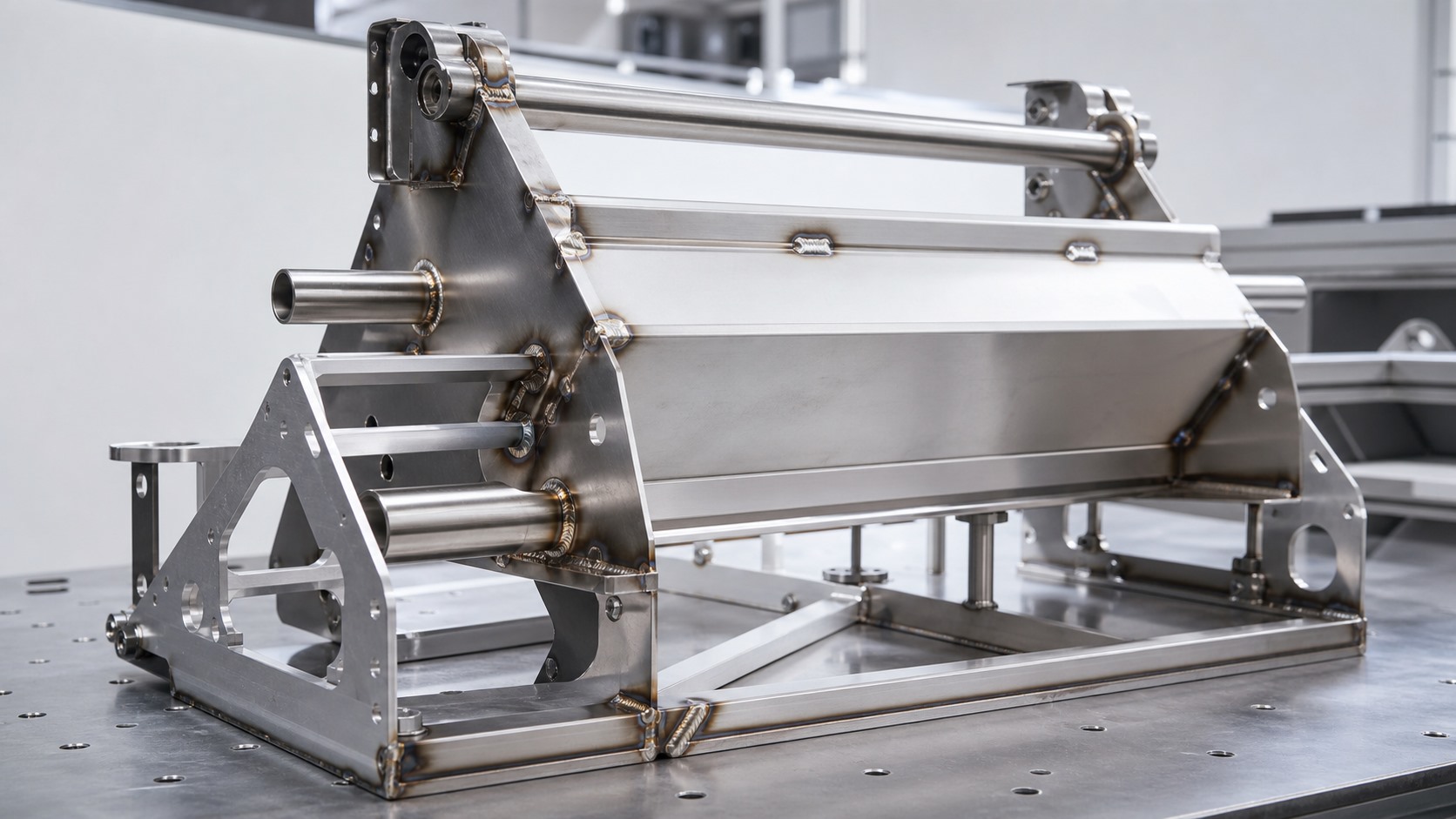
| Welded structure | Fit-up and welding of the main structure or frame, including welded assembly services scope | Frames, bases, support weldments, tubular structures and welded frame assembly builds | Weld symbols, sequence sensitivity, cosmetic zones and critical datums should be marked |
| Hardware-complete subassembly | Welding plus fasteners, inserts, bought-in parts or secondary mechanical assembly | Enclosures, module frames, bracket packs, fixture bodies | BOM, purchased hardware list, torque or fit notes and packaging-ready delivery condition should be included |
| Finish-ready shipment | Assembly delivered after coating, passivation, blasting or cosmetic handling | Powder-coated structures, brushed stainless modules, anodized support assemblies | Finish order, masking zones and protected surfaces must be called out clearly |
Choosing the right weld route for the assembly
Buyers do not need a long welding textbook. They need to understand which route supports the assembly geometry, appearance and production condition, whether the build uses TIG welding, MIG welding or spot welding.
TIG welding
Often selected for cleaner appearance, thinner wall sections, stainless assemblies and areas where heat control or weld visibility matters.
MIG welding
Often used for fabricated steel structures, brackets and general production weldments where speed and structural joining are the main drivers.
Spot or mixed-route joining
Used when assemblies include thin sheet components, covers or hardware zones that benefit from spot welding or a mixed process sequence.
Where welding projects usually fail if the RFQ package is too light
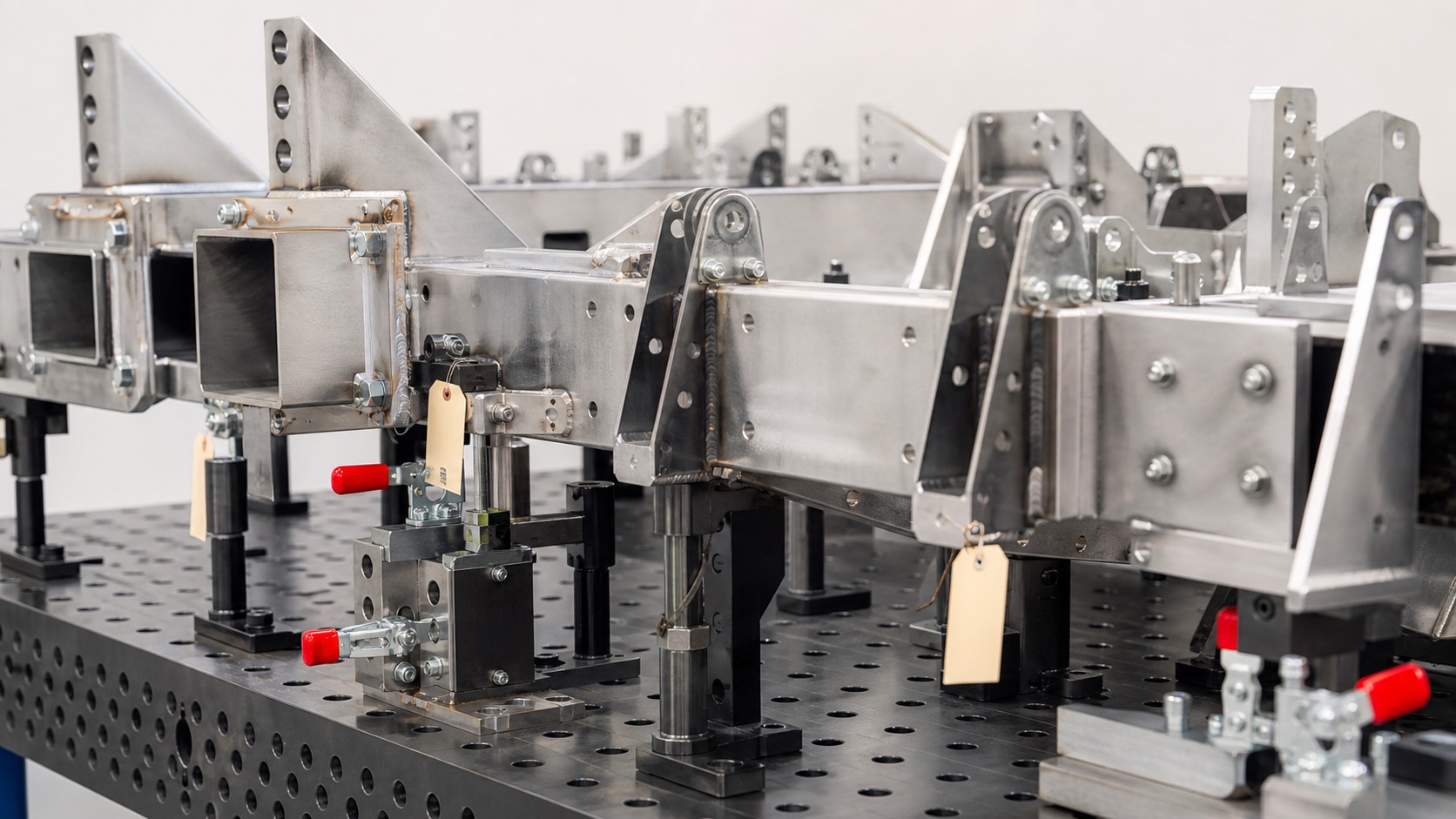
Assembly quotes slow down when the supplier receives only single-part drawings and no subassembly logic. Welding and hardware completion are route decisions, so the drawing package should show the connection between structure, sequence, fixture design and inspection.
| RFQ item | Why it matters | Typical example |
|---|---|---|
| Assembly drawing or weldment overview | Shows how single parts relate to one another and where weld sequence matters | Frame layout, subassembly exploded view or general arrangement sheet |
| BOM and hardware list | Clarifies what is fabricated, what is bought in and what must be installed before shipment | Fasteners, inserts, hinges, standoffs, bearings or customer-supplied items |
| Weld symbols and cosmetic zones | Prevents confusion around weld type, visible faces and cleanup expectations | Visible stainless seams, non-cosmetic hidden joints, ground flush areas |
| Critical dimensions after welding | Defines what must still be controlled after heat input and fit-up | Mounting hole position, interface flatness check, tube center distance, hinge alignment and other dimensional check points |
| Finish sequence | Changes masking, cleanup and final appearance planning | Weld then powder coat, brush then passivate, coat after hardware masking |
If the project starts from individual parts, use custom metal parts and sheet metal fabrication as supporting scope pages before moving the RFQ into assembly review.
What to include in the quote request
- Assembly drawing, single-part drawings and revision status
- BOM with fabricated parts, purchased hardware and installation notes
- Material and thickness for each part group
- Preferred weld route if already specified, or note that process review is requested, including weld bead access and heat input concerns
- Critical dimensions to be checked after welding or final assembly
- Surface finish, cosmetic face zones and packing condition
- Target quantity, delivery stage and destination country
For projects that combine fabricated bodies with machined interfaces, linking the RFQ to CNC machining services and quality control reduces handoff friction.
Frequently asked questions
Can one supplier machine parts and weld the final assembly?
Yes, many assembly projects combine machined interfaces, cut plates, bent panels and welded structures. That is a common need behind custom metal welding services and metal fabrication and assembly services inquiries. The important point is that the RFQ clearly shows which parts must stay dimension-critical after welding.
What is the difference between TIG and MIG for fabricated assemblies?
TIG is often selected for cleaner appearance and more controlled heat input, especially on stainless or thinner sections. MIG is often chosen for structural steel assemblies and production-oriented weldments.
What should be on the welding assembly drawing package?
Include the assembly view, single-part drawings, BOM, weld symbols, hardware list, finish notes, critical post-weld dimensions and any cosmetic face requirements.
How is weld distortion managed during fabrication?
Distortion control is usually addressed through fixture planning, weld sequence, part preparation, heat-input awareness and identifying which dimensions must be checked after joining.
Can welded assemblies include coating or passivation?
Yes, but the finish order should be defined clearly because coating, brushing, passivation or masking can change the required route and cosmetic handling.
What is the fastest way to get an assembly quote reviewed correctly?
Submit the assembly drawing, BOM, single-part files, material list, target quantity, finish requirement and the critical dimensions that still matter after welding or hardware installation.
Send the Weldment Drawing, BOM and Final Delivery Condition Together
Assembly RFQs become much easier to price and review when the supplier can see the structure, the hardware list and the final finish expectation in one package. Use the RFQ page to connect the project with sheet metal fabrication, custom metal parts, quality control and the final quote path.