ALUMINUM FINISH SELECTION
Anodized Aluminum Parts
Anodizing is one of the most common ways to add corrosion resistance, wear improvement and finish consistency to machined aluminum parts. The right choice depends on whether the part is cosmetic, functional, hard-wearing, electrically isolating or dimension-sensitive.
Compare Type II and hardcoat anodizing for CNC aluminum parts, see how color, masking and thickness affect the drawing, and confirm what to include in the RFQ before quote review. For the broader finish path, connect with surface finishing for CNC parts, aluminum CNC machining, custom metal parts and Request a Quote.
Fast finish check
- Choose Type II when appearance, color options and general corrosion protection matter most
- Choose hardcoat when wear resistance and tougher surface performance justify the finish
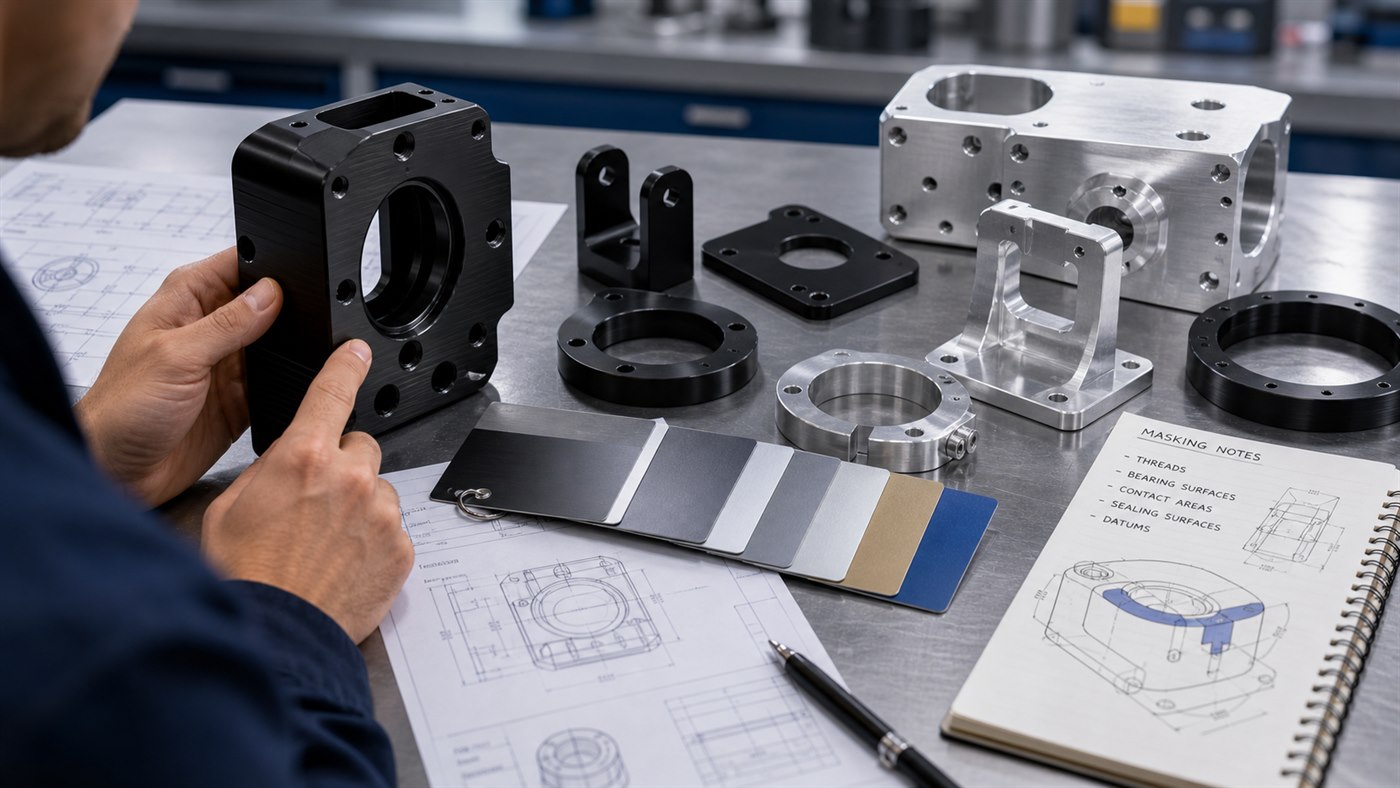
- Discuss masking early if threads, bores or contact surfaces must stay controlled
- Include color, thickness intent and alloy grade in the RFQ so finish review is faster
| Primary CTA | Select anodizing option |
| Best fit | Buyers selecting anodized finish for machined aluminum housings, brackets and visible parts |
| Key decisions | Type, color, masking, thickness and alloy compatibility |
Why anodizing is chosen for machined aluminum parts
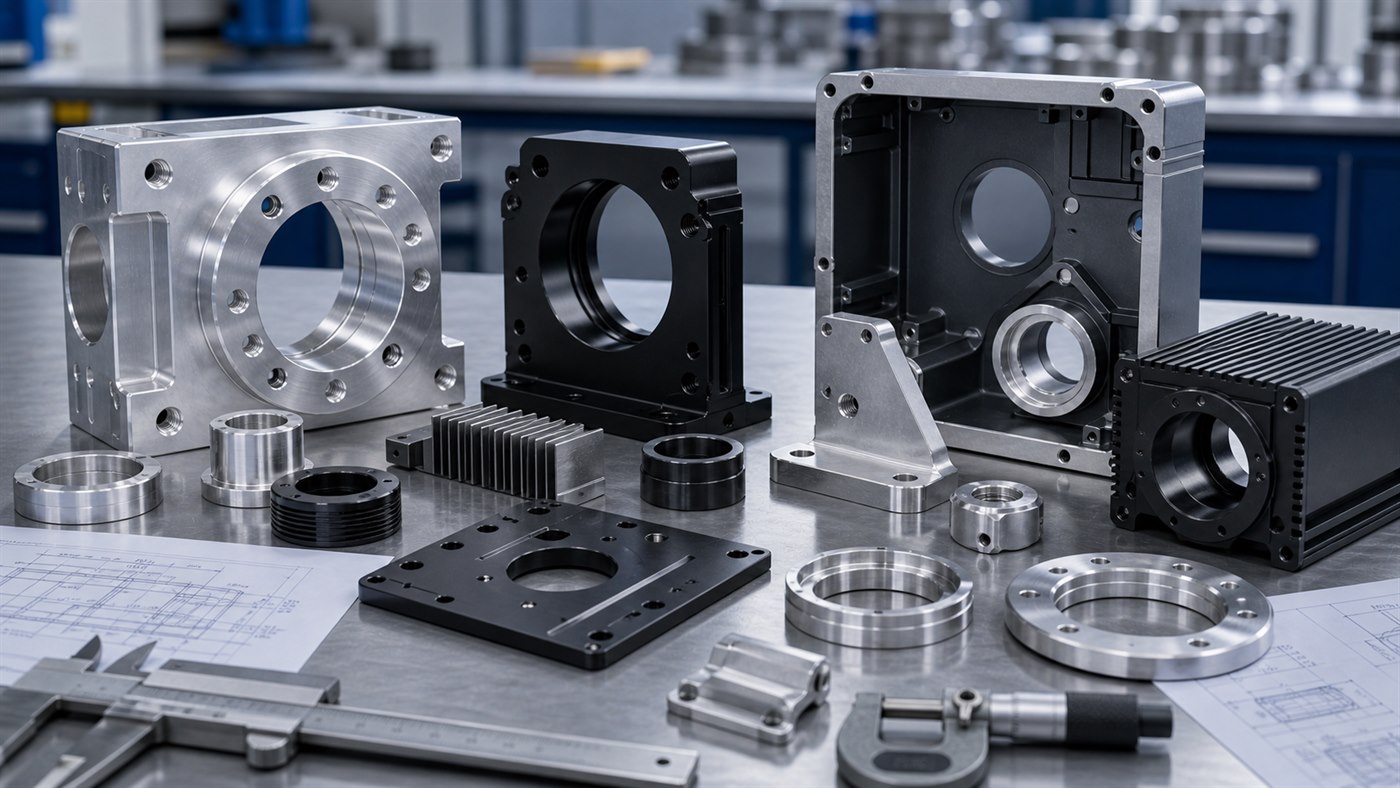
Unlike a surface paint layer, anodizing grows an oxide layer from the aluminum itself. That is why it is often selected for parts that need better corrosion resistance, stronger wear performance, electrical isolation or durable appearance without a thick external coating.
The finish decision becomes more useful when it is tied to the part function. A black instrument panel, a cosmetic housing, a fixture plate and a wear-exposed slider may all be aluminum parts, but they are not asking for the same anodizing route.
- Type II is often the default for cosmetic and general protective anodized parts
- Hardcoat is more relevant when surface wear and durability are doing real work in the design
- Color choice and surface preparation should be reviewed together, not as separate late steps
- Masking matters when threads, bores and contact surfaces must stay controlled
Type II vs hardcoat anodizing for machined aluminum parts
Use the comparison below to connect finish selection with drawing review, not just process terminology.
| Decision factor | Type II anodizing | Hardcoat anodizing | What it means in RFQ review |
|---|---|---|---|
| General role | Common route for appearance, color and general corrosion protection | Heavier-duty route where wear and harder surface performance matter more | State whether the finish is primarily cosmetic, protective or wear-driven |
| Appearance and color | Strong choice for clear, black and dyed finish presentation | Usually more functional than decorative, with color options depending on route | If the finish is customer-facing, call out color and cosmetic expectations clearly |
| Wear and durability | Good practical protection for many housings, covers and brackets | Better fit when surface wear, sliding contact or harder service conditions are present | Ask whether hardcoat is solving a real wear problem or just being assumed |
| Dimensional effect | Usually easier to integrate when dimensional sensitivity is moderate | Needs tighter finish planning where bores, fits and thread behavior matter | Mark critical surfaces and discuss masking or post-finish sizing if needed |
| Typical part fit | Consumer panels, visible housings, brackets, covers and general CNC aluminum parts | Wear-exposed components, fixtures, sliding parts and tougher-duty surfaces | Tie the finish type to the actual part family and service condition |
| Masking and control points | Often reviewed for threads, contact faces and fit-critical bores | Even more important when finish performance and thickness matter to function | Include masking expectations in the RFQ, not only after the quote is issued |
Color, masking and thickness should be defined before the quote is locked
Many anodizing problems start when the drawing only says “black anodize” without clarifying type, critical surfaces or appearance standard.
This finish decision often connects directly with finish planning, aluminum material choice and inspection requirements.
Which aluminum parts usually benefit most from anodizing
Anodizing is most useful when the part needs a balance of corrosion resistance, appearance control and surface improvement without moving to a thicker external coating.
- Visible housings, panels and covers that need durable cosmetic finish
- Brackets and structural aluminum parts that need cleaner corrosion protection
- Instrument, electronics and fixture parts where finish consistency matters
- Wear-sensitive aluminum parts where hardcoat is more appropriate than standard anodize
The best result usually comes when the alloy grade, surface prep and finish type are reviewed together rather than chosen in isolation.
What to include in an anodizing RFQ
- Part drawing and CAD: latest revision with critical features marked
- Alloy grade: 6061, 7075 or other aluminum grade
- Finish type: Type II, hardcoat or open to recommendation
- Color and appearance: clear, black, dyed finish or cosmetic standard
- Masking needs: threads, bores, contact faces or fit-critical surfaces
This gives the supplier enough context to review finish feasibility before production starts.
Frequently asked questions
What is the difference between Type II and hardcoat anodizing?
Type II is often selected for color, appearance and general protection, while hardcoat is more often chosen when stronger wear performance and tougher surface duty matter.
Does anodizing change dimensions on aluminum parts?
Yes. That is why fit-critical bores, threads and contact surfaces should be reviewed early, especially where masking or tighter finish control may be needed.
Which aluminum alloys anodize best?
Many common CNC aluminum grades can be anodized, but appearance and finish response can vary by alloy, so the exact grade should be part of the finish review.
Can threads and critical holes be masked before anodizing?
Yes, when function requires it. Threads, bores and contact points are common areas to review for masking or finish control.
Is black anodizing cosmetic or functional?
It can be both. The key question is whether the part needs the finish mainly for appearance, corrosion protection, wear behavior or a combination of these.
What should be included in an anodizing RFQ?
Include the drawing, alloy grade, finish type, color requirement, masking needs and any fit-critical or cosmetic surfaces that need special attention.
Send the finish type, color and masking notes with the drawing
If the anodizing route is still open, send the drawing package with alloy grade, finish type, color target and critical surfaces. Use the RFQ page to request a finish review before the part goes to production.