BEAD BLASTING AND BRUSHING
Bead Blasted Aluminum Parts vs Brushed Finish for CNC Components
When the part is already machined but the visible finish is still undecided, engineers and buyers can choose between bead blasted matte texture and brushed directional grain for aluminum housings, front panels, brackets, covers and other CNC components where surface appearance changes the buying decision.
The right finish choice is not only about appearance. It also affects how machining marks are softened, whether grain direction matters, how the part should be masked, and how the finish behaves before anodizing or another downstream route. For broader finish planning, connect the finish choice with our surface finishing, aluminum CNC machining and precision CNC machining pages.
Best Fit for These Finishes
- Visible aluminum housings, covers, front panels and cosmetic brackets
- Parts where machining marks need to be softened or controlled
- Programs choosing between matte texture and directional grain
- Aluminum parts that may be anodized after cosmetic preparation
- RFQs that need grain direction, masked faces or no-finish zones defined early
Send the CAD file, visible-face notes, finish preference, grain-direction requirement and anodizing plan together for faster finish review.
Visual Result
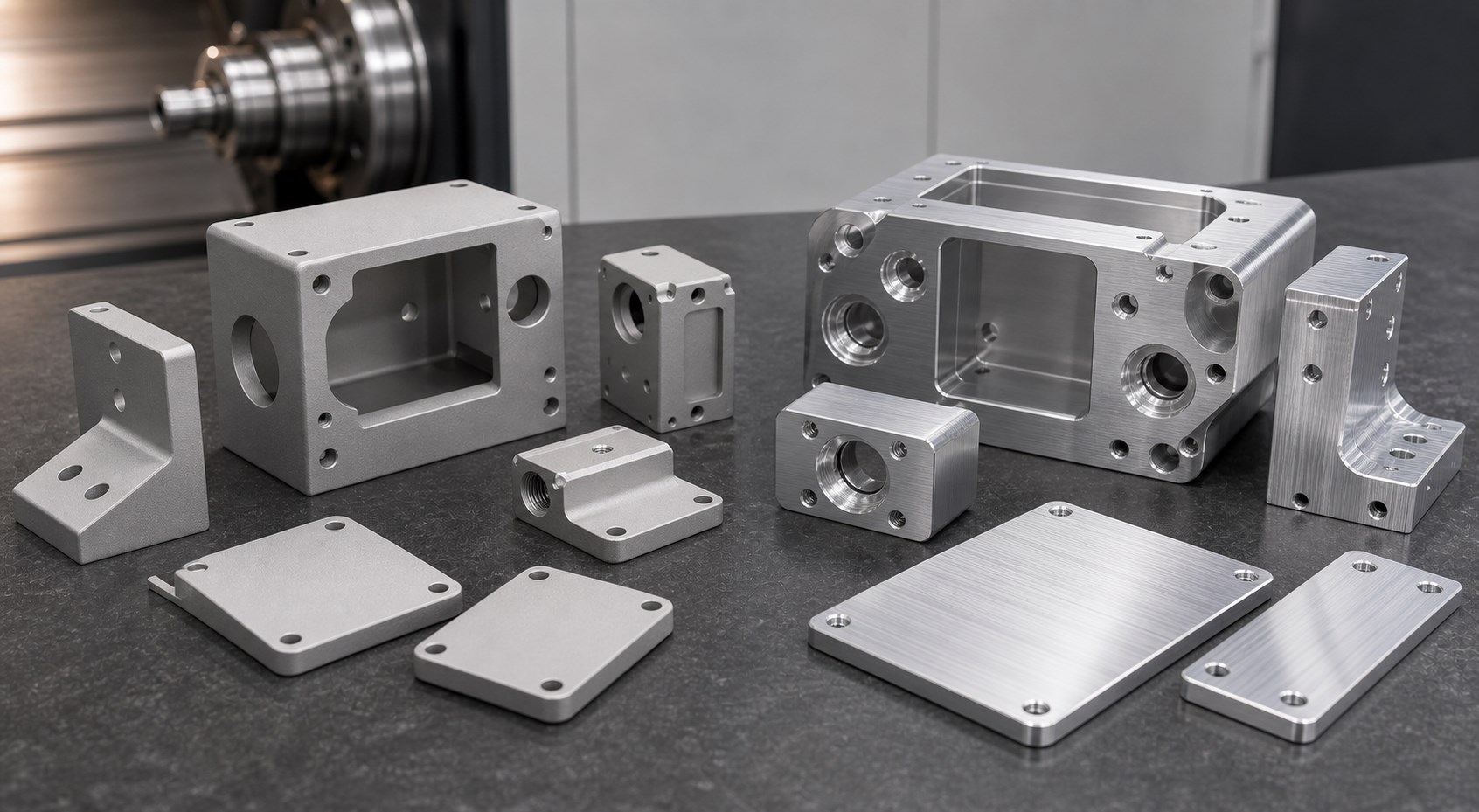
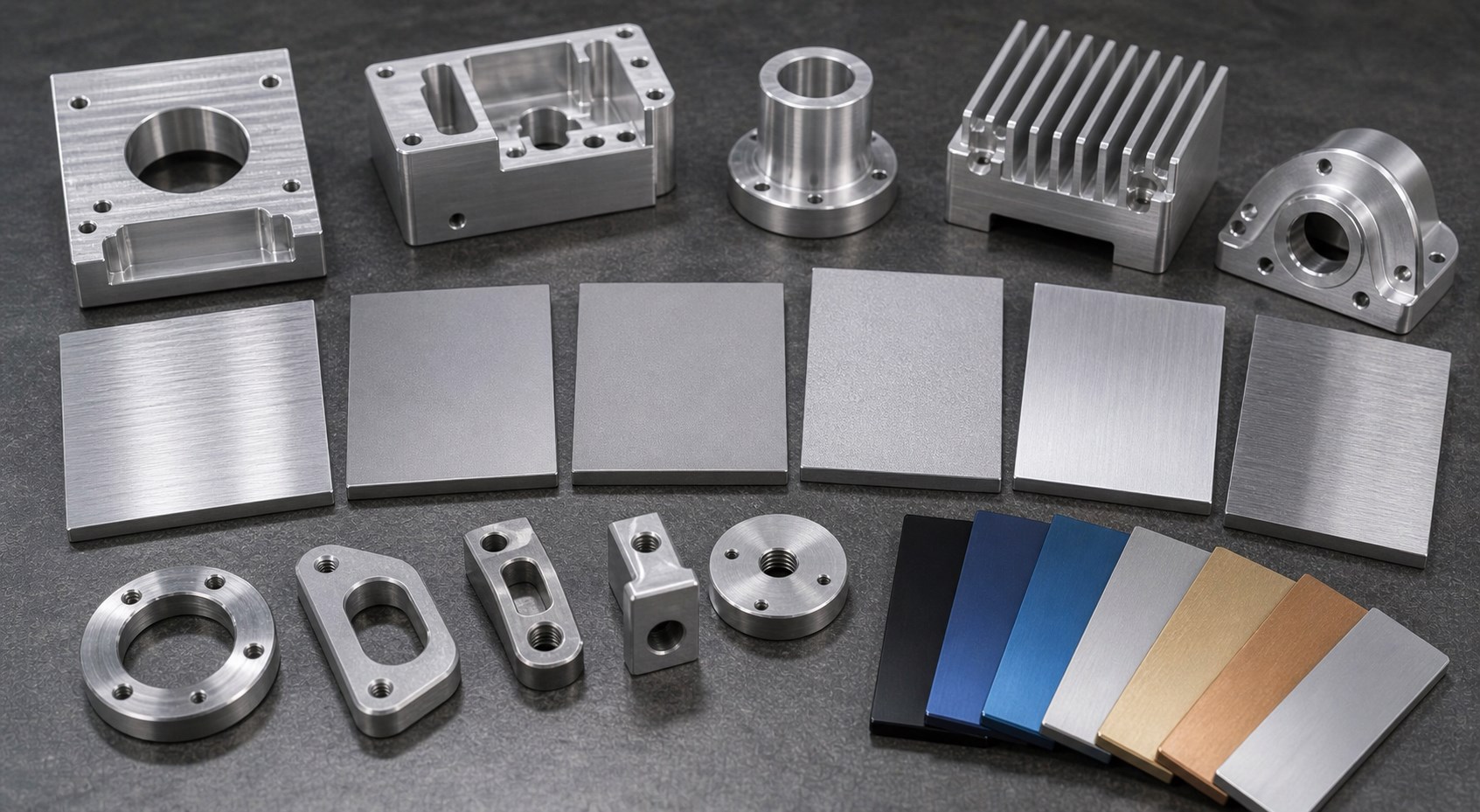
Bead blasting creates a uniform matte texture. Brushing creates a visible directional grain.
Geometry Fit
Brushing favors flatter, more open surfaces. Bead blasting adapts better to mixed geometry and detail.
Post-Finish Path
Both routes can feed anodizing, but they leave different visual character under the final finish.
RFQ Risk
Grain direction, masked faces and no-finish features must be called out before quoting starts.
What Each Finish Changes on a Machined Aluminum Part
Bead blasting and brushing are often grouped together because both are cosmetic post-machining treatments, but they solve different visual problems. Bead blasting is usually selected when the goal is to reduce glare, soften fine tool marks and create a uniform matte surface. Brushing is usually selected when the goal is to create a deliberate grain line that makes the part look directional, technical and premium.
That difference matters in real RFQs. A front panel, enclosure cover or control interface may benefit from brushed grain because the part is meant to be seen up close. A housing body, support frame or mixed-geometry visible part may benefit more from bead blasting because the finish needs to stay visually even across multiple surfaces and feature transitions.
Bead blasting direction
Best when uniform texture and reduced reflectivity matter more than visible grain.
Brushing direction
Best when the part needs a controlled linear look on visible outer faces or flat feature zones.
Bead Blasting vs Brushing Comparison Matrix
This matrix is built for visible CNC parts where the finish choice changes customer perception, drawing notes and downstream processing.
| Comparison point | Bead blasting | Brushing |
|---|---|---|
| Visual character | Uniform matte or satin texture with low glare | Directional grain that creates a technical brushed look |
| Best part types | Mixed-geometry housings, covers, brackets and general visible hardware | Flat panels, face plates, trim surfaces and visible outer faces |
| Tool-mark handling | Usually softens fine machining marks into a more even texture | Replaces random marks with a deliberate grain, but the grain itself becomes visible |
| Geometry limits | More forgiving across curved or interrupted geometry | Works best on flatter and more accessible surfaces where grain can stay consistent |
| Anodizing fit | Common pre-anodizing route when a matte anodized result is desired | Can also feed anodizing when the design wants directional grain preserved under the final appearance |
| Drawing notes that matter | Call out visible surfaces, masked zones, no-blast threads or precision faces | Call out grain direction, brushed faces only, masked zones and any no-brush features |
When to Choose Each Finish
Choose bead blasting when
The part needs a uniform low-glare look, the geometry is varied, the visible surfaces wrap around multiple faces, or the design is heading toward matte anodizing.
Choose brushing when
The part needs a premium directional appearance, the visible face is relatively open and flat, and the grain line is a design feature rather than a risk.
Be cautious with bead blasting when
Threads, sealed surfaces, close-fit bores or critical datums must stay untouched or need controlled masking before cosmetic preparation.
Be cautious with brushing when
The geometry is highly broken, the visible surface changes direction often, or the design has no clear answer for grain direction on mating faces.
If the finish is still open between brushed, blasted and a colored route, compare the finish route with our aluminum anodizing and surface finishing guides before finalizing the callout.
Anodizing, Masking and Tolerance Notes
- Bead blasting before anodizing: often used when the final part should read as matte and visually even rather than reflective.
- Brushing before anodizing: works when the design wants grain direction to remain part of the finished appearance.
- Masking matters: threads, bearing bores, sealing faces, grounding points or datum surfaces may need explicit no-finish instruction.
- Geometry limits matter: brushing consistency can fall off across pockets, edges and broken face transitions more quickly than many buyers expect.
- Cosmetic face definition matters: call out the exact visible faces rather than assuming the whole part receives the same treatment.
| RFQ note | Why it matters |
|---|---|
| Visible face only | Prevents finish effort from being spread across non-cosmetic surfaces without need. |
| Grain direction | Critical for brushed front panels, covers and user-facing outer faces. |
| No-finish threads or bores | Helps protect function-critical features and fit surfaces. |
| Finish before anodizing | Defines the intended visual route for aluminum parts heading to anodized appearance. |
Typical Part Families and Better Finish Direction
| Part family | Common appearance goal | Likely better finish direction |
|---|---|---|
| Front panels and interface plates | Intentional premium visible face | Brushing if grain direction is part of the design language |
| Housings and enclosure covers | Uniform matte appearance across multiple faces | Bead blasting in many cases, especially before matte anodizing |
| Cosmetic brackets and visible supports | Clean visible finish without harsh machine marks | Bead blasting unless the bracket has a show-face grain requirement |
| Decorative trim or show surfaces | Directional technical appearance | Brushing when the visible geometry supports clean linear grain |
| Mixed-geometry technical hardware | Even texture without drawing attention to direction changes | Bead blasting is often more forgiving |
RFQ Checklist for Bead Blasted or Brushed Parts
| RFQ input | What to include |
|---|---|
| Visible surfaces | Mark the cosmetic faces clearly on the drawing or notes. |
| Finish route | State bead blasted, brushed or finish route under review. |
| Grain direction | For brushed parts, call out the intended direction on the visible face. |
| No-finish or masked zones | Identify threads, bores, sealing faces and datum surfaces that must stay protected. |
| Downstream finish | If the part will be anodized or coated after this step, say so in the first RFQ. |
| Sample expectation | If cosmetic approval matters, ask for finish sample alignment before production release. |
If the finish decision is tied directly to aluminum color or anodized appearance, review the bead blasted or brushed route together with our aluminum anodizing page before locking the quote package.
Bead Blasting and Brushing FAQ
What is the difference between bead blasting and brushing on aluminum parts?
Bead blasting creates a more uniform matte texture, while brushing creates a visible linear grain. The right choice depends on whether the design wants even texture or directional appearance.
Can bead blasted aluminum parts be anodized?
Yes. Bead blasting is commonly used before anodizing when the goal is a more matte anodized appearance.
Can brushed aluminum also be anodized?
Yes. Brushing can be used before anodizing when the project wants the grain to remain part of the final visual character.
When is brushing a poor fit for a part?
Brushing is less ideal when the part has many interrupted surfaces, deep pockets or no clear grain direction on the visible faces.
Does bead blasting affect precision features?
It can if critical threads, bores, sealing surfaces or datums are not protected. That is why masked or no-finish zones should be called out before quoting.
What should I include in the RFQ for a cosmetic aluminum finish?
Include the visible faces, finish route, grain direction if brushed, masked features, and whether the part is heading to anodizing or another downstream finish.