STAINLESS STEEL CNC MACHINING
Stainless Steel CNC Machining Services for Custom Metal Parts
Quote custom machined stainless steel housings, fittings, shafts, brackets and precision components in 303, 304, 316, 17-4 and related grades while aligning corrosion resistance, material strength, passivation and RFQ inputs before production starts. These stainless steel CNC machining services support custom stainless steel machined parts, CNC machined stainless steel parts and stainless steel milling and turning programs for prototype and repeat production.
If the drawing is already fixed, you can move directly to our CAD upload and quote page. For projects that combine stainless grade choice with tighter datums or fit-critical features, review our precision CNC machining, CNC turning services and quality control and inspection capabilities before submitting the RFQ. This is especially useful when the RFQ is comparing stainless steel machining services, 304 stainless steel machining, 316 stainless steel machining or 17-4 stainless steel machining for the same part family.
Best Fit for Stainless RFQs
- 304 and 316 corrosion-resistant housings and fittings
- 303 turned parts and threaded components
- 17-4 structural and strength-driven parts plus 15-5 PH alternatives when precipitation-hardening logic matters
- Valve bodies, medical parts, food equipment parts and corrosion-sensitive hardware
- Passivated or controlled-finish visible parts
- Prototype and repeat low-volume stainless programs
Send the CAD model, target grade, finish or passivation needs, operating environment and quantity together for faster quote review.
Common Grades
303, 304, 316, 17-4 and related stainless options selected by corrosion, machinability and strength needs.
Typical Parts
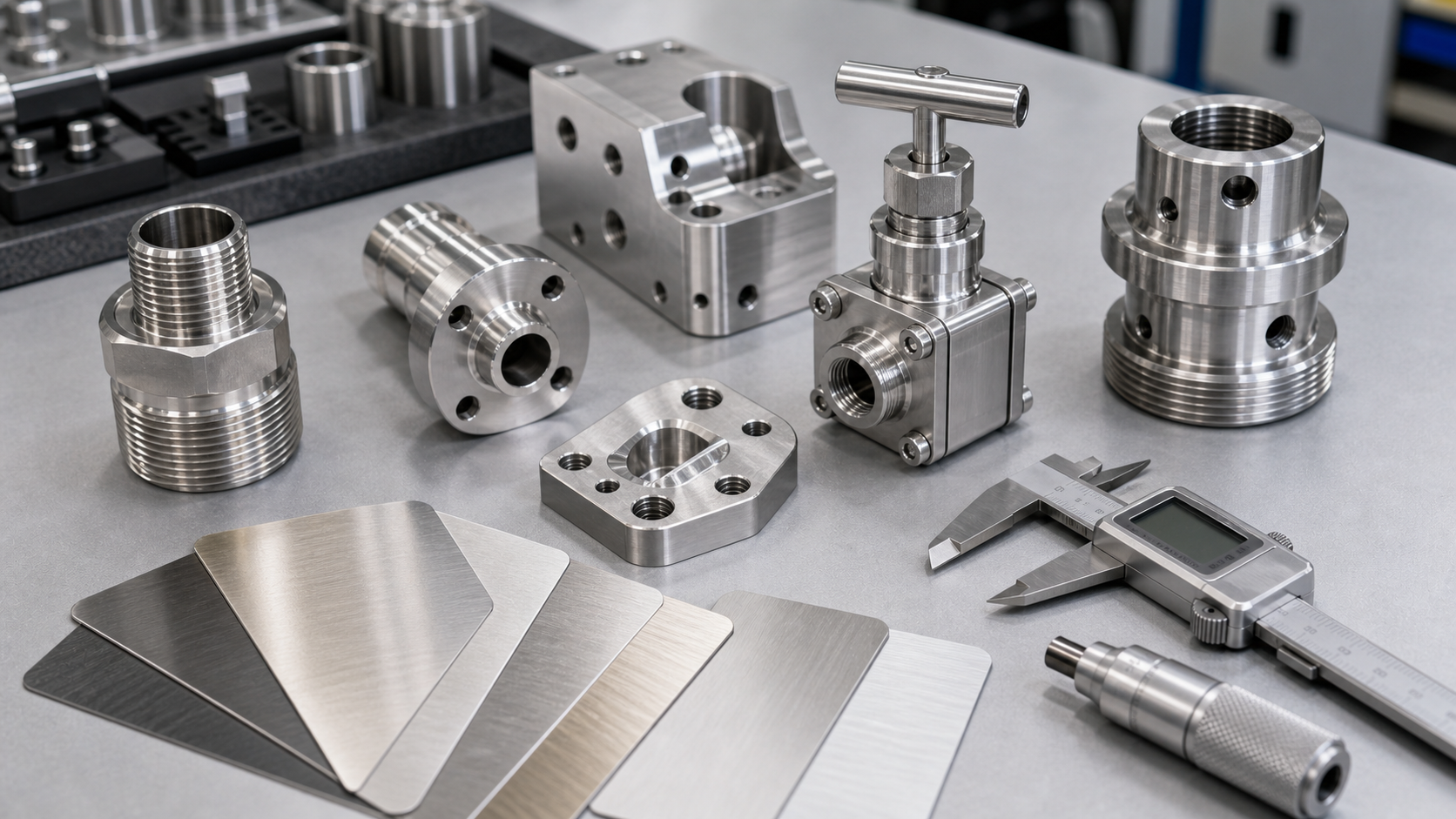
Fittings, shafts, housings, valve bodies, brackets, medical hardware and corrosion-exposed components.
Finish Planning
As-machined, brushed, bead blasted and passivation-led surface-state control for corrosion-sensitive parts.
Quote Priorities
Grade choice, environment, threads, burr control, cosmetic surfaces and documentation requirements.

Why Stainless Steel Is Chosen for Machined Parts
Stainless steel stays in heavy rotation for machining RFQs because buyers need a workable combination of corrosion resistance, structural reliability, cleanable surfaces and recognizable grade families. It is often the material of choice when the part has to survive moisture, chemicals, repeated washdown, outdoor exposure or long service life without the material path feeling uncertain.
The real decision is usually not whether stainless can be machined, but which grade family best matches the operating environment and how that choice affects finish, burr control, threading, tolerances and quote strategy. Buyers often need a clearer answer to questions like: should this fitting stay in 304, does the assembly really need 316, and is the part a 303 turning candidate or a 17-4 strength-driven component?
Corrosion-led choice
304 and 316 usually enter the short list when environment, washdown or exposure conditions matter more than easy machining alone. Buyers often compare 304 stainless steel machining with 316 stainless steel machining at this stage.
Machinability or strength-led choice
303 and 17-4 become more relevant when the RFQ is shaped by free-machining needs, tighter threaded geometry or higher structural performance. 17-4 stainless steel machining and 15-5 PH routes are common where strength and heat treatment planning matter more than broad corrosion-only logic.
Stainless Grade Selection Matrix
This matrix is meant to reduce requotes by connecting the part family, corrosion environment and performance target to the most common stainless grade directions for custom stainless steel machined parts and CNC machined stainless steel parts.
| Grade direction | Best fit | Why buyers choose it | RFQ notes that matter |
|---|---|---|---|
| 303 | Turned parts, fittings, threaded hardware and components where machinability matters strongly | Often chosen when the geometry is thread-heavy or turning-led and easier machining can improve route efficiency. | Clarify corrosion exposure, thread sensitivity and whether finish or appearance matters more than machining speed. |
| 304 | General corrosion-resistant housings, brackets, covers and equipment parts | A common default when corrosion resistance and broad availability matter more than specialized performance. 304 stainless steel machining is often the baseline route for general corrosion-resistant components. | Call out finish expectations, visible surfaces, welded or assembled context and any cleanability requirements. |
| 316 | More demanding corrosion environments, chemical exposure and washdown-sensitive applications | Usually selected when the environment is harsher and corrosion margin matters more than raw machinability. 316 stainless steel machining is common when washdown, chemical or outdoor exposure drives the quote. | Describe the operating environment and whether passivation, surface state or contamination control affects acceptance. |
| 17-4 PH / 15-5 PH direction | Strength-driven shafts, structural parts, precision hardware and demanding mechanical components | Chosen when strength and performance requirements justify a narrower and more controlled material path. 17-4 stainless steel machining often requires earlier heat treatment and document planning than standard austenitic grades. | Mark the critical dimensions, load-driven features and document requirements early so quote review stays aligned. |
Typical Stainless Part Types and What Changes the Quote
Fittings and connectors
Thread quality, burr control, sealing faces and corrosion environment usually matter more than part size alone.
Shafts and turned hardware
Grade selection, concentricity, thread behavior and finish-sensitive surfaces tend to drive the review.
Housings and valve bodies
Bores, threaded ports, cosmetic finish and corrosion exposure usually define the RFQ depth.
Medical or cleanable components
Surface-state consistency, burr control, passivation and documentation can matter as much as geometry itself on medical parts and food equipment parts.
For stainless projects that include mixed material families or non-stainless mating components, combine the grade and finish requirements with our custom metal parts and CNC machining services capabilities so the quote reflects the full assembly context instead of a single isolated part.
Machining and Design Risks to Flag Early
- Burrs and thread condition: stainless fittings and threaded parts often need clearer edge, chamfer, thread-quality notes and galling-risk callouts than broad metal RFQs provide.
- Work-hardening-sensitive features: tighter bores, repeated tool contact and finish-critical surfaces can become more route-sensitive than they are in aluminum parts. Work hardening should be considered early on stainless bores, slots and repeated-tool-contact features.
- Cosmetic or brushed surfaces: visible faces should be identified before the machining and finish path are locked in.
- Corrosion environment: outdoor, washdown, chemical or damp-service context should be part of the RFQ, not a late clarification.
- Mixed-function geometry: one part may combine structural, sealing and visible surfaces, each with a different review priority.
For stainless parts where tolerance and datum strategy drive the risk more than grade selection alone, move the drawing through our precision machining review path before finalizing the RFQ.
Passivation and Finish Planning for Stainless Parts
| Finish path | Typical reason to choose it | What to call out in the RFQ |
|---|---|---|
| As-machined | Fastest route when appearance is secondary and the part is reviewed mainly by function. | Mark any visible surfaces, sealing faces or thread-sensitive zones that still need controlled condition. |
| Brushed or appearance-led finish | Used when the stainless part is visible and surface consistency matters to the buyer. | Separate cosmetic areas from precision and sealing interfaces so finish expectations stay realistic. |
| Passivation-linked route | Common when corrosion behavior and post-machining surface condition are part of the acceptance logic. | Call out whether passivation, cleanability or corrosion exposure should be considered during quote review. |
| Other stainless finish or heat treatment routes | Selected when assembly fit, appearance, heat treatment status or downstream handling changes the right surface path. | Use the RFQ notes to connect finish needs with function, not only visual preference. |
When finish selection is still open, align grade choice with our surface finishing guide and stainless steel passivation guidance so downstream surface treatment stays consistent with the operating environment.
RFQ Checklist for Custom Stainless Steel Machined Parts
| RFQ input | What to include |
|---|---|
| CAD model and drawing | Include the 3D model plus 2D drawing for critical dimensions, threaded features, cosmetic faces and finish notes. |
| Target stainless grade | Call out whether the part is aimed at 303, 304, 316, 17-4 or another grade, even if still provisional. |
| Operating environment | Describe moisture, washdown, outdoor or chemical exposure when corrosion behavior affects the material path. |
| Finish or passivation needs | List brushed, as-machined, passivation-linked or other finish requirements before quote review starts. |
| Critical surfaces and threads | Mark sealing faces, visible surfaces, bores, threaded features and contact areas that drive acceptance. |
| Documentation | Add material cert, dimensional report or other document needs in the first RFQ, not after quotation. |
If the grade is still open between a few stainless options, send the service environment and functional requirement with the drawing so the review can narrow the right path instead of quoting multiple mismatched versions. For projects focused on corrosion margin, compare the material decision with our 304 vs 316 stainless steel guide.
Stainless Steel CNC Machining FAQ
What is the most common stainless grade for CNC machining?
304 is often the default starting point when buyers need a broadly useful corrosion-resistant stainless option for machined housings, brackets and equipment parts. That is why 304 stainless steel machining is the most common baseline route for CNC machined stainless steel parts.
When should I choose 316 instead of 304?
316 becomes more relevant when the service environment is harsher and the buyer wants more corrosion margin rather than only a general-purpose stainless path. 316 stainless steel machining is usually reviewed where chloride, washdown or chemical exposure raises the corrosion requirement.
Why is 303 often used for turned stainless parts?
303 is frequently chosen when machinability matters strongly, especially for thread-heavy or turning-led parts where route efficiency affects the quote. Stainless steel milling and turning programs often separate 303 from 304 or 316 for exactly this reason.
Does a stainless steel RFQ need to mention passivation?
Yes, if corrosion behavior or post-machining surface condition matters. It is better to raise that need during quotation than after the process route is already set.
What should I flag on a stainless RFQ besides the grade?
Include operating environment, finish or passivation needs, visible surfaces, thread quality, critical bores or faces, quantity and documentation requirements. That keeps stainless steel machining services aligned with the real corrosion, strength and finish requirements before quotation begins.
Ready to quote a custom stainless steel machined part?
Upload the CAD file with target grade, finish or passivation needs, operating environment, critical dimensions and document requirements. If the part combines stainless grade choice with tighter tolerance control, use the same RFQ path and flag the critical features in the notes.