Material Certificates and Traceability for CNC Machined Parts
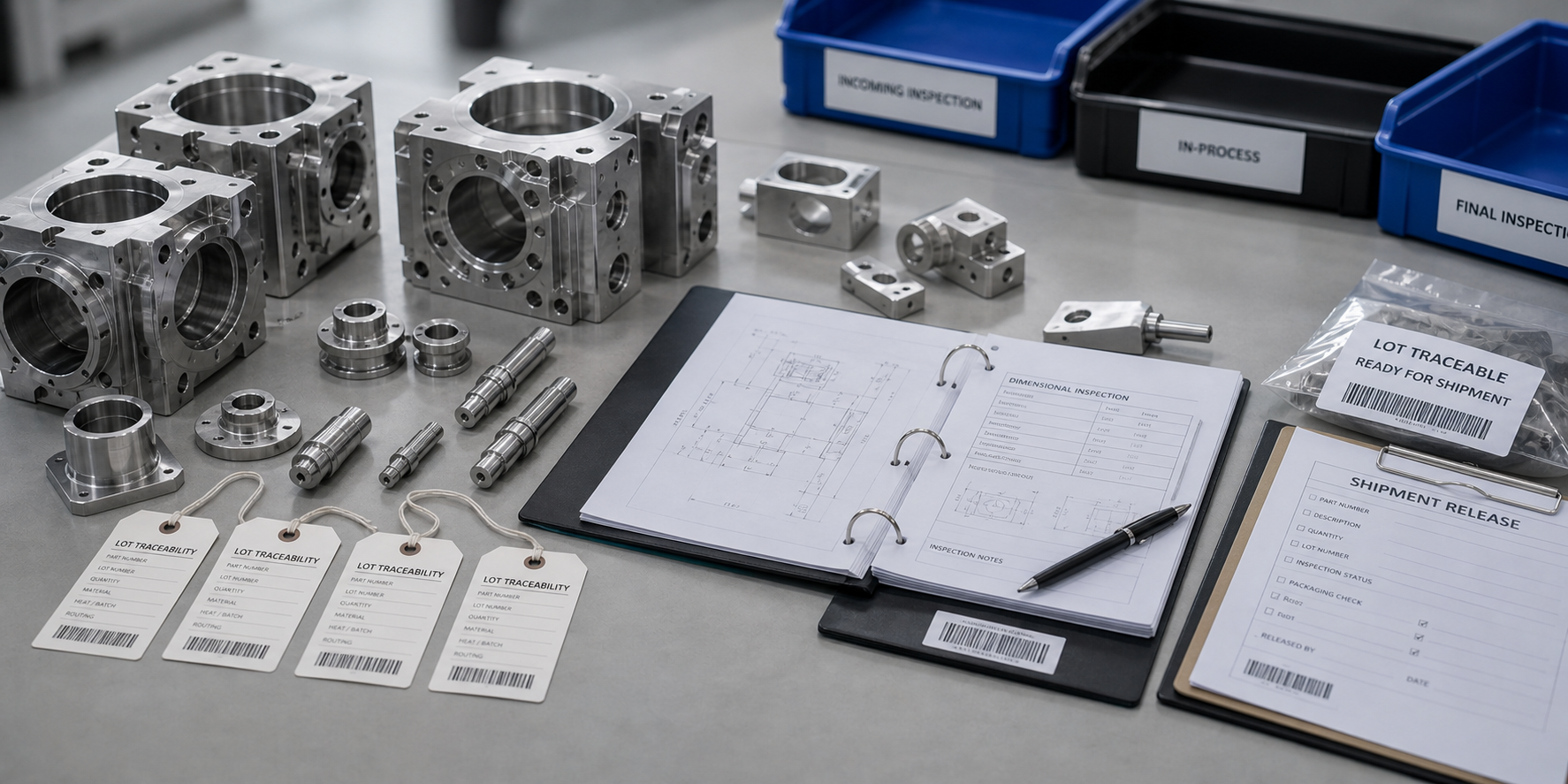
When an order needs more than dimensional acceptance, buyers usually need the material paperwork to stay connected to the parts through release. The documentation path below shows how material certificates, certificate of conformance records and lot-linked traceability fit into a custom CNC machining order.
If the project already requires cert-backed supply, define the document package in the RFQ upload workflow. If the order also needs feature-level approval, connect the requirement with quality control and inspection and first article inspection.
Document scope should be defined before production routing
Material documents are most useful when they are named before the order is routed. Once the buyer defines the alloy, part revision and certificate scope, the order package is easier to keep aligned from incoming material through machining, inspection and shipment release.
That matters especially for aluminum CNC machining housings, plates and fixtures, and for stainless steel CNC machining fittings, shafts and corrosion-resistant components where supplier approval often depends on document traceability.
What stays linked
Material source, heat number or lot number, part revision, work order, inspection output, packing label and release documents.
Why buyers care
The shipment package needs to support supplier approval, lot traceability and customer-side record retention.

Document matrix for material-backed machined parts
Different documents answer different release questions. Buyers usually need a quick way to decide which one belongs in the RFQ package.
| Document type | What it confirms | When it is usually requested |
|---|---|---|
| Material certificate / MTR | Material grade, heat or lot-linked source reference and the paperwork tied to supplied stock | Programs needing approved material grades, lot-backed sourcing or customer record support |
| Certificate of conformance | The finished lot is released against the submitted drawing and requested order package | Routine custom machined-part orders needing shipment paperwork |
| Dimensional report | Measured results for named critical dimensions or acceptance features | Tolerance-sensitive parts, mating features or higher-risk geometry |
| First article inspection | Early approval gate for a new part, revised part or controlled first piece | New launches, revision-sensitive builds or controlled first-run approval |
| Compliance statement | Order-package support for downstream RoHS or REACH requests when needed | Import workflows or customer packages requiring compliance support |
If the order combines material documentation with feature-level approval, define both the document package and the inspection scope in the same RFQ.
Traceability chain from stock to shipment package
The traceability path is easiest to understand when it is broken into the same operational references used during order release.
Where stronger document control usually matters most
What buyers should name in the RFQ
If the order needs document-backed supply, these items should be named before the quote is routed.
- Material grade and alloy family
- Required document type such as MTR, material cert, COC or combined package
- Part revision and lot-traceability requirement
- Critical dimensions that also need report support
- Finish, compliance or destination-country requirements
- NDA or controlled-document handling instructions
A clear RFQ note reduces document ambiguity and makes it easier to keep the material paperwork aligned with the released lot.
Quick difference: MTR vs COC
| Document | Primary purpose |
|---|---|
| MTR / material cert | Supports source material identity and lot-linked stock information |
| COC | Supports release of the finished lot against the submitted drawing and order package |
Frequently asked questions
What is the difference between a material certificate and a certificate of conformance?
A material certificate supports source material identity and lot-linked stock information, while a certificate of conformance supports release of the finished order against the submitted drawing and requested package.
When should buyers request material certs for machined parts?
Request them when the program depends on approved material grades, lot-linked supply, customer onboarding records or downstream documentation requirements.
What fields usually matter on a traceability label?
Typical lot-linked labeling stays aligned with the part identity, order reference, revision control and shipment package carrying the released parts and documents together.
Can document-backed orders also include dimensional or FAI records?
Yes. Many buyers request a combined package that includes material documentation plus dimensional support or first article outputs on new or tolerance-sensitive parts.
Does material traceability replace quality inspection?
No. Traceability supports the document path and lot logic, while inspection controls dimensional and release acceptance. Many buyers need both.
How should this requirement be submitted in the RFQ?
Upload the CAD file, name the material grade, define the requested document type and note any lot-traceability, compliance or related inspection requirements in the RFQ notes.