First Article Inspection for CNC Machined Parts
First article inspection is the approval step used when a machined part cannot move directly from setup to full release. Buyers use it to confirm the first good part before volume risk expands across the rest of the order.
The review path below explains when FAI is usually required, what the report package should contain and how first piece approval, partial FAI or PPAP-style approval should be defined in the RFQ. If the project already needs controlled first-piece release, use the RFQ upload workflow to submit the drawing revision, critical dimensions and report expectations up front.
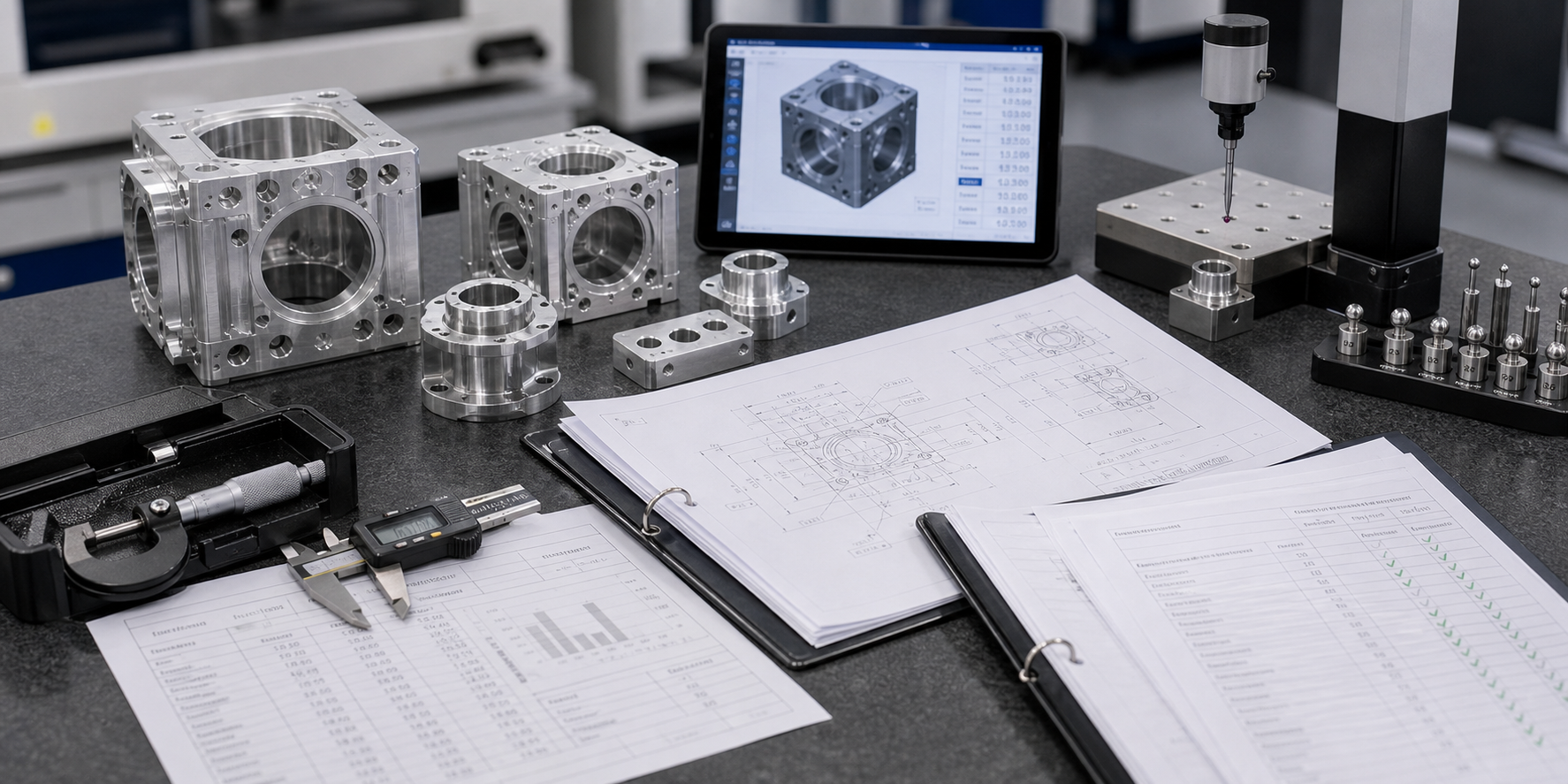
FAI is used to release the first good part before the run expands
Search results for this topic are rich in explanations but weak on supplier decision support. Buyers usually need three answers: when should first-piece approval happen, what should the report cover, and how should approval be tied to the released drawing revision before repeat supply begins.
That question comes up often on new housings and brackets under CNC machining services, on higher-accuracy builds under precision CNC machining, and on aluminum or stainless programs where a controlled first piece is required before the lot expands.
Why buyers add FAI
Validate setup, reduce launch risk and make sure the first approved part reflects the current revision before more parts are cut.
What it is not
FAI is not the same as routine final inspection. It is an approval gate for the first good part and the release path around it.
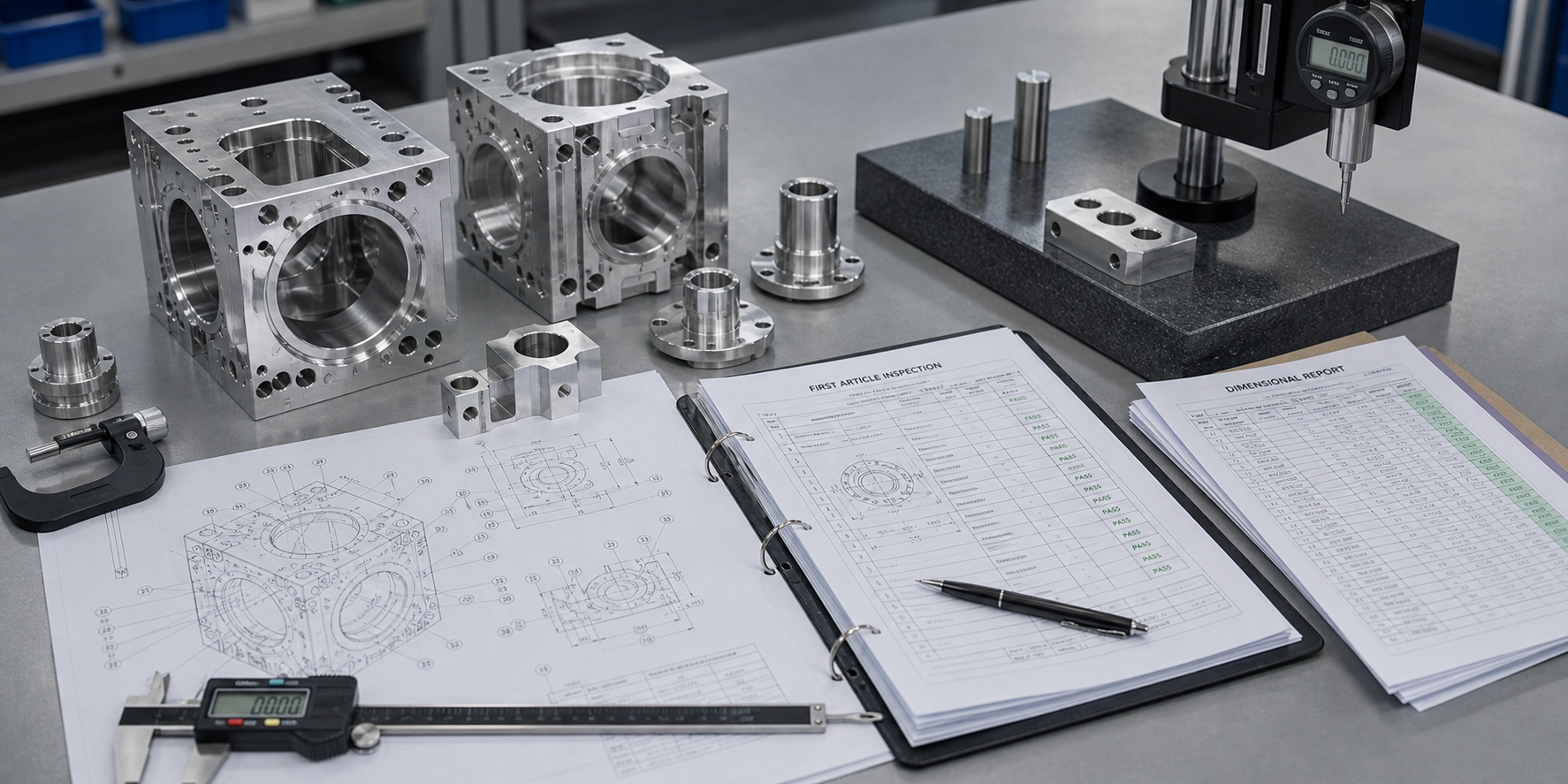
Which report should the buyer request?
Buyers should not have to guess whether they need FAI, a dimensional report or only a routine final release check.
| Report type | Best used for | What it should confirm |
|---|---|---|
| First article inspection | New parts, revised drawings, first-piece approval or controlled launch orders | The first approved part matches the drawing, revision and requested release package before broader production starts |
| Dimensional report | Orders where only selected features or critical dimensions need measured evidence | Named dimensions or tolerance-sensitive features meet the acceptance requirement |
| Final inspection release | Routine shipments after the process and part are already stable | The production lot is released against the order package before packing and shipment |
| FAI plus material documentation | Programs needing first-piece approval together with lot-linked source documents | The approved part, revision and requested document package stay aligned in one release path |
If the order also needs lot-linked source paperwork, connect the FAI requirement with material certificates and traceability instead of treating FAI as an isolated request.
First-piece release workflow
The approval sequence should be easy to scan. Buyers need to know whether the supplier can pause and verify the first good part before volume risk increases.
When FAI is usually worth adding
What a buyer usually expects in an FAI package
The exact form depends on the customer workflow, but the approval package usually needs to connect the first accepted part back to the submitted design intent. Some buyers reference AS9102-style FAIR expectations, including Form 1 part accountability, Form 2 material or process records and Form 3 characteristic results.
- Controlled part identification and current drawing revision
- Ballooned or clearly referenced dimension checkpoints
- Measured results for critical features and interfaces
- Material and finish references when they affect release
- Approval notes showing whether production can proceed
- Linked requests for material certs or broader inspection support when required
This is why FAI belongs near the RFQ stage instead of being added after parts are already routed.
What to submit in the RFQ for FAI-controlled parts
| RFQ field | Why it matters for FAI |
|---|---|
| Drawing revision | The report must match the exact revision being approved for release. |
| Critical dimensions | These define which features need visible measurement coverage. |
| Material and finish | The first piece should reflect the released material and surface requirement. |
| Requested report format | Some buyers need their own template or approval form. |
| Approval contact | The first approved part should have a clear release path before production continues. |
Frequently asked questions
What is first article inspection in CNC machining?
It is the review and approval step used to confirm that the first produced part matches the released drawing, key dimensions and requested order package before broader production continues.
When should buyers request FAI instead of only a dimensional report?
FAI is usually the better choice on new parts, revised drawings or controlled launch orders. A dimensional report is often enough when the design is already stable and only selected features need measured evidence.
What should an FAI report include?
Buyers usually expect the current drawing revision, referenced dimensions or balloon checkpoints, measured results for critical features and a clear release note showing whether the first piece is approved.
How many parts are needed for first article inspection?
That depends on the buyer workflow, but the approved first-piece sample and the released drawing revision should stay tied to the same approval decision.
Does FAI replace final inspection?
No. FAI approves the first-piece release path. Final inspection supports the released lot before packing and shipment. Many projects need both at different stages.
How should FAI requirements be submitted in the RFQ?
Upload the drawing or model, state the required revision, name the critical dimensions, define the report format or approval form and add any linked material or compliance requirements in the RFQ notes.
Release the first piece with the approval package defined from the start
Send the CAD model or drawing together with the part revision, critical features, requested FAI format, material notes and any linked document requirements. That keeps the first-piece release gate aligned before production routing begins.