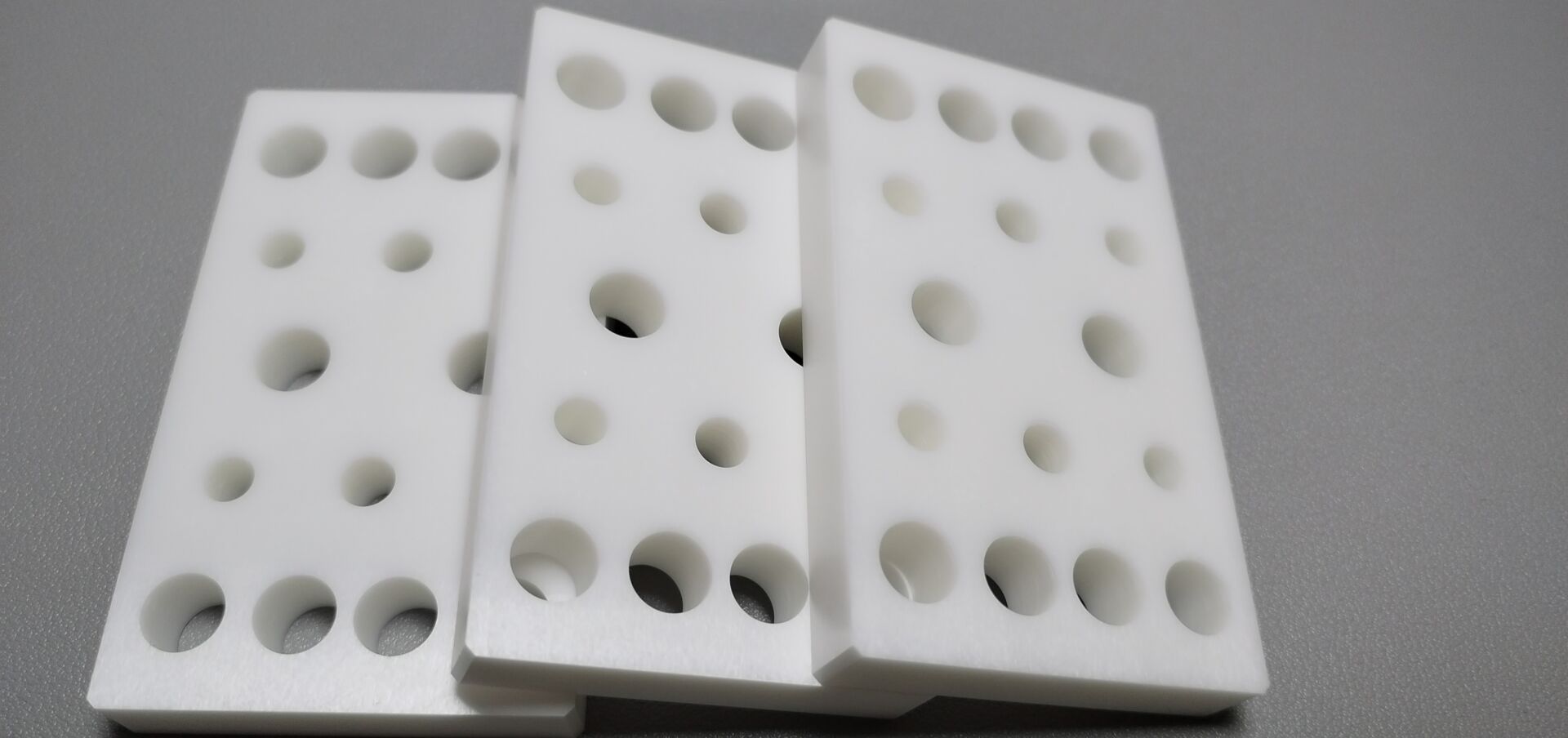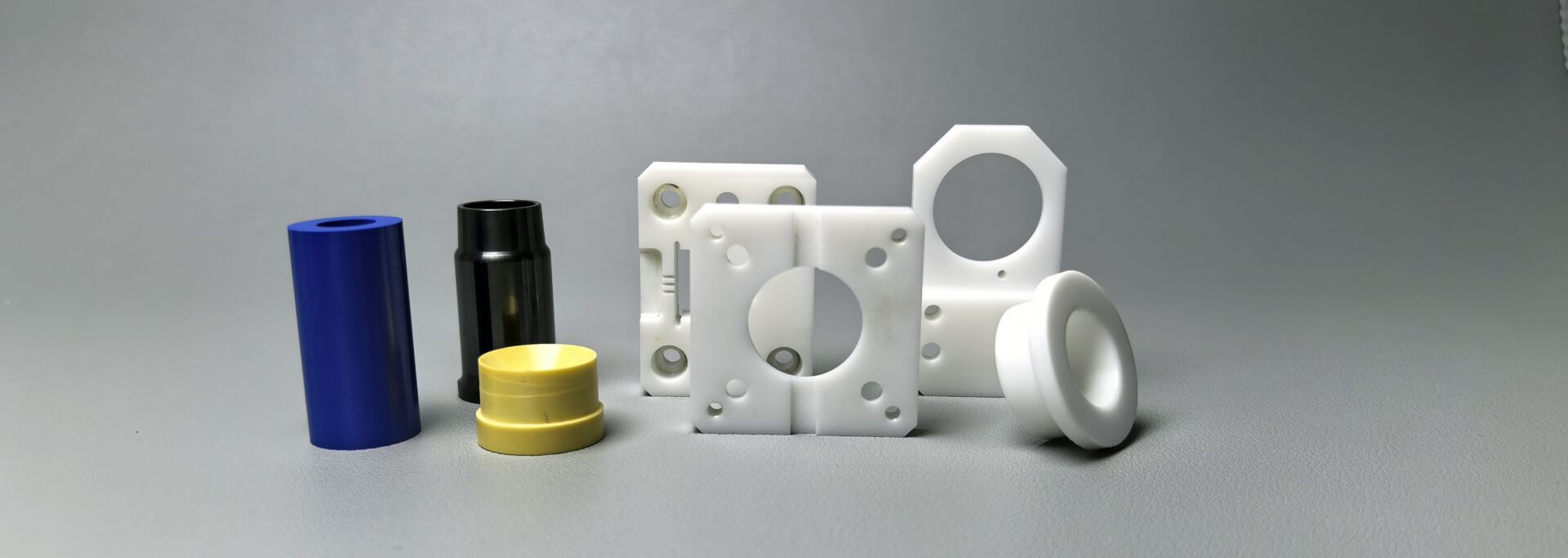
Robotics CNC Machined Parts for Automation Assemblies
Robotics and automation buyers are usually not sourcing generic machined hardware. They are sourcing parts that affect motion accuracy, weight balance, repeat assembly, cable routing, gripping interfaces and sensor alignment.
Review the common robot and automation component types that benefit from CNC machining, how material and finish choices affect assembly behavior and what should be included in a robotics RFQ. The content is aimed at teams comparing robotics CNC machining, automation machined parts and custom robotic parts machining support for pilot and repeat builds. When the drawing package is ready, continue to Upload CAD for Quote. For broader capability support, connect with CNC machining services, precision CNC machining and aluminum CNC machining.
Robotics RFQ essentials
- Part function: structure, joint, EOAT, fixture, motor mount, coupler or housing
- Critical fit points, parallelism, concentricity or hole-position requirements
- Material, weight target and finish requirement
- Assembly interfaces, cable clearances or fastening pattern notes
- Prototype, pilot run or repeat build quantity
- Any need for FAI, dimensional report or inspection support
| Primary CTA | Send robotics RFQ |
| Best fit | Robot builders, automation integrators and EOAT development teams |
| Linked pages | Precision machining, aluminum parts, inspection support and CAD upload |
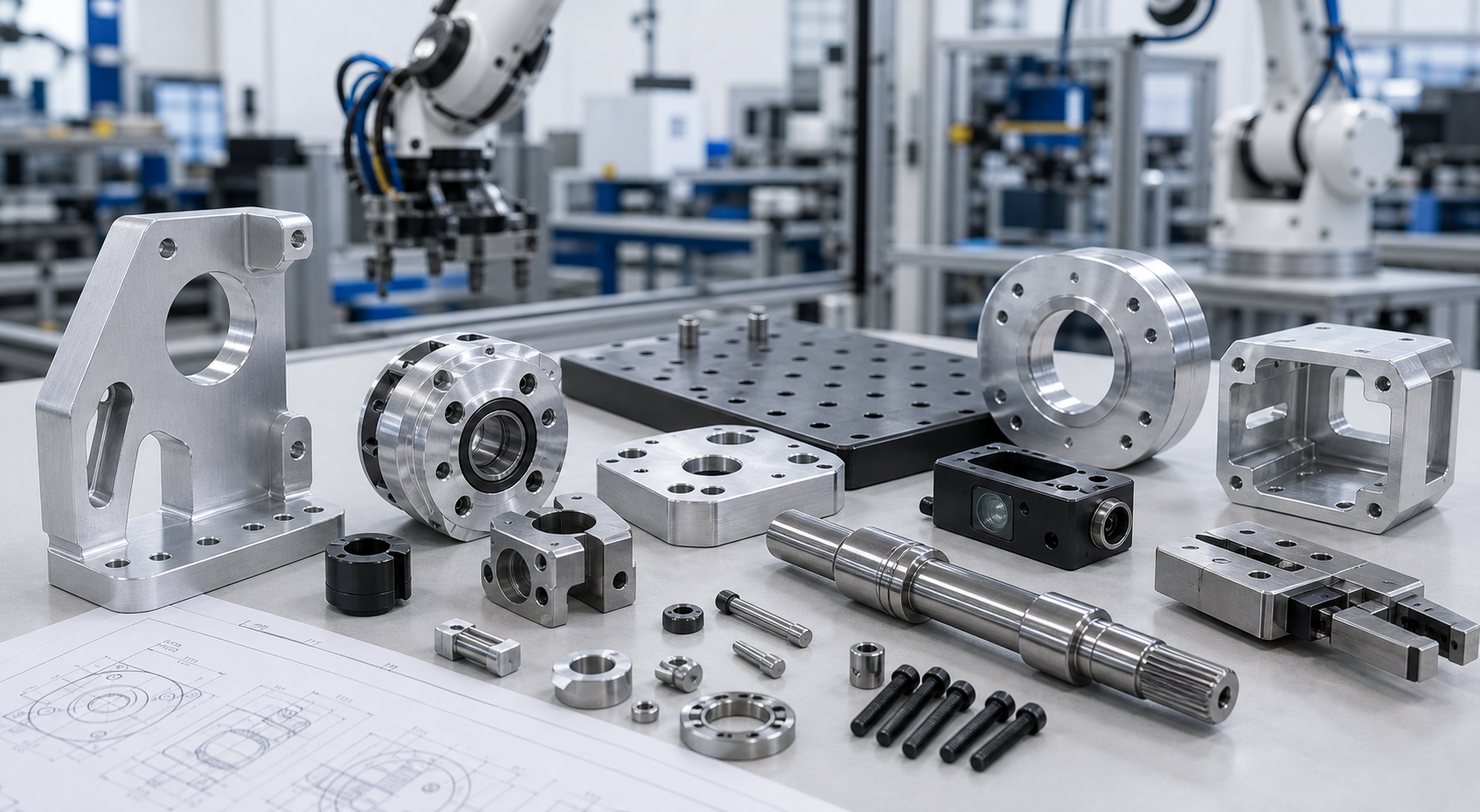
Robotics parts are judged by motion behavior and repeat assembly, not by shape alone
A useful robotics machining page has to explain how parts behave inside a robotic assembly. A bracket on a robot arm, a fixture in an automation cell and a joint housing in a motion module each carry different precision and material priorities.
For robotics RFQs, component function and assembly role are more useful than a generic machining-process list. Engineering and sourcing teams can use the structure below to decide what to upload, what to control and what to expect from prototype through repeat build.
- Structural parts often prioritize stiffness, mounting accuracy and reduced weight
- Motion-system parts depend more heavily on concentricity, bearing fits and repeat alignment
- EOAT and automation fixtures need controlled interfaces, tool access and fast changeover logic
- Assembly repeatability matters as much as part geometry once a robotics build moves past prototype
How robotics buyers usually compare a supplier
Google results increasingly mix robotics explainers with supplier landing pages. That means a serious robotics automation parts supplier has to answer both engineering and sourcing questions: what part family is being quoted, what fit controls matter, what material keeps the assembly stable and what documents are needed before repeat builds start.
| Buyer check | What usually matters | Why it changes the RFQ |
|---|---|---|
| Component role | Whether the part is structural, motion-facing, EOAT, sensing or fixture-related | It changes the tolerance stack, weight target and inspection burden |
| Assembly sensitivity | Hole position, concentricity, parallelism, datum strategy and bearing fits | It determines whether the quote is for generic automation machined parts or true fit-critical robotics hardware |
| Build stage | Prototype, pilot cell, engineering validation or repeat automation deployment | It changes recommended process flow, fixture strategy and document level |
| Surface and handling needs | Wear, cleaning exposure, cable contact, operator handling and visible finish quality | It affects material choice, finish path and masking decisions |
Typical robotics and automation components that benefit from CNC machining
The part family usually determines the right sourcing conversation. The matrix below separates structural robot parts, motion-system details, motor mounts, shaft couplers, EOAT hardware, sensor mounts and automation fixtures before RFQ preparation. It also helps buyers distinguish robot arm machined components from broader machined components for automation equipment.
| Component family | Typical role | Common materials | Key machining concern |
|---|---|---|---|
| Robot arm brackets and structural links | Support loads, connect axes and reduce deflection | Aluminum, steel, selected stainless grades | Weight-to-stiffness balance, hole position and flat mounting faces |
| Joint housings and bearing seats | Hold rotational interfaces and protect motion assemblies | Aluminum, steel, stainless steel | Bore accuracy, concentricity and mating-interface control |
| Motor mounts, shafts and couplers | Transfer torque, hold drive alignment and connect motion modules | Aluminum, steel, stainless steel | Concentricity, shaft fit, face squareness and repeatable drive alignment |
| EOAT plates, gripper brackets and tool mounts | Carry end tools, fixtures, grippers or sensor payloads | Aluminum, steel, stainless steel | Interface repeatability, weight control and fast mounting changes |
| Sensor mounts and vision brackets | Hold cameras, sensors and alignment devices | Aluminum and lightweight alloys | Stable geometry, mounting consistency and cable-clearance features |
| Automation fixtures and nest plates | Locate parts repeatedly for assembly, testing or handling | Aluminum, tool steel, steel plate | Repeat locating accuracy, dowel-hole control and wear considerations |
Material and finish choices for robotic assemblies
Robotics assemblies often force more tradeoffs than standard industrial hardware. Lower mass can help motion behavior, but rigidity, wear, cleaning exposure and cable protection still have to be balanced.
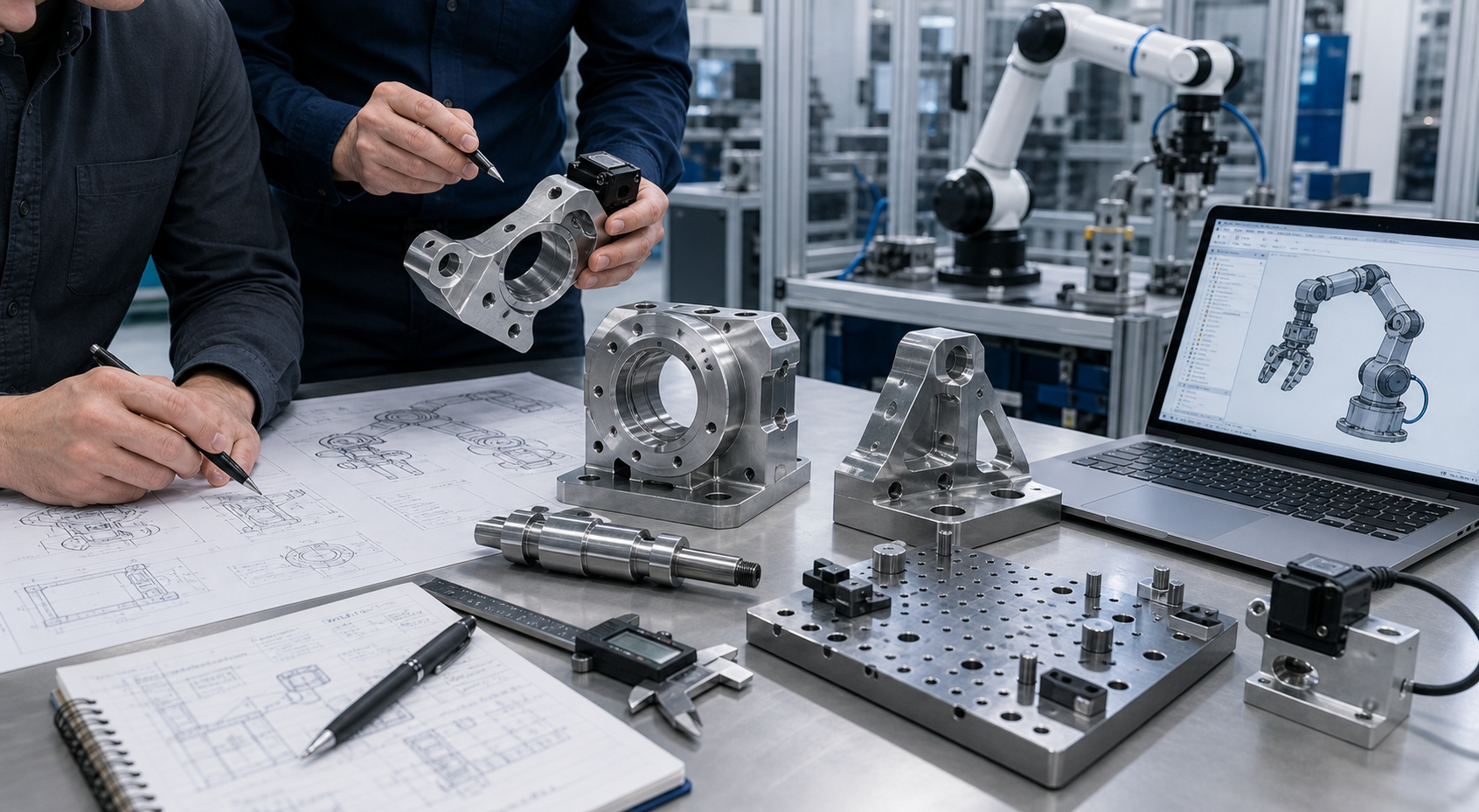
What matters most in robotics machining is usually the assembly stack
A robot or automation assembly can fail even when each part looks correct in isolation. The real issue is often accumulated misalignment across bores, fastener patterns, fixture interfaces, cable paths and sensor mounting planes.
- Joint and bearing interfaces usually depend on controlled concentricity and fit
- Multi-part fixture assemblies depend on repeat hole location and stable datums
- EOAT mounts often need fast changeover without losing repeat position
- Sensor brackets need both rigidity and predictable installation geometry
If the assembly already has critical interfaces, call them out clearly in the RFQ and request the right level of inspection support or first article inspection.
What to include in a robotics part RFQ
- CAD model or drawing with current revision
- Component role in the robot or automation cell
- Material, finish and any weight target
- Critical fit, bore, datum or mounting requirements
- Prototype, pilot run or repeat production quantity
- Any need for dimensional reports or material certificates
- Assembly notes, fastening pattern and destination country
A more complete robotics RFQ becomes a usable machining package instead of a generic custom-part inquiry. That is especially useful when the buyer needs CNC machined end effector parts or a mix of robot arm machined components and support hardware in one review cycle.
Sample robotics and automation applications
These are shown as sample application patterns so buyers can match their own assemblies quickly.
Related industry and capability paths
Robotics projects often share requirements with industrial equipment, electronics hardware, semiconductor fixtures and precision CNC machining. Use these paths when the drawing package fits a broader equipment build or a more specific operating environment.
Frequently asked questions
What robotics parts are commonly CNC machined?
Common examples include arm brackets, housings, bearing seats, shafts, gripper plates, fixture hardware, adapter blocks and sensor mounting components.
Why is aluminum so common in robotics assemblies?
Aluminum is often chosen because it helps reduce moving mass while still supporting good machinability and structural performance for many brackets, plates and housings.
Which tolerances matter most for automation parts?
The most important controls are usually tied to assembly function: hole location, bore size, concentricity, mounting-plane flatness, bearing fits and repeat locating features.
Can CNC machining support EOAT and gripper hardware?
Yes. EOAT plates, adapter blocks, brackets and fixture interfaces are common machining candidates because they often need custom geometry and controlled assembly interfaces.
What should be uploaded for a robotics RFQ?
Upload the drawing or CAD model together with component role, material, finish, fit-critical features, quantity and any inspection-document needs so the quote reflects the assembly function correctly.
Do robotics programs usually need FAI or dimensional reports?
Many do, especially when the parts affect motion alignment, fixture location or repeat assembly. The required review level should be defined at RFQ stage.
Send the part package with the assembly context
Robotics components should be quoted with assembly role, fit controls, material and quantity context. Use the RFQ page to submit the drawing package so machining, inspection and finish decisions can be aligned from the start.