Laser Cutting Services for Custom Metal Parts and Bend-Ready Blanks
Laser cutting metal parts is usually the right route when the part starts as flat sheet or plate and the buying decision depends on clean profiles, hole patterns, vent arrays, cosmetic edges, fast prototype blanks or follow-on bending. Great Material supports OEM buyers who need custom laser cut metal parts, precision laser cut parts and a practical metal laser cutting service without turning the request into a generic machining or full-fabrication inquiry.
Define materials, thickness, feature spacing, edge expectations and next-step operations before submitting an RFQ. This is also the stage where buyers prepare an online laser cutting quote for laser cut sheet metal parts, aluminum laser cutting parts or a stainless steel laser cutting service request. If the part also needs forming, hardware insertion or welded assembly, move into sheet metal fabrication services. If the geometry should be cut from solid stock rather than flat material, use CNC machining services.
Best fit for laser cutting
- Flat laser cut blanks, panels, brackets, mounting plates and vented covers
- Prototype and low-volume part families that may later move into forming or finishing
- Buyers comparing aluminum, stainless steel, mild steel or copper for cut-first geometry
- RFQs where edge quality, burr condition, cosmetic side and bend handoff must be defined early
- Projects that need a cleaner route than a broad all-process quote request
| Primary CTA | Upload DXF, STEP or drawing |
| Common follow-on path | sheet metal fabrication, surface finishing, inspection review |
| Typical part families | brackets, flat panels, enclosure blanks, vented covers and bend-ready plates |
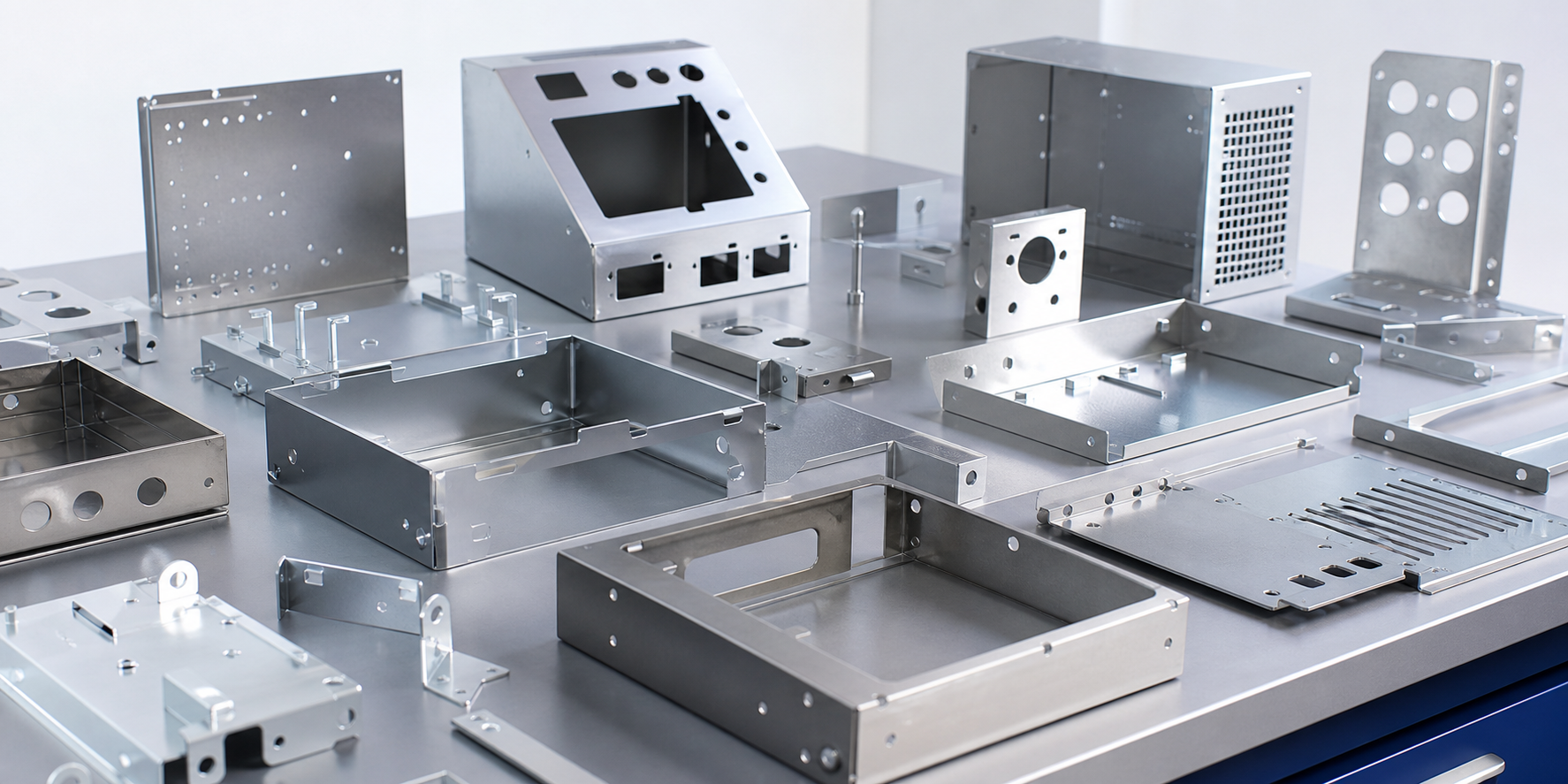
Choose laser cutting when the part value is in the flat profile, not the formed assembly
Laser cutting solves a narrower sourcing problem than full sheet metal fabrication. The buyer already knows the part starts as flat stock; what still needs deciding is material, thickness, feature sizing, edge condition, cosmetic side and whether the cut blank ends at shipment or continues into bending, welding or finishing.
A strong laser cutting service request needs more than a short process description. It has to help engineers define what the blank needs before it becomes a bracket, cover or enclosure shell. It also has to route the project correctly into fabrication, finishing or machined enclosure alternatives when the part family changes.
- Best for flat blanks, panels, cover plates, vented plates, brackets and face panels
- Strong for slot arrays, fastener holes, perimeter profiles and bend-ready geometry
- Useful when cost and speed matter more than deep 3D machined features
- Works well as the front end of a broader fabricated part route
What buyers usually need from a laser cutting supplier page
Most laser-cut part buyers already know the flat profile they need, but the quote still depends on material, thickness, edge expectations, bend handoff and finishing notes. The sections below make those cut-first decisions explicit before the RFQ is submitted, whether the project is a prototype blank order or repeat custom laser cut metal parts supply.
Choose the right metal and thickness for edge quality, stiffness, follow-on forming and finish compatibility.
Define holes, slots, hole size limits, slot width limits, narrow bridges and vent patterns so the blank is practical before it reaches production review.
Clarify burr direction, visible face, deburring scope and cut-edge appearance when the part ships as-cut or gets coated later.
Know when the blank ends at shipment and when it should move into bending, hardware insertion, welding or inspection documents.
Part family, material and route matrix
A better laser cutting page helps the buyer connect the part family to the correct quote path instead of stopping at a generic process summary. That is especially important when fiber laser routing, material type and follow-on forming decide whether the part should stay laser-only.
| Part family | Typical material route | Why laser cutting fits | Quote details that matter |
|---|---|---|---|
| Mounting plates and flat brackets | Aluminum, stainless steel or mild steel blanks; may continue into forming | Fast route for perimeter profiles, fastener holes and repeatable flat geometry in custom laser cut metal parts programs | Thickness, hole sizes, bend handoff, deburr requirement and visible side |
| Panels, covers and face plates | Aluminum and stainless sheet with cosmetic finishing options | Supports vents, screen openings, countersunk features and appearance-critical profiles | Cosmetic side, powder coat or brushed finish, edge cleanup and flatness expectation |
| Enclosure blanks and bend-ready shells | Cut-first blanks routed into bends, tabs and hardware after laser | Laser cutting defines the flat pattern accurately before the fabrication stage | Flat pattern file, bend notes, relief logic, hardware locations and coating mask areas |
| Conductive and specialty blanks | Copper, brass or selected specialty metals depending on part role | Useful for EMI covers, electrical plates, heat spreaders and custom flat components | Material grade, post-cut handling, burr sensitivity and finish protection requirements |
Edge quality, tolerance and feature planning
Many laser cutting pages mention tolerance only briefly, but the real sourcing issue is whether the cut blank is usable for the next operation. Edge condition, minimum feature logic, kerf planning, burr control and cosmetic expectations should be part of the RFQ from the start.
| Planning area | What to define in the RFQ | Why it matters |
|---|---|---|
| Cut edge expectation | As-cut, deburred or cosmetic-ready edge level with any burr control notes | Changes handling, post-processing and appearance acceptance |
| Feature sizing | Critical hole size targets, slot width limits, narrow bridges and vent arrays | Protects cut quality and reduces revision loops before release |
| Thickness route | Sheet or plate thickness tied to stiffness, finish and bend plan | Affects cut behavior, cost and whether the part should stay laser-only |
| Inspection points | Critical profiles, hole locations, mating edges and cosmetic faces | Keeps acceptance logic aligned with inspection review |

Laser cutting vs sheet metal fabrication vs machining
This comparison helps keep the page distinct from nearby capability pages and gives buyers a cleaner route to the right quote path.
| Decision factor | Laser cutting page | Sheet metal fabrication page | Machining page |
|---|---|---|---|
| Core geometry | Flat profiles, holes, slots, vents and cut blanks | Cut plus bends, hardware, welds and formed assemblies | Solid-stock features, bores, pockets and machined datums |
| Best quote stage | Cut-first flat-part sourcing and prototype blank review | Broader fabricated assemblies and bend-ready part families | Precision 3D parts and billet-based components |
| Main handoff | May route into forming or finishing | May include forming, hardware, welds and release inspection | May route into precision machining and document-heavy inspection |
| Use laser cutting when | The buyer needs fast flat parts with controlled profiles and edge planning | The buyer needs a broader fabricated component, not just the blank | The buyer needs 3D machined geometry rather than sheet or plate cutting |
Typical laser cut part families and follow-on operations
Flat brackets and support plates
Often start as cut-first profiles and later move into bends, countersinks, powder coating or passivation.
Related page: custom metal brackets
Panels, covers and vented blanks
Strong fit for cosmetic faces, vent patterns, screen openings and parts that may later become enclosure shells.
Related page: housings and enclosures
Electrical and conductive cut parts
Copper, brass and stainless blanks used for conductive plates, shields, contact panels and equipment hardware.
Related pages: aluminum, stainless steel
What to include in a laser cutting RFQ
Laser cutting quotes move faster when the file package defines more than perimeter shape. The bottlenecks are usually material ambiguity, unclear thickness, cosmetic side, post-cut cleanup and whether the part stops at a blank or continues into fabrication.
- DXF, STEP or drawing with current revision and any critical dimensions highlighted
- Material grade, thickness and any preference for aluminum, stainless steel or other metal
- Critical holes, slots, vent arrays or cut-edge areas that affect assembly or appearance
- Deburr level, cosmetic face, finish, quantity and target delivery window
- Whether the blank moves into bending, hardware insertion, welding or inspection documents after cutting
Laser cutting RFQ checklist
| Files | DXF, STEP or drawing, current revision, material and thickness |
| Build scope | Prototype or low-volume run, laser-only shipment or follow-on fabrication scope |
| Technical scope | Critical features, cosmetic face, deburring level, finish and bend handoff notes |
| Quality scope | Inspection points, document requests, packaging notes and destination country |
| Submission path | Upload CAD for quote and note post-cut operations directly in the RFQ |
Frequently asked questions
Upload the file with material, thickness and post-cut scope clearly marked
Laser cutting quotes move faster when the RFQ package defines the flat part, not just the outline. Send the current drawing or model through the RFQ page with material, thickness, cosmetic side, deburring level and any follow-on fabrication or finish requirements.