Wire EDM Services for Precision Contours in Hard and Tight-Tolerance Parts
Wire EDM is the right route when the part value is tied to sharp internal corners, narrow slots, hardened material, deep contour access or profile accuracy that is difficult to achieve efficiently with standard milling. The service supports OEM buyers, tooling engineers and precision-part sourcing teams that need wire EDM services, wire EDM machining and specialist wire cut capability rather than a generic machining quote.
Define contour-critical features, start-hole needs, material condition, skim-cut expectations and inspection priorities before submitting an RFQ. Buyers preparing wire cut EDM services, custom wire EDM parts or EDM cutting services RFQs should also call out whether the part stays EDM-only or combines with later machining. If the part should be milled from solid stock, go to CNC machining services. If the geometry starts as flat sheet and the buying decision is really about sheet profiles, use laser cutting services.
Best fit for wire EDM
- Hardened tool steel, carbide-compatible and contour-critical parts that are difficult to finish with milling alone
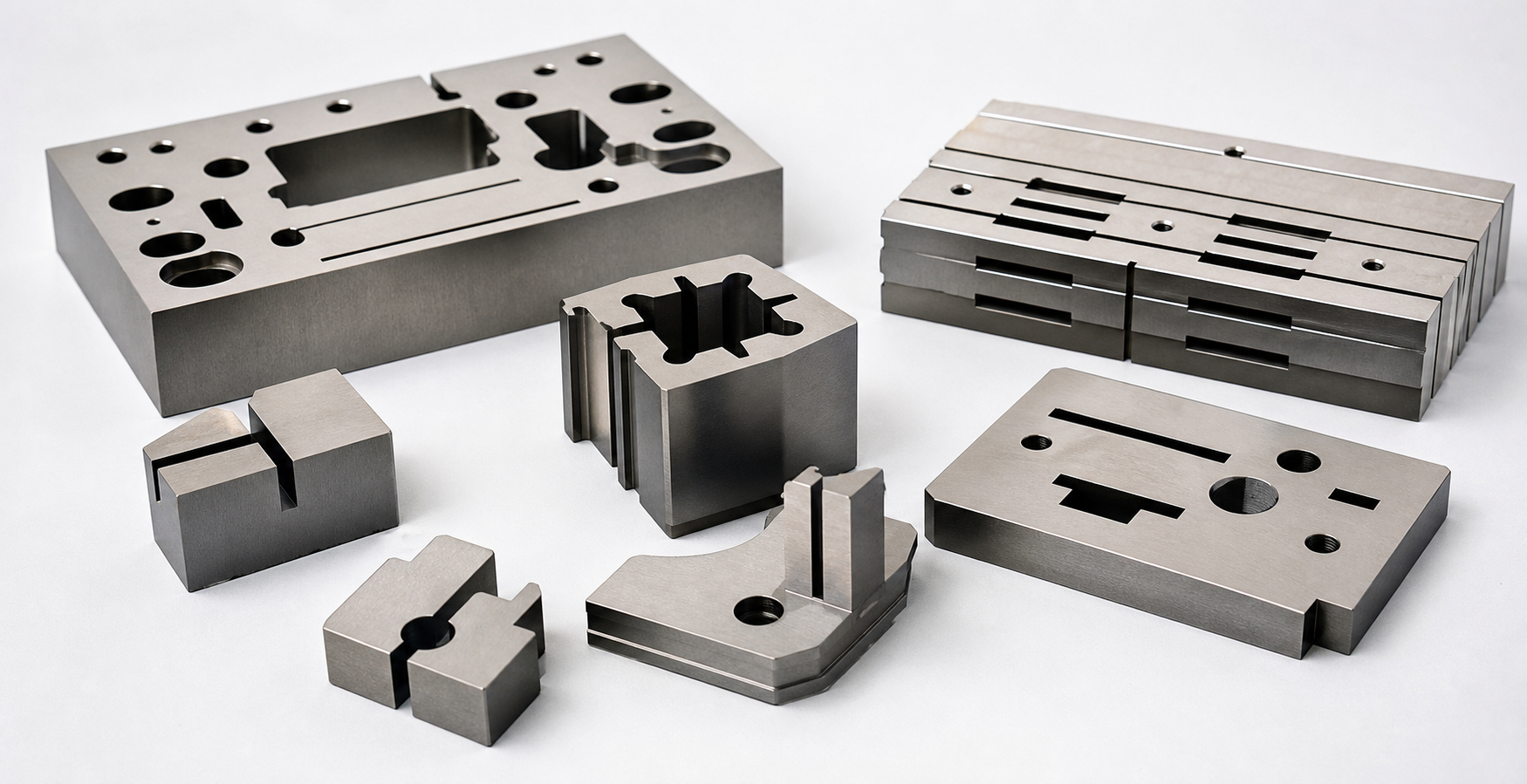
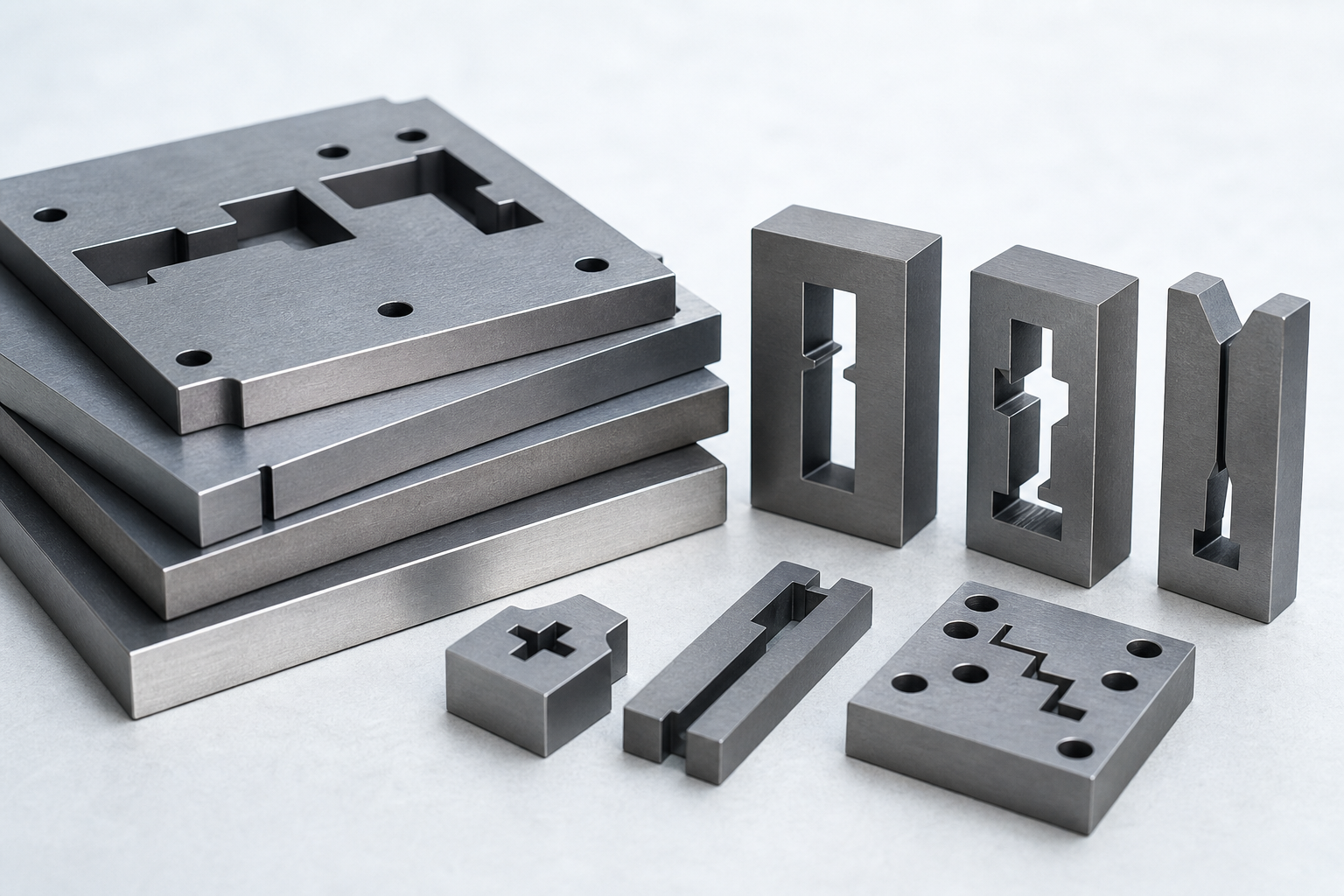
- Tooling inserts, wear plates, punches, dies, gauges, fixture details and profile-driven precision components
- Parts that need sharp internal corners, fine ribs, narrow slots or through-cut profiles in thick sections
- Prototype or low-volume orders where contour accuracy matters more than broad process bundling
- RFQs where critical corners, start holes, skim cuts and inspection points should be reviewed early
| Primary CTA | Upload STEP, PDF or EDM drawing |
| Related quality path | quality control, first article inspection, material certificates |
| Typical part families | tooling inserts, hardened plates, precision brackets, fixture details and contour-defined wear components |
Choose wire EDM when the geometry depends on the wire path, not just the machine envelope
Wire EDM answers a narrower manufacturing question than precision CNC machining. The buyer already knows the part is profile-driven, through-cut and sensitive to corners, slot width or hardness. What still needs deciding is whether wire EDM is the cleanest route for the contour, which material condition is involved, and what details should be fixed on the drawing before release.
A strong wire EDM page should therefore do more than describe the process. It should help the engineer decide when to keep the job in EDM, when to split it with milling, and how to prepare the RFQ so review time stays short. That is also why the page should connect directly to inspection and drawing submission rather than acting like a generic service summary.
- Best for through-cut profiles in hard or heat-treated materials
- Strong for internal corners, narrow slots, fine webs and contour-critical interfaces
- Useful when milling would leave tool-radius limits or excessive burr cleanup
- Works well with tooling, fixture, insert and precision-part RFQs that need clean geometry ownership
What buyers usually need from a wire EDM supplier page
Many EDM service pages mention precision without clarifying the route decision. Great Material makes that decision easier by tying material condition, contour access, start holes and inspection points to the quote scope for precision wire EDM, wire EDM for hardened steel and tight tolerance EDM machining work.
Clarify when hardened steel, wear-resistant alloys, titanium or profile-sensitive plates should move to wire EDM instead of conventional milling.
Define critical internal corners, wire path access, start holes and narrow-feature priorities before quoting the part.
Separate rough-cut assumptions from skim-cut expectations when the edge or fit condition matters in the final assembly.
Show when EDM should stay the primary route and when the job should hand off to milling, broader machining or inspection-heavy review.
Wire EDM capability matrix by part type and contour risk
The buyer should be able to connect the part family to the reason EDM is being chosen. This matrix makes that routing explicit.
| Part family | Typical material route | Why wire EDM fits | Quote details that matter |
|---|---|---|---|
| Tooling inserts and die details | Hardened tool steel, wear-resistant steel and profile-critical insert stock | Strong fit for sharp corners, precise profile transfer and hard-material contour work | Heat-treatment state, critical corners, skim-cut requirement and mating geometry notes |
| Precision plates, gauges and fixture details | Tool steel, stainless or specialty metals depending on wear and alignment needs | Useful when slot width, contour access or internal geometry makes milling less efficient | Datum strategy, start-hole locations, inspection points and surface-critical areas |
| Narrow-slot brackets and contour-defined components | Steel or stainless parts where edge geometry matters more than broad volume removal | Helps maintain fine profiles and difficult internal transitions without tool-radius compromise | Slot widths, functional cut faces, post-machining operations and burr expectations |
| Prototype hard-material parts | Tool steel, hardened alloys or difficult-to-profile production-intent stock | Supports low-volume validation when the contour itself is the feature under review | Revision control, sample quantity, critical fit zones and requested inspection output |
Materials and geometry conditions that usually point to EDM
The strongest routing signal is not just tolerance. It is the mix of material hardness, contour access and edge geometry. If the part is through-cut and the limiting feature is the profile itself, electrical discharge machining often becomes the cleaner sourcing path.
| Planning area | What to define in the RFQ | Why it matters |
|---|---|---|
| Material condition | Tool steel grade, hardness state, pre- or post-heat-treatment condition, brass wire assumptions and any wear requirements | Changes whether the part should stay EDM-first or combine with milling |
| Internal corners and narrow features | Critical corners, fine ribs, slots, reliefs, contour transitions and any burr-free edge expectations | Defines the value of the wire path versus a cutter-radius-limited process |
| Start-hole strategy | Whether entry holes are supplied, specified on the drawing or should be planned during review | Prevents review delays and keeps the contour route practical |
| Skim-cut and inspection scope | Critical fit surfaces, profile callouts, recast layer sensitivity and document needs such as FAI | Aligns contour quality expectations with the inspection plan |
Wire EDM vs CNC milling vs laser cutting
This comparison keeps the page distinct and helps buyers route the part to the correct quote path.
| Decision factor | Wire EDM page | CNC milling page | Laser cutting page |
|---|---|---|---|
| Best geometry type | Through-cut contours, sharp corners, narrow slots and profile-defined hard-material parts | 3D features, pockets, bores, faces and milled datums in solid stock | Flat sheet or plate profiles, holes and vent patterns for cut-first blanks |
| Main process value | Contour precision where tool radius or hard material makes milling inefficient | General precision machining and volumetric feature creation | Fast flat-part production and bend-ready blank generation |
| Typical materials | Tool steel, hardened steel, stainless and selected specialty alloys | Aluminum, steel, stainless, brass, copper and many billet materials | Aluminum, stainless, mild steel and conductive sheet materials |
| Choose this route when | The buyer needs the contour itself to be the controlled feature | The buyer needs general machining rather than wire-path geometry | The part begins as flat material and the job is sheet-first sourcing |
Typical wire EDM part families and sourcing paths
Tooling inserts and die profiles
Often chosen when corner fidelity and hardened-material profile control matter more than broad stock removal speed.
Related page: precision CNC machining
Fixture details and precision plates
A strong fit for alignment features, contour-defined cutouts, gauges and repeat parts that need clean profile ownership.
Related page: industrial equipment parts
Narrow-slot and contour-sensitive components
Useful when profile geometry or slot access is the limiting factor and the part is not a flat-sheet commercial cutting job.
Related pages: custom metal brackets, laser cutting services
What to include in a wire EDM RFQ
Wire EDM review moves faster when the file package explains why the contour matters. The delays usually come from missing start-hole notes, unclear material condition, undefined critical corners and incomplete inspection priorities. That is especially true for EDM prototype parts and tight tolerance EDM machining reviews.
- Current STEP or drawing revision with the contour-critical areas clearly called out
- Material grade and hardness state, especially for tool steel, titanium or heat-treated parts
- Any required start-hole locations, skim-cut expectations, recast layer concerns and functional cut faces
- Critical corners, slot widths, mating geometry and inspection-document requirements
- Prototype quantity, target timing and whether the job stays EDM-only or hands off to other machining steps
Wire EDM RFQ checklist
| Files | STEP or drawing, current revision, material grade and thickness / block condition |
| Contour scope | Critical corners, slot widths, fine ribs, start-hole notes and skim-cut expectations |
| Build scope | Prototype or low-volume run, EDM-only scope or combined machining plan |
| Quality scope | Inspection points, FAI, document requests and destination country |
| Submission path | Upload CAD for quote with contour-critical notes included directly in the RFQ |
Frequently asked questions
Upload the drawing with critical corners, start holes and inspection points marked
Wire EDM quotes move faster when the contour-critical information is already visible in the RFQ package. Send the current file through the RFQ page with material condition, critical geometry, document needs and any combined-machining notes.