Parts Gallery / Shafts & Turned Parts
Custom CNC Turned Shafts for Stepped Threaded and Precision Bearing Journal Parts
A shaft is rarely purchased as a simple round part. Buyers usually care about what happens along the shaft: bearing seats, seal lands, shoulders, threads, grooves, keyways, cross-holes, surface finish and how those features stay aligned after turning and any secondary operations.
Review quote-ready custom shafts and turned parts for motor, pump, drive, automation and mechanical assemblies. Compare common shaft families, when a part stays within CNC turning services and when it moves into milling, live-tooling or grinding, how material and finish affect performance and what should be uploaded when you need a similar shaft quoted. For rotating shafts, the review should also define fit class targets such as h6, h7 or k6 when specified, datum relationships, TIR / runout limits, surface finish on journals and whether balance or vibration risk changes the inspection plan. For broader scope, connect with custom metal parts, precision CNC machining and RFQ support.
Shaft RFQ essentials
- Shaft role: motor, drive, pump, roller, idler, lead, linkage or custom rotating element
- Critical diameters such as bearing journals, seal lands, fits, threads and shoulder stack-up
- Any keyway, flat, cross-hole, retaining groove, spline or wrench feature added after turning
- Material, hardness target, finish and whether the part stays turned, ground or balanced
- Quantity stage: prototype, pilot run or repeat supply
- Any need for FAI, runout / TIR checks, datum-based dimensional report or inspection support
| Primary CTA | Upload shaft drawing |
| Best fit | Buyers sourcing feature-rich shafts for OEM assemblies, not generic bar stock |
| Related pages | Turning, steel or stainless materials, inspection and RFQ support |
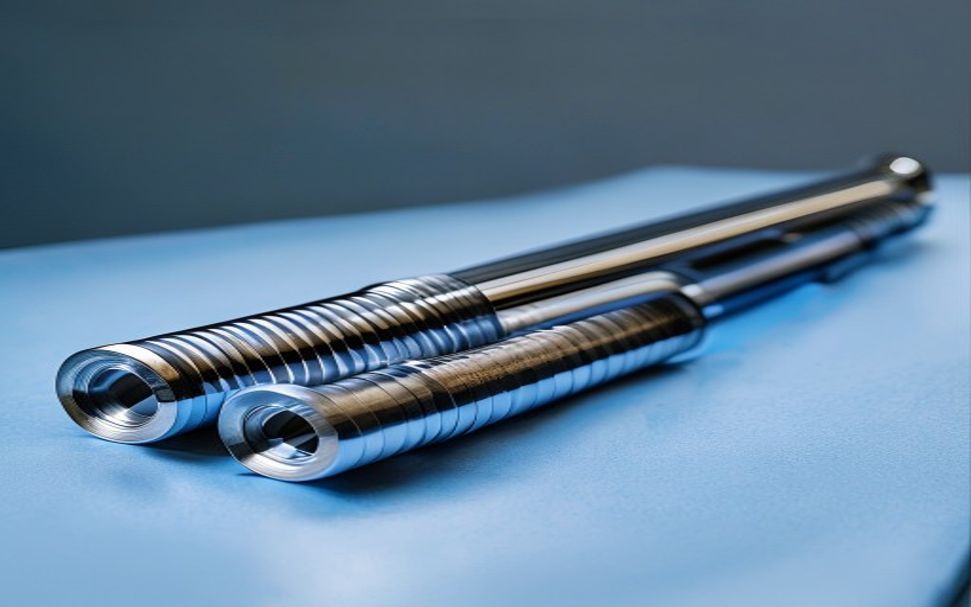
A shaft page should help buyers read functional features, not just outside diameter
Shaft sourcing is more specific than broad turned-part procurement. Shaft buyers usually need to understand how several diameters relate to each other, where the load rides, where the seal touches, how the shaft is driven and which surfaces define the assembly fit.
That changes the quote logic. A shaft with two journals, a thread and a chamfer is very different from a stepped motor shaft with a keyway, a retaining groove and a ground bearing seat. The shape still starts with turning, but the finished shaft often depends on secondary operations and a clearer inspection plan.
- Journals and fit diameters usually drive the inspection burden more than overall length
- Features like keyways, flats and cross-holes often move the part into live tooling or milling
- Long slender shafts need length-to-diameter review, straightness and support strategy, not only a turned profile
- Seal lands and bearing seats often demand a better finish than non-functional sections
Typical custom shaft and turned-part families
Shaft buyers usually want to place their part into a familiar family first. That makes the quoting discussion more exact and helps identify whether the part stays in turning or needs added operations.
| Shaft family | Typical role | Common materials | What usually matters most |
|---|---|---|---|
| Stepped drive shafts | Transfer torque between couplings, gears, pulleys or rotary elements | Alloy steel, carbon steel, stainless steel | Journal relationships, shoulder locations, keyways, datum plan, TIR and concentricity across diameter changes |
| Motor and encoder shafts | Support motor output, sensor alignment or controlled rotary transmission | Steel, stainless steel, selected aluminum | Runout, end geometry, flats, threads and assembly-facing datums |
| Pump and seal shafts | Carry rotating elements through wet or sealed assemblies | Stainless steel, hardened alloy steel | Seal-land finish, corrosion resistance, bearing seats, groove accuracy and surface finish target such as Ra when specified |
| Threaded and retention shafts | Provide clamping, axial retention or adjustable mounting within the assembly | Carbon steel, stainless steel, aluminum for lighter-duty builds | Thread class, shoulder timing, groove positions and burr-free edge condition |
| Linear and guide shafts | Guide slides, rollers or moving carriages in automation equipment | Hardened steel, stainless steel | Straightness, finish consistency, wear surfaces, L/D deflection risk and post-turning grinding logic |
When turning alone is enough and when the shaft needs secondary operations
A strong shaft quote should separate profile turning from the features added after turning. That is where many broad turned-parts pages stay too vague.
| Process route | Best fit | Typical features |
|---|---|---|
| Turning only | Simple journals, shoulders, chamfers, grooves and threaded ends that stay rotationally symmetric | Stepped diameters, fillets, retaining grooves, standard threads |
| Turning + live tooling | Shafts needing milled or drilled features indexed to the turned body | Flats, keyways, cross-holes, wrench features, simple slots |
| Turning + secondary milling | Longer or more complex shafts where indexed features or tight positional relationships need added control | Deeper keyways, bolt-circle features, multiple flats, complex end machining |
| Turning + grinding | Fit-critical or wear-critical shafts where journals need tighter size, finish, TIR or runout control | Bearing seats, guide surfaces, high-finish seal lands, hardened shaft sections, balance-sensitive rotating zones |
If the part needs better fit or finish on only a few diameters, note those zones clearly on the drawing so the route can stay efficient instead of over-processing the full shaft.
Shaft features that change the manufacturing route
A drawing review should separate simple turned geometry from the features that add setup, fixturing or inspection work.
Material and finish logic for custom shafts
Material choice changes how a shaft handles torque, corrosion, wear, weight and secondary finishing. Shaft programs usually need a functional answer instead of a simple material list.
- Steel CNC machining is often selected for stronger drive, transmission and wear-focused shafts where stiffness matters more than corrosion resistance
- Stainless steel CNC machining is common where shafts run in corrosive, washdown or fluid-exposed environments
- Aluminum shafts are more likely in lighter-duty motion or fixture systems where weight and machinability matter more than wear resistance
- Surface finishing should match corrosion exposure, handling, cosmetic need and whether journals or threads require masking or protection
If the shaft includes seal contact, bearing fits or sliding wear surfaces, identify those zones early so material, hardness and finish are selected around the actual function.
Shaft DFM and cost drivers
- Very long slender shafts that need L/D ratio review and support against deflection during turning
- Several stepped diameters with tight relationships but no clear datums
- Deep or wide keyways that remove stiffness near fit-critical journals
- Cross-holes or milled features placed near shoulders, threads or thin sections
- Fit-critical journals combined with cosmetic requirements across the whole part
- Inspection requirements such as first article inspection, datum-based runout / TIR checks, balance notes or quality-control review
A shaft quote improves when the drawing marks which diameters are functional fits, which surfaces are reference-only and which features are added after turning. That helps route the part without building excess inspection into every section.
Related shaft, housing and machining paths
Shaft projects often connect to nearby machined-part families and process decisions. Use these paths when the same assembly also includes housings, brackets, fixtures, material choices or inspection requirements.
Sample shaft application patterns
These are shown as sample shaft patterns so buyers can match their own component type quickly.
Frequently asked questions
What types of custom shafts are commonly CNC turned?
Common examples include stepped drive shafts, motor shafts, threaded shafts, pump shafts, roller shafts, guide shafts and retention shafts with grooves or keyways.
When does a shaft need milling after turning?
A shaft usually needs live tooling or milling when it includes keyways, flats, cross-holes, slots, wrench features or end details that are not rotationally symmetric.
Which materials are common for custom machined shafts?
Steel and stainless steel are the most common choices. Aluminum appears more often in lighter-duty assemblies where lower weight and easier machining are more important than wear resistance.
What tolerances usually matter most on a turned shaft?
The highest attention usually goes to bearing journals, seal lands, shoulder relationships, thread starts, straightness, concentricity, TIR / runout and any stated fit class such as h6, h7 or k6 rather than the non-functional sections of the shaft.
When is grinding added after turning?
Grinding is commonly added when a shaft has fit-critical journals, hardened wear surfaces, low-runout bearing seats or finish-sensitive contact zones that need tighter size and surface control than turned-only processing provides.
What should be uploaded for a shaft RFQ?
Upload the drawing or 3D model together with material, quantity, critical fit diameters, datum references, TIR / runout limits, secondary features, finish requirements, balance notes and any inspection-document needs so the route can be matched to the actual shaft function.
When should balance or vibration be discussed for a shaft?
Balance and vibration should be discussed when the shaft rotates at higher speed, carries uneven features, spans a long distance between supports or has journals that must stay aligned to a shared datum during assembly.
How should long shaft length-to-diameter concerns be quoted?
Provide overall length, smallest diameter, support or center features, straightness requirement, runout datum and whether grinding or stress-relief is expected after rough turning.
Upload the shaft drawing with the fit-critical zones marked
Custom shaft quotes move faster when the package shows journals, keyways, grooves, threads, quantity stage, datum references, TIR / runout limits, fit class targets, balance notes and any fit-critical or finish-critical zones. Use the RFQ page to submit the shaft package so turning, secondary operations and inspection can be reviewed together.