Buyer support resource

CNC Machining FAQ for Quotes, Materials and Production Planning

Most buyers do not start with one problem. They start with a stack of smaller questions about files, tolerances, materials, finishes, lead times, inspection reports and whether the part should go to milling, turning or another route. This page answers those questions before the RFQ is sent.

Use this FAQ hub to shorten the pre-quote cycle for custom machined parts. If the project needs deeper DFM or tolerance review, move into the design guide, the tolerance guide or submit the package through Upload CAD for Quote.

What this page answers

  • What CNC machining covers and when it is the right route
  • What files and notes make quoting easier
  • How tolerances, finishes and materials affect the build path
  • When milling, turning or 5-axis review is the better fit
  • What documents can be requested for quality and traceability
Best fit Question-led evaluation before a machining RFQ is released
Primary CTA Contact engineering support
Related pages CNC machining services, precision machining, quality control
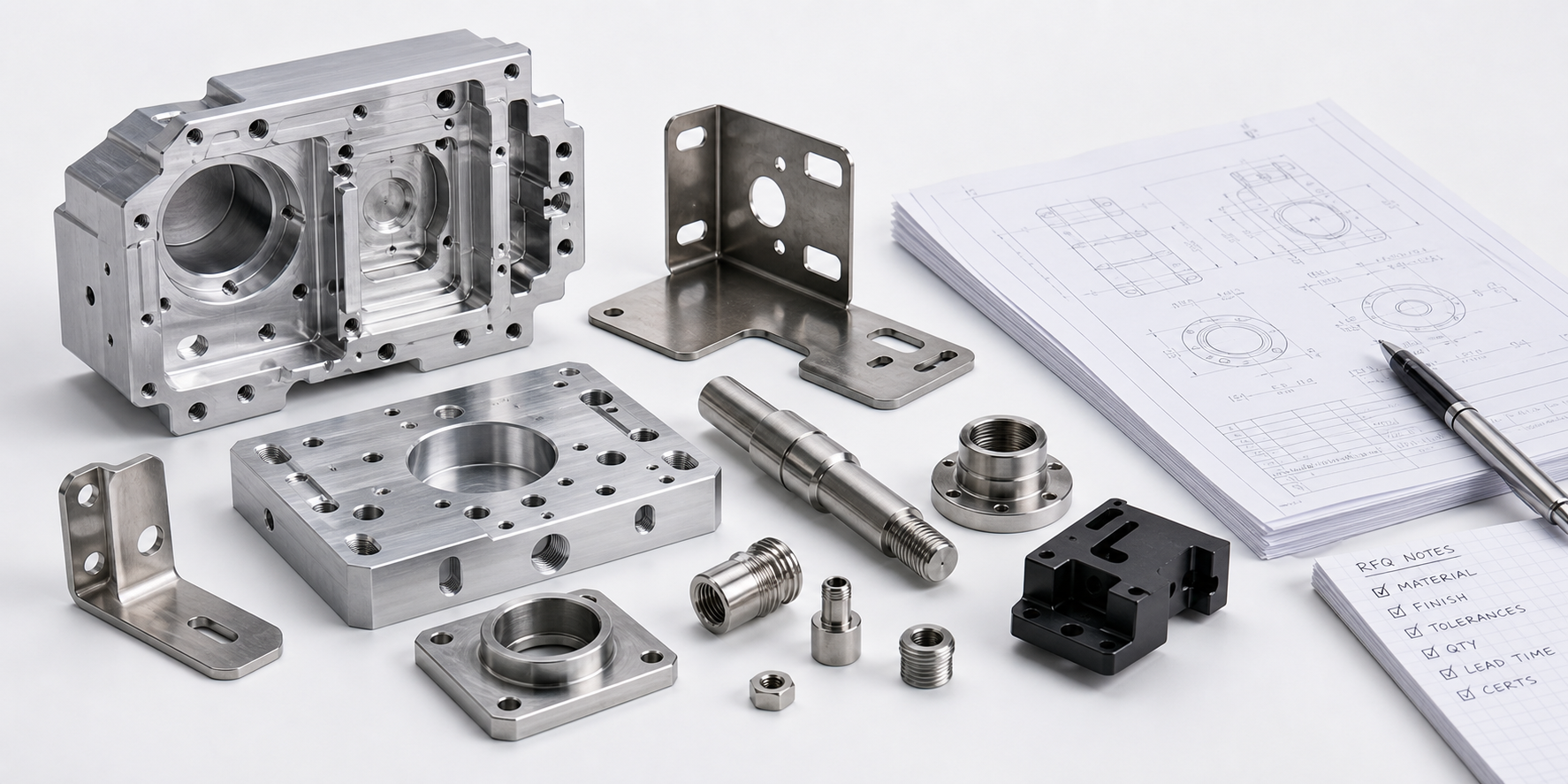
machined aluminum and stainless steel parts arranged beside an RFQ drawing package

CNC machining questions usually cluster around quoting, geometry and proof

The common buyer questions are rarely isolated. A tolerance question affects process choice. A finish question affects masking and final inspection. A material question can change both cost and lead time. A file-format question can slow down the entire RFQ path before anyone even reviews the part.

That is why this page is structured as a support hub rather than a generic blog. It answers the fast questions, then points users toward the right deeper page such as CNC milling services, CNC turning services, surface finishing or material certificates and traceability.

  • Useful for OEM buyers, engineers and supplier-qualification teams
  • Designed to reduce back-and-forth before submitting the RFQ package
  • Built to hand off into the right service, quality or RFQ page

Quick-answer matrix for the most common CNC machining questions

This matrix is the fast path. It lets a buyer scan the question category, understand why it matters and move to the correct next step without reading the full page top to bottom.

Question category What the buyer is really asking Why it matters Next step
Files and RFQ package Which files, revisions and notes are needed for a useful quote Weak input creates quote delays and avoidable engineering questions Upload CAD for Quote
Tolerances How close the process can hold and which dimensions need special attention Tolerance level changes route, cost, inspection and lead time Tolerance guide
Materials and finishes Which alloy and finish route best match the part environment Material and finish selection affect machining behavior and final part function Surface finishing and material pages
Process fit Whether the part belongs in milling, turning, 5-axis or another route Wrong process assumptions distort both quote and manufacturability review CNC machining services
Quality documents Which inspection reports, FAI or certs can be requested Document requirements should be known before quote release Quality control and FAI

FAQ categories

Quotes and filesWhat to upload, what to note and what slows review.
Process selectionWhen to choose milling, turning or multi-axis review.
Materials and finishesHow alloy and surface treatment shape the route.
TolerancesWhat dimensions matter most and when cost starts to rise.
Lead times and quantitiesHow prototype, pilot and repeat supply differ.
Quality documentsWhen to ask for certs, reports and traceability support.

Common questions about quotes, files and process fit
CNC machining is the right route when the part depends on controlled metal removal from solid stock to create precise faces, holes, bores, threads and functional geometry. It is commonly used for custom housings, brackets, shafts, fixtures and low-volume production parts where dimensional control matters.
The strongest RFQ package includes the current 3D model, a 2D drawing for critical notes, the target material, finish requirements, quantity and any requested inspection documents. If revisions exist, clearly identify the latest release set.
Parts dominated by prismatic faces, pockets and multiple machined planes usually lean toward milling. Parts dominated by rotational geometry, diameters, shoulders and axial features usually lean toward turning. Some parts use both routes.
Ask for 5-axis review when the part has multi-face geometry, complex access conditions or tight positional relationships that would be inefficient or risky with repeated re-fixturing. That usually routes into 5-axis CNC machining.
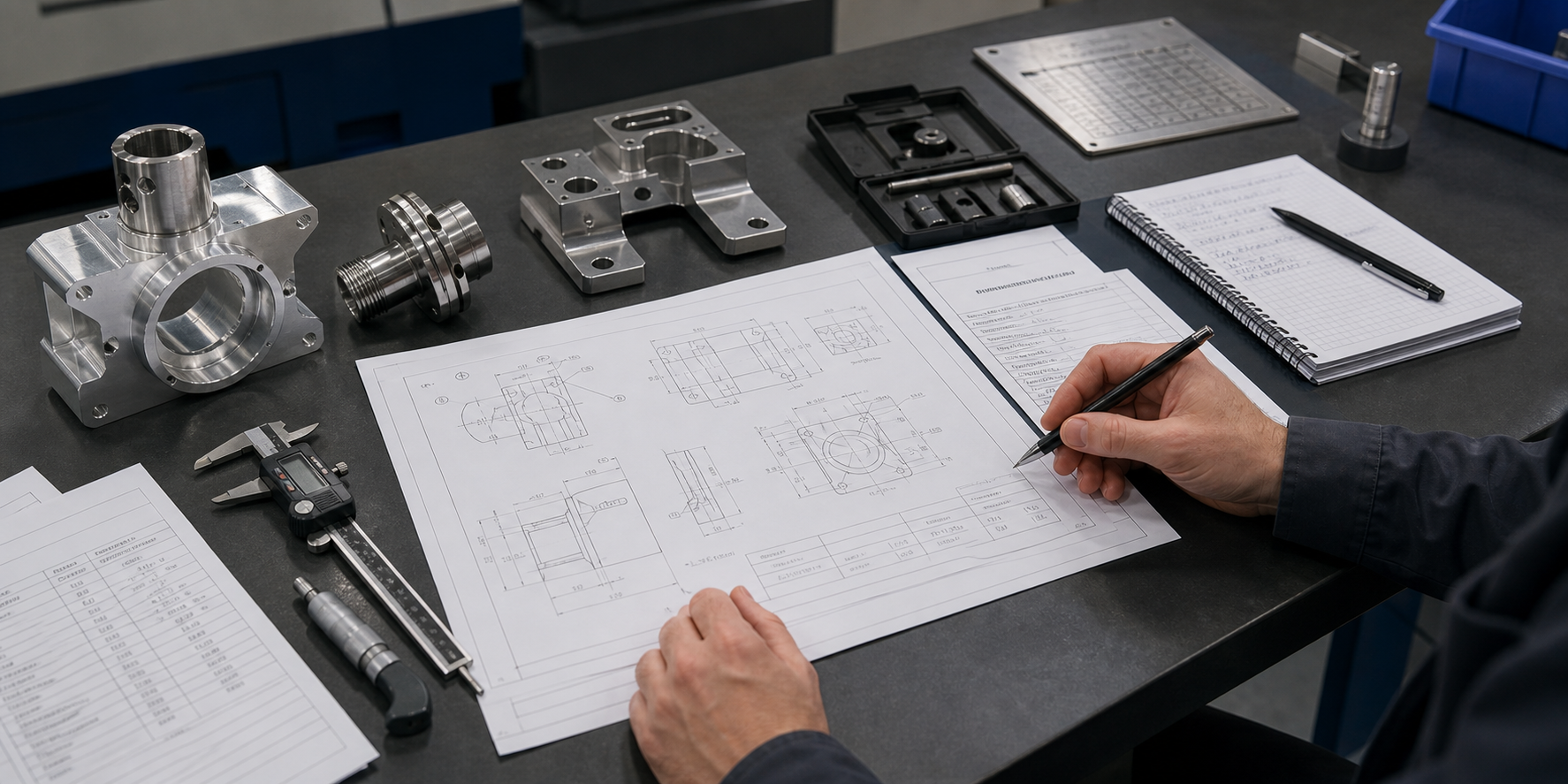
engineer reviewing machined part questions with drawings, materials and inspection notes

Common questions about materials, tolerances and finishes

Common choices include aluminum, stainless steel, steel, brass, copper and titanium, along with specialty alloys for specific environments. The right material depends on strength, corrosion, weight, conductivity and finish requirements.
Tolerance capability depends on geometry, size, material and inspection method. General machining tolerances and special critical dimensions should be separated clearly. If the project depends on tighter control, use precision CNC machining and the tolerance guide during review.
Yes. Anodizing, passivation, powder coating, blasting and other finishes can affect masking, appearance, corrosion behavior and some fit-sensitive regions. Finish selection should be known before quote release whenever possible.
Yes. Some OEM projects contain machined interfaces plus formed or fabricated components. In those cases the RFQ should define which parts belong to machining, which belong to sheet metal fabrication or welding and assembly, and how the documents map to each item.

RFQ readiness checklist

Files Model, drawing and current revision status
Technical scope Material, finish, critical dimensions and process notes
Commercial scope Prototype or low-volume quantity, target timing and destination
Quality scope Inspection report, FAI, certs or traceability requests
Submission path Upload CAD for Quote

Common questions about lead times, quantities and quality documents

Lead time depends on part complexity, quantity, material, finish route and document requirements. Prototype runs, repeat orders and mixed-process packages do not move at the same speed, so timing should be discussed with the RFQ package rather than assumed from a generic number.
No. CNC machining is commonly used for prototypes, pilot builds, bridge quantities and repeat low-volume supply. The right route depends on part complexity, quantity bands and whether the project is still changing or already stable.
Yes. If the project needs first article inspection, dimensional reports, material certificates or traceability support, those requirements should be stated before quoting so the review path and final documentation are aligned.
They can. Additional inspection scope, report formatting, traceability controls and finish-related checks all add work to the release path. It is better to define them early than add them after pricing has started.

Where to go next when the question becomes specific

General capabilityStart with the full service scope and process overview.CNC machining services
Tolerance depthUse this when the question is about critical dimensions and inspection.Tolerance guide
Design and DFMUse this when the drawing still needs engineering cleanup.Design guide
Submit the packageUse this when the RFQ is ready for review.Upload CAD for Quote

Still have a CNC machining question that affects the quote?

Bundle the part files, material intent, finish notes, quantity and any inspection-document requests into the RFQ package so the engineering review starts with the right context.