Surface Finishing for CNC Machined Parts
Surface finishing for CNC parts changes more than appearance. These CNC machined part finishes affect corrosion resistance, wear resistance, conductivity, cosmetic finish quality, masking requirements and sometimes the final dimensional condition of the part.
Use this guide to compare CNC machining surface finishes, review surface finish options for machined parts and choose the right machined part surface treatment for aluminum, stainless steel, carbon steel, brass, copper and titanium parts before submitting a quote package. Buyers often start by comparing anodizing bead blasting powder coating machining tradeoffs, then narrow the right surface finish for aluminum CNC parts or the right surface finish for stainless steel machined parts. For projects with tighter feature control, review our CNC machining tolerances guide, quality control and inspection and material certificates and traceability resources before finalizing the RFQ notes.
Finish decisions to define before quote
- Which finish best fits appearance, corrosion, wear or conductivity priorities
- Which materials match anodizing, passivation, powder coating, plating or black oxide
- When finish build-up can affect threads, bores, sealing faces or masking plans
- What finish notes should be added to the drawing or RFQ package
- When to request post-finish recheck or additional inspection evidence
| Best for | Machined housings, brackets, covers, shafts, fixtures, visible parts and corrosion-sensitive components |
| Primary CTA | Select finish for quote |
| Related pages | Aluminum machining, stainless machining, tolerances, inspection, certs and RFQ upload |
Start with part function, then choose the finish
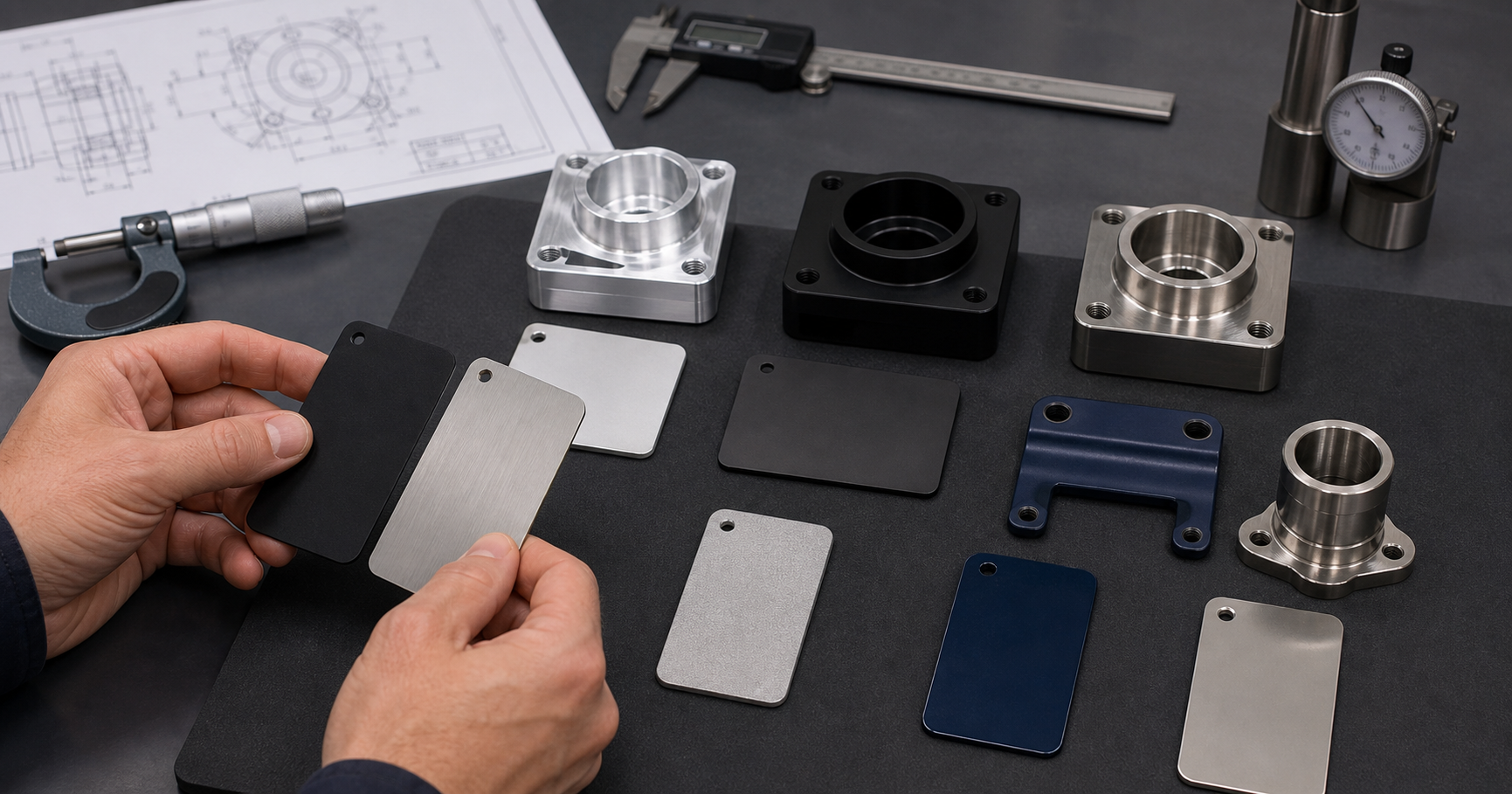
The right finish depends on what the part needs to do after machining. A visible enclosure may need a controlled cosmetic look. A stainless fastener block may only need passivation. A bracket going outdoors may need stronger corrosion protection. A bore or thread near a fit-critical area may need masking or post-finish recheck.
That is why finish choice should sit next to material selection, tolerance planning and document requirements rather than being added at the very end. If the base material is still open, review aluminum CNC machining or stainless steel CNC machining first so the finish remains compatible with the alloy and the part environment.
- Use appearance-led finishes when color consistency and visual texture matter
- Use protective finishes when corrosion, wear or handling life matters more than cosmetics
- Flag fit-critical regions before finishing if threads, bores or sealing faces must stay tightly controlled
- Include finish, masking and document notes together when you request a quote
Finish gallery for common machined-part requirements
Use this gallery as the fast first pass through common metal surface finishing services. It groups the finishes buyers most often review for machined metal parts and ties each one to the reason it is usually selected.
As machined and bead blasted
A strong baseline when you need a clean metal appearance without coating build-up. Bead blasting softens visible tool marks and creates a more uniform matte surface.
- Best for visible aluminum housings and covers
- Low dimensional impact compared with coated finishes
- Often paired with later anodizing on aluminum parts
Anodizing and passivation
Use anodizing for aluminum parts that need appearance, wear support or corrosion resistance. Anodizing Type II is common for cosmetic color and general protection, while Anodizing Type III is reviewed when higher wear resistance matters. Use passivation for stainless parts that need a cleaner corrosion-resistant surface without a visible coating layer.
- Anodizing fits aluminum only
- Passivation fits stainless steel only
- Critical bores and threads may need masking, thread protection or recheck
Powder coating, plating and black oxide
These options are usually selected when stronger environmental protection, color control, decorative metal appearance or dark steel protection is needed after machining. Depending on the alloy, the review may also compare chromate conversion, zinc plating or electroless nickel as a secondary process after machining and deburring.
- Powder coating adds more visible build than blasting or brushing
- Plating can change fit-sensitive surfaces and thread behavior
- Black oxide is commonly used on steel hardware and tools
Finish comparison matrix for CNC machined parts
This matrix compares CNC machining surface finishes for quote-stage selection. It does not replace part-specific engineering review, but it does make it easier to narrow the finish before the RFQ is sent.
| Finish | Typical visual effect | Primary value | Best-fit materials | Dimensional impact | Watch items | Common applications |
|---|---|---|---|---|---|---|
| As machined | Visible tool-path character and metallic sheen | Fastest route with minimal added process steps | All common machined metals | Lowest added change | Cosmetic variation and visible machining marks | Fixtures, hidden internals, prototype reviews |
| Bead blasted | Uniform matte texture | Reduces visible tool marks and improves tactile feel | Aluminum, stainless steel, some steels | Usually light | Mask sealing zones or optical surfaces if needed | Visible housings, panels, consumer-facing metal parts |
| Brushing | Linear grain direction | Premium directional appearance | Stainless steel, aluminum | Usually light | Grain direction should be specified on visible faces | Panels, covers, display hardware, exposed brackets |
| Anodizing | Clear, black or colored oxide finish | Corrosion support, wear support and improved appearance on aluminum | Aluminum only | Moderate on critical surfaces depending on finish type | Mask threads, bores, grounding points and fit surfaces when needed | Electronics housings, brackets, instrument panels |
| Passivation | Minimal visible change | Cleaner stainless surface with corrosion-resistance support | Stainless steel only | Very low visible build | Part cleanliness and alloy choice matter more than color outcome | Stainless valves, fittings, housings, medical and lab hardware |
| Powder coating | Opaque color coating with broad texture options | Strong visual coverage and environmental protection | Steel, aluminum and selected fabricated metal parts | Higher build than blasted or brushed finishes | Mask threads, mating faces and gasket seats | Enclosures, guards, frames, outdoor brackets |
| Plating | Bright or technical metal deposit | Corrosion, conductivity or wear-driven upgrade depending on system | Steel, brass, copper and selected machined alloys | Can be significant on fit-sensitive geometry | Call out plating type and protect critical fits | Connectors, fittings, hardware, shielding parts |
| Black oxide | Dark low-gloss steel finish | Appearance and mild corrosion support on steel parts | Carbon steel and alloy steel | Usually lower than thick coatings | Usually paired with oil or additional handling protection | Fasteners, fixtures, tooling, industrial hardware |
Material compatibility matters as much as finish appearance
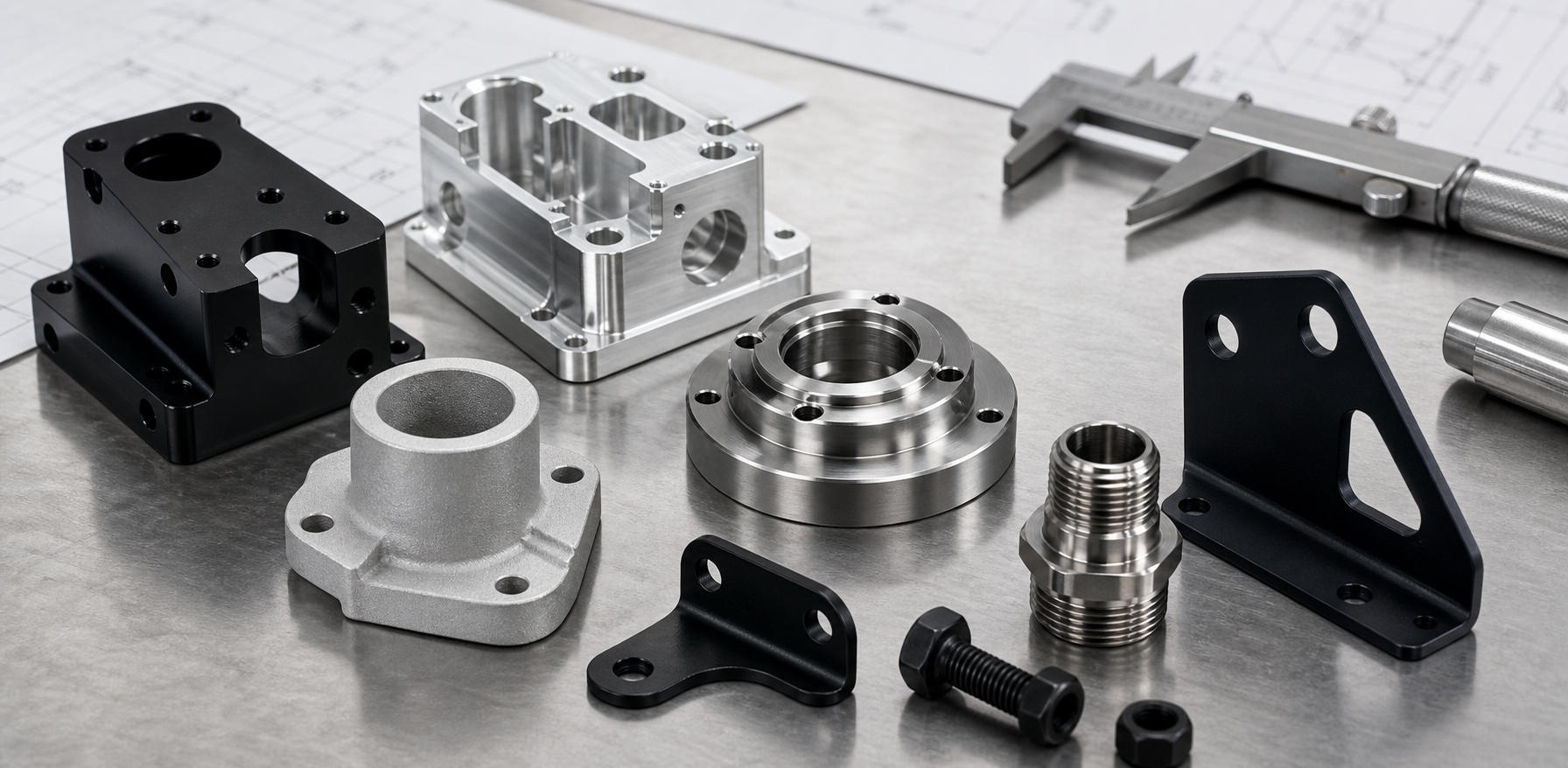
The same finish cannot be applied to every machined metal. Anodizing belongs to aluminum. Passivation belongs to stainless steel. Powder coating and plating follow different prep and coverage logic. If the material is not fixed yet, it is better to settle the base alloy before locking the finish. That step is what separates a generic finish request from surface finishing for CNC parts that can actually move cleanly into quoting and production.
This is also where process choice matters. A milled housing, turned fitting or mixed-route component may expose different visible faces, bore requirements or masking points. If the geometry is still under review, work back through CNC machining services, CNC milling services or CNC turning services before the finish is finalized.
Rule-of-thumb material pairing
- Use anodizing when aluminum needs color control, harder surface behavior or better corrosion performance
- Use passivation when stainless steel needs a cleaner corrosion-ready surface without a visible coating layer
- Use powder coating when the part needs stronger environmental protection and visible color coverage
- Use plating when conductivity, decorative metal finish or targeted corrosion behavior drives the choice; electroless nickel and zinc plating are common examples
- Use chromate conversion when aluminum needs conductivity retention with lighter conversion coverage than anodizing
- Use black oxide when steel parts need a darker appearance with lower build than paint-like coatings
Material-to-finish compatibility matrix
Use this matrix to confirm whether a finish is a natural fit, a conditional fit or usually not the right starting point for the base metal.
| Base material | As machined / blasted | Brushing | Anodizing | Passivation | Powder coating | Plating | Black oxide |
|---|---|---|---|---|---|---|---|
| Aluminum | Strong fit | Strong fit | Primary finish option | Not typical | Conditional | Conditional | Not typical |
| Stainless steel | Strong fit | Strong fit | Not typical | Primary finish option | Conditional | Conditional | Limited use case |
| Carbon steel | Strong fit | Conditional | Not typical | Not typical | Strong fit | Strong fit | Strong fit |
| Brass / copper | Strong fit | Conditional | Not typical | Not typical | Limited use case | Strong fit | Not typical |
| Titanium | Strong fit | Conditional | Limited specialized routes | Not typical | Limited use case | Limited use case | Not typical |
Masking, threads and critical surfaces should be decided early
Most finish problems do not start with the finish itself. They start because the RFQ never identified which surfaces had to stay untouched, which bores controlled fit, which grounding or sealing faces could not carry build-up, or which threads needed protection before the part moved into finishing.
This matters even more on parts that already carry tighter geometry. If the part has fit-critical features, pair finish review with precision CNC machining and the inspection path defined on first article inspection or quality control.
- Mask threads when coating or plating may change thread function or assembly feel
- Protect bores, bearing seats and locating diameters when the finish could alter fit
- Flag gasket lands, optical surfaces and grounding faces if they must remain controlled
- Call out cosmetic class separately from function-critical geometry so inspection stays clear
Typical finish-risk zones
| Internal threads | May need masking or re-tap logic depending on finish system |
| Bearing bores | Should be reviewed for coating build and final fit condition |
| Sealing faces | Need clear masking or post-finish flatness and visual expectations |
| Electrical contact areas | May need exposed-metal zones instead of full cosmetic coverage |
| Visible cosmetic faces | Need clear color, texture or grain-direction expectations |
How to call out finish requirements on the drawing or RFQ
A clean finish callout shortens quote review because it tells the team exactly what needs to happen after machining. Use the checklist below when you prepare the quote package and define the machined part surface treatment clearly.
| RFQ or drawing item | Why it matters | Best practice |
|---|---|---|
| Finish name and class | Different finish systems create different color, protection and build behavior | State the finish clearly instead of writing only "surface treatment required." |
| Material and grade | Finish compatibility depends on the base alloy | Name the alloy and temper or stainless grade in the RFQ package |
| Masking zones | Threads, bores or contact faces may need protection | Mark no-finish zones on the drawing or in project notes |
| Cosmetic class | Visible faces often need different expectations from hidden faces | Identify which faces are customer-visible or presentation-critical |
| Critical dimensions after finish | Some dimensions matter in the final finished state, not only after machining | State whether recheck is required after finishing and which features control acceptance |
| Inspection documents | Document scope changes how the job is reviewed and released | Request dimensional report, finish evidence or supporting cert path where needed |
Inspection after finishing should match the finish risk
Inspection does not stop when machining stops. Once a part goes through blasting, anodizing, passivation, powder coating, plating or black oxide, the release review may need to check appearance, coating thickness review where applicable, protected zones, surface roughness expectations, critical dimensions and sometimes the supporting document path.
If the order needs controlled paperwork, connect finish selection to RoHS and REACH compliance, material certificates and traceability or the inspection route defined on the RFQ page.
Post-finish review usually covers
- visual appearance and color consistency on designated cosmetic faces
- presence or absence of finish in masked and unmasked regions
- thread protection, sealing face coverage and other no-build areas identified before release
- critical dimensions that must hold after finishing
- surface condition expectations for blasted, brushed or coated areas, including surface roughness when it is called out
- coating thickness review where anodizing, powder coating, plating or black oxide could affect fit
- requested supporting documents if the order includes compliance or report requirements
FAQ: Surface finishing questions
What is the best surface finish for CNC machined parts?
The best finish depends on the material, environment, cosmetic expectation and whether fit-critical surfaces must stay tightly controlled after finishing. There is no single best option for every part type.
Does anodizing change part dimensions?
It can affect the final condition of fit-sensitive surfaces, which is why threads, bores, grounding faces and mating features often need masking or post-finish review when aluminum parts are anodized.
When should I use passivation instead of coating stainless steel?
Use passivation when the goal is to support corrosion resistance on stainless steel without adding a visible paint-like layer. It is often preferred when the part should remain metallic in appearance.
Does powder coating affect threads and mating faces?
It can. Powder coating adds more build than blasted or brushed finishes, so threads, sealing lands, gasket faces and other close-contact regions often need masking before the coating step.
How should finish requirements be shown in the RFQ?
Name the finish, base material, visible faces, masking zones, any post-finish critical dimensions and any requested documents. That gives the review team enough information to quote the part correctly.
Which finish should I use for a visible aluminum housing?
Common starting options are bead blasting plus anodizing, depending on the target texture, color and wear expectation. The better choice depends on how cosmetic the face is and whether any contact or fit surfaces must stay protected.
Add the finish to the RFQ before the quote is released
If the project already knows the material, finish, masking zones, critical dimensions or requested documents, send the drawing package through the RFQ page. If the finish is still open, include the part environment and visible-surface priorities so the review can narrow the best path faster.