TIGHT-TOLERANCE SECONDARY PROCESS
Precision Grinding Services for Tight-Tolerance Metal Parts
Grinding is usually selected when turning or milling has already created the part geometry, but the final bore, shaft, face or wear surface still needs tighter size control or a finer finish. It is commonly used for flatness-critical plates, bearing-fit diameters, hardened shafts, sealing faces and post-heat-treatment finishing work. Buyers often group this need under precision grinding services, CNC grinding services or precision metal grinding.
Use this guide to review surface, cylindrical, ID and OD grinding for custom metal parts that need tighter feature control after milling, turning, heat treatment or finishing. It explains when grinding is the right secondary process, which feature classes benefit most, and what details help engineering teams quote accurately. Buyers comparing surface grinding services, cylindrical grinding services, ID grinding services, OD grinding services or grinding services for machined parts can use it to structure the quote correctly. Related pages include precision CNC machining, CNC turning services, CNC milling services, quality control and inspection and Request a Quote.
Fast process check
- Use grinding when fit-critical surfaces need more control than machining alone can hold economically, especially for tight tolerance grinding work
- Choose surface grinding for flat faces, plates and parallel surfaces
- Choose cylindrical or ID/OD grinding for shafts, sleeves, bores and bearing fits that need cylindrical grinding services, ID grinding services or OD grinding services
- Include hardness condition, finish target and critical features in the RFQ so route selection is faster
| Primary CTA | Quote grinding requirement |
| Best fit | Shafts, sleeves, flat plates, sealing faces and hardened or fit-critical surfaces |
| Key decisions | Process type, material condition, roughness target, critical datum path and post-heat-treatment needs |

Why grinding is chosen after turning or milling
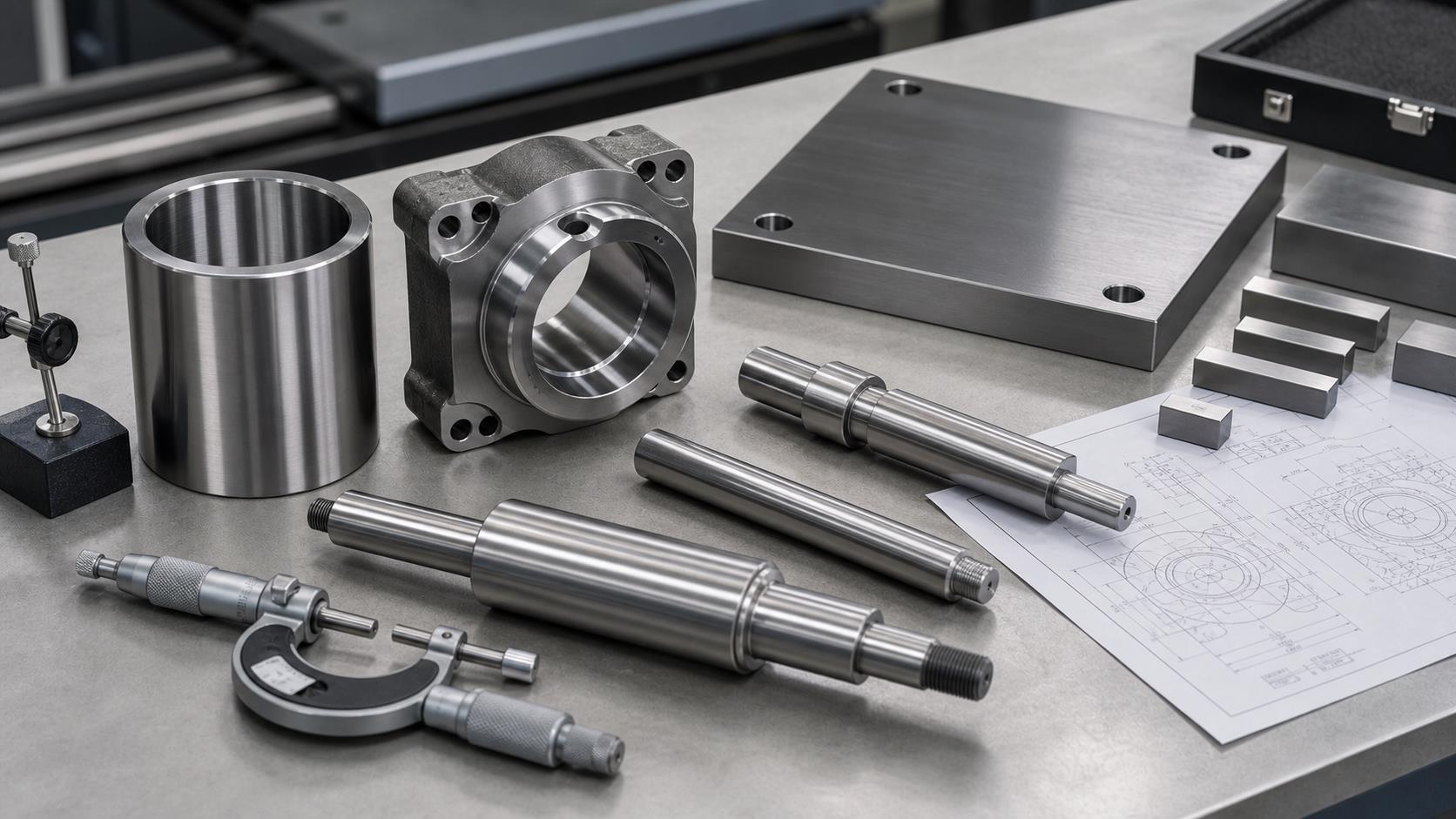
Grinding is usually not the first shaping process. The part is often milled or turned first, then ground only on the features that control function: bearing seats, sealing faces, locating surfaces, wear faces or hardened diameters that need a tighter finish and more stable geometry.
That is why grinding is common on shafts, sleeves, plates, hardened components and assemblies where a specific face or diameter matters more than the rest of the part. It is especially useful when the part has already gone through heat treatment and the final geometry needs to be corrected before inspection or assembly.
- Used for tighter finish and fit on selected features, not always the whole part
- Common after turning, milling or heat treatment
- Helpful for shafts, bores, flat faces and wear surfaces
- Should be planned with the datum scheme and inspection route, not added late without drawing review
Surface grinding vs cylindrical grinding vs machining-only finish
This comparison is written for engineering review and RFQ preparation, not just process naming.
| Decision factor | Surface grinding | Cylindrical / ID / OD grinding | Machining only |
|---|---|---|---|
| Primary purpose | Control flat faces, thickness, parallelism and surface finish | Control round features such as shafts, sleeves and bores | Use turning or milling only when required finish and geometry are already achievable |
| Typical features | Sealing faces, fixture plates, guide faces, wear pads | Bearing seats, shafts, sleeves, precision bores | General faces, non-critical diameters and standard tolerance features |
| Best time in process flow | After rough machining, often near final inspection | After turning or heat treatment when final fit needs correction | When secondary finishing is unnecessary |
| Buyer signal | Flatness, parallelism or seal performance matter | Roundness, bearing fit, concentricity or shaft finish matter | Standard machining route is enough for function |
| RFQ implication | Mark the face, finish target and datum relationship clearly | Mark fit class, critical diameter, runout or roughness note | No separate grinding note needed unless a late-stage change is still under review |
What feature classes are most often sent to grinding
Grinding is usually reserved for the features that drive performance, sealing or assembly. That is why the drawing should clearly separate critical ground surfaces from the rest of the part instead of treating the whole component as equally sensitive. This is the same logic buyers use when they compare grinding services for machined parts with a machining-only route.
Flat faces and plates
Use surface grinding for tooling plates, fixture bases, guide faces and sealing flats where contact quality matters.
Shafts, sleeves and bearing fits
Use cylindrical or OD grinding when the final fit, roundness or surface finish of a rotating feature drives performance.
Precision bores and hardened features
ID grinding is commonly reviewed when a bore must hold fit after heat treatment or when machining alone leaves too much variability.
How to prepare a grinding RFQ so the process is reviewed correctly
Grinding quotes become cleaner when the drawing states exactly which features need the secondary process and why. That helps the engineering review decide whether grinding should be applied, which route is appropriate and what inspection checks should follow, including surface roughness and Ra finish expectations.
| RFQ item | Why it matters | Example |
|---|---|---|
| Critical feature marked on drawing | Shows which surfaces are truly ground and which stay machined, especially on grinding services for machined parts | Bearing seat, sealing face or plate thickness reference |
| Surface finish or roughness note | Explains whether grinding is driven by finish quality, not only size | Surface roughness or Ra finish requirement on a shaft or seal face |
| Material and hardness condition | Changes wheel choice and whether post-heat-treatment correction is needed | Tool steel after hardening, stainless sleeve, alloy shaft |
| Inspection expectation | Helps define how roundness, flatness or fit will be checked | Dimensional report, FAI or fit-critical feature verification |
For upstream process context, connect with CNC turning services, CNC milling services, precision CNC machining and first article inspection.
What to include in a grinding quote request
- Part drawing and CAD with ground features clearly identified
- Material and condition, including whether the part is hardened before grinding or needs post-heat-treatment finishing
- Which route is expected if already known: surface grinding services, ID grinding services, OD grinding services or cylindrical grinding services
- Critical dimension, fit or roughness target on the ground surface
- Any datum relationship, runout or sealing requirement tied to that feature
- Whether a dimensional report or FAI should include the ground features
If the part only needs standard machined finish, ask whether grinding can be removed from the route to reduce cost and lead time.
Frequently asked questions
When is grinding needed after CNC machining?
Grinding is usually added when selected surfaces need tighter size control, better roundness, better flatness, better straightness or a finer finish than turning or milling alone can provide economically.
What is the difference between surface grinding and cylindrical grinding?
Surface grinding is mainly used for flat faces and plate-like geometry. Cylindrical grinding is used for round external or internal features such as shafts, sleeves and bores. Centerless grinding may also be reviewed when straightness and diameter consistency matter on simpler shaft families.
Can grinding be used after heat treatment?
Yes. Grinding is often used after heat treatment when the part needs final size correction or finish improvement on hardened features.
Which materials are commonly ground?
Grinding is commonly reviewed for tool steel, alloy steel, stainless steel and other metals where fit, wear or surface quality are more critical than simple material removal speed.
What should be written on the RFQ or drawing?
Mark the ground features, state the critical dimensions or roughness notes, identify material condition and note whether dimensional reporting should include those features.
Can grinding reduce cost compared with tighter machining alone?
In some cases, yes. It can be more efficient to machine the part normally and grind only the critical features instead of forcing the entire part through an overly tight primary machining route.
Send the Drawing With the Ground Features and Inspection Notes Already Marked
If grinding is part of the build, send the drawing package with the ground surfaces, fit notes and any roughness or report request already identified. Use the RFQ page to connect the process review with quality control, first article inspection and the final quote path.