CNC Machining Tolerances Guide
For most machined metal parts, the real question is not whether CNC machining can hold a tight number. The real question is which dimensions actually need that number, how the drawing should show it and what inspection path should support it.
This guide is written for engineers and buyers reviewing machined-part drawings before quotation. It covers standard tolerance logic, ISO 2768 as a starting point, which feature types usually need tighter control, how finishing and process choice affect tolerance strategy, and what to send when requesting precision CNC machining or a general CNC machining services quote.
What this page helps you decide
- When a general tolerance framework is enough and when it is not
- Which features usually deserve tighter control than the rest of the part
- How milling, turning, finishing and inspection affect tolerance planning
- What tolerance notes, datums and documents belong in the RFQ package
- When to route the job to first article inspection or tighter review
| Best for | Tolerance planning for machined housings, brackets, bores, hole patterns, mating features and repeat-order parts |
| Primary CTA | Ask tolerance review |
| Related pages | Precision machining, milling, turning, quality control, design guide and RFQ upload |
Start with a clear hierarchy, not blanket precision
A useful tolerance strategy begins by separating three things: non-critical geometry, function-critical features and inspection-critical features. When every dimension is treated the same, machining time rises, inspection becomes heavier and the quote often reflects uncertainty rather than real part function.
For many parts, a general-tolerance framework such as ISO 2768 can cover non-critical dimensions while bores, locating faces, hole patterns, sealing lands and fit-related surfaces receive explicit tighter callouts. That approach is easier to machine, easier to inspect and easier to quote accurately.
- Use general tolerances for dimensions that do not control fit or function
- Tighten only the features that drive assembly, sealing, alignment or visible quality
- Link narrow tolerances to datums and inspection intent, not just a number on the print
- Send CAD, drawing and requirement notes together when you request a quote
Quick reference for CNC tolerance planning
Use this table early in drawing review. It is designed to help teams decide where standard tolerances are usually acceptable and where explicit control should be added before the RFQ goes out.
| Feature category | Typical tolerance approach | What usually makes it tighter | Inspection implication | RFQ note to include |
|---|---|---|---|---|
| Overall block or plate size | Often suitable for general tolerances when not tied to fit | Stack-up to enclosure fit, cover match or cosmetic gap | Basic dimensional verification with calipers or micrometers | Mark if the outside profile controls mating or visible alignment |
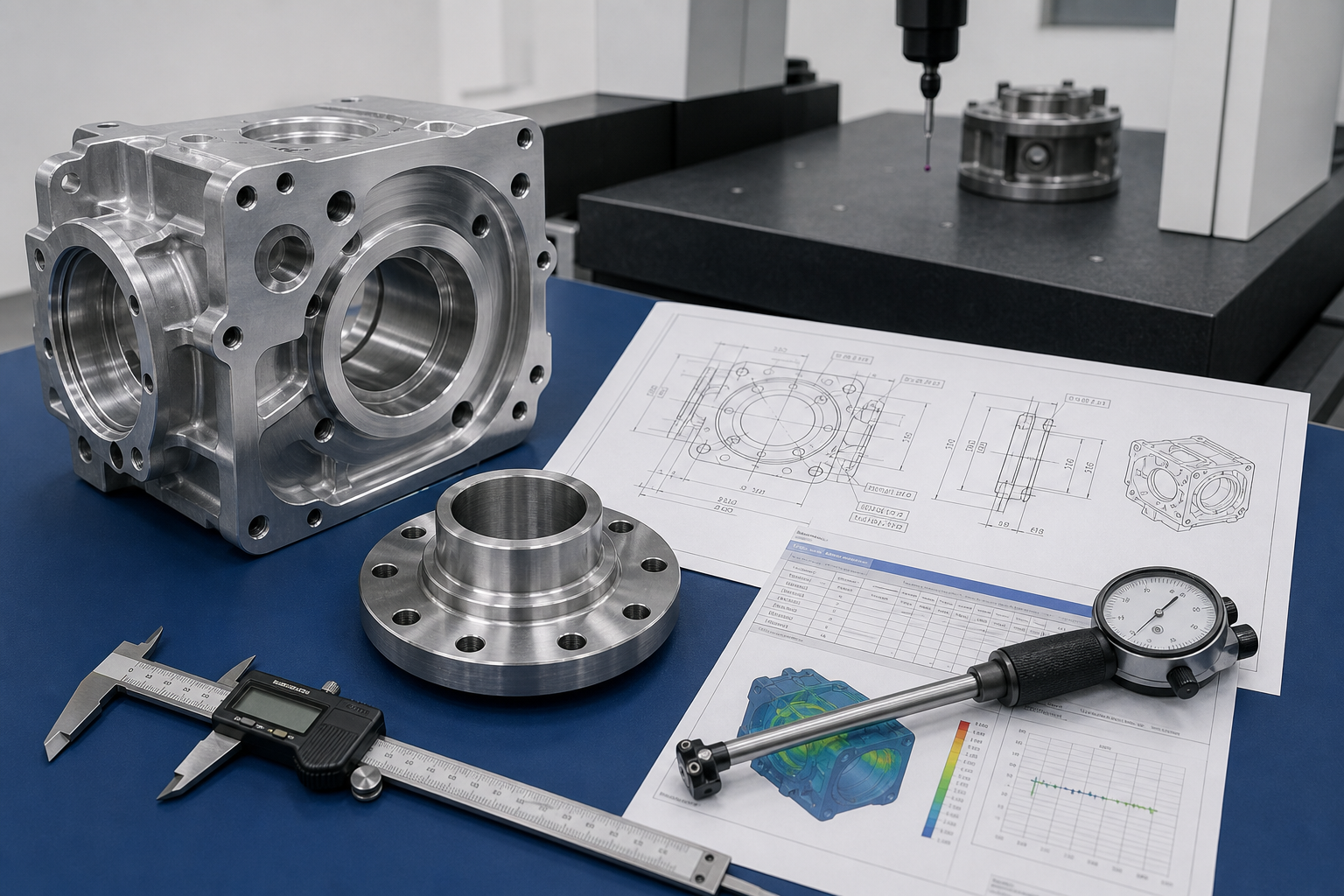
| Bores and bearing seats | Usually require explicit limits, fit class or bore callout | Press fit, slip fit, concentricity or rotating assembly function | Often moves from simple checks to bore gauges or CMM review | State mating shaft condition, fit expectation and any runout concern |
| Hole patterns and mounting locations | Pattern location often needs tighter control than hole diameter alone | Assembly alignment, bracket mounting, fixture repeatability | Position checks against datums become more important | Define datums and note whether the pattern is clearance-only or locating |
| Flatness and sealing faces | Needs explicit control when gaskets, seals or optical contact depend on it | Fluid sealing, thermal interface or cover compression | May require surface and flatness checks beyond size measurement | Flag if the face is sealing-critical or finish-sensitive |
| Threads and tapped holes | Thread standard and depth should be explicit; surrounding geometry may stay general | Thin walls, close spacing, depth, insert usage or repeated service loads | Thread gauges or mating checks may be needed | Include thread form, class and whether the thread is primary to assembly |
| Turned diameters and shoulders | Often easier to control tightly when features are rotational and datum-consistent | Fits, concentricity, shoulder location and coaxial sealing surfaces | May require tighter gauging strategy than milled external features | Clarify if the part is best suited for CNC turning services |
Using ISO 2768 without losing control of critical features
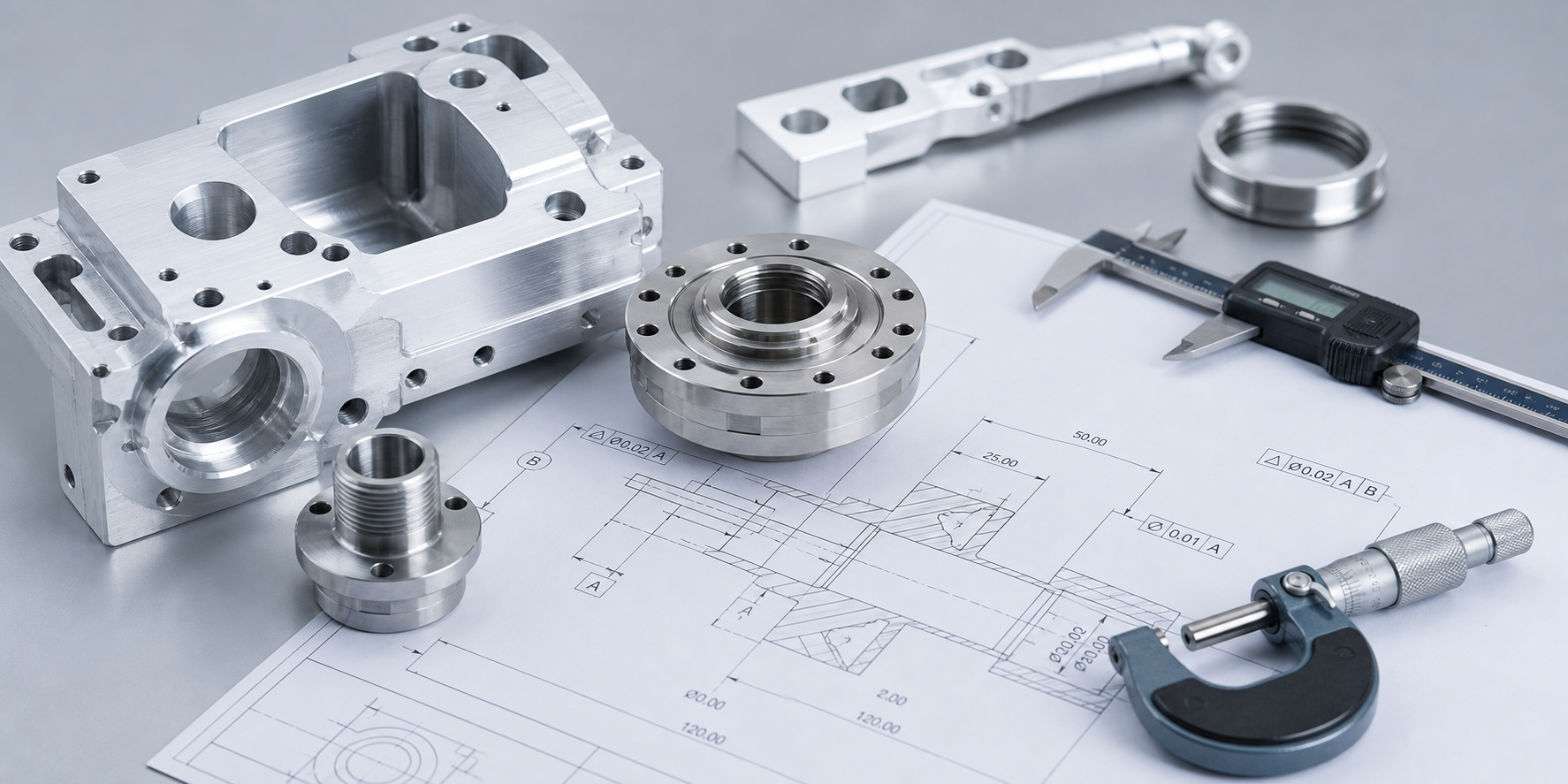
ISO 2768 is useful because it keeps non-critical dimensions from being over-specified. It gives the drawing a general framework so the team does not need to assign a custom tolerance to every size, location or edge condition that does not affect function.
The mistake is treating a general standard as a full substitute for engineering intent. If a bore fit, locating pattern, sealing face, datum chain or cosmetic interface matters, it still needs explicit control on the print. ISO-style general tolerances reduce clutter. They do not replace critical callouts.
- Use a general-tolerance standard to simplify non-critical dimensions
- Break out the features that control fit, motion, sealing or assembly alignment
- Pair datum references with the features that truly need positional or form control
- Move tight-tolerance parts toward quality control and inspection planning earlier in the RFQ stage
A practical drawing hierarchy
- Set the general tolerance framework for non-critical dimensions
- Call out the features that control fit, datum transfer or sealing
- Specify the thread, bore, pattern or surface conditions that drive inspection
- Note any finish-sensitive areas before sending work to surface finishing
- Request the right document path, such as dimensional report or first article inspection
This keeps the drawing readable while still protecting the features the assembly actually depends on.
Process, feature type and finish all change tolerance difficulty
The same number can be easy on one feature and expensive on another. A rotational diameter handled in a stable turning setup may be straightforward, while the same range on a thin unsupported milled wall or a deep pocket floor may be far harder to produce and verify.
Finishing matters as well. Coating build-up, anodizing response, passivation workflow and cosmetic surface requirements can all affect how dimensions should be protected, masked or rechecked after machining. That is why tolerance review should sit beside process choice, not after it.
- Ask whether the feature is best made by milling, turning or a mixed route
- Separate fit-critical sizes from cosmetic or non-critical geometry
- Identify post-machining finishes that may affect threads, bores or masking areas
- Use the design guide when geometry and tolerance decisions need to be reviewed together
What usually deserves tighter control on machined parts
Tolerance review checklist before sending the RFQ
A strong RFQ package shortens revision cycles because it tells the supplier where tolerance risk actually sits.
| RFQ item | Why it matters for tolerance review | Best practice before submission |
|---|---|---|
| CAD model and drawing | The model shows geometry; the drawing shows which dimensions actually control function | Send both whenever available and keep revision status clear |
| Datums and feature priority | Without datum logic, high-precision numbers are harder to interpret and inspect | Show the primary locating scheme and identify the real fit-driving features |
| Material and process route | Material stability and process choice can change how difficult a number is to hold | State the preferred material and whether the part is best suited to milling, turning or mixed machining |
| Surface finish or coating | Post-machining treatments can affect masking, thread protection and final dimensional condition | List finish requirements and identify any critical areas that must be protected or rechecked |
| Inspection documents | Document scope affects quote assumptions and quality workflow | State whether you need dimensional report, sample inspection data or FAI-style review |
Frequently asked questions
What is a standard CNC machining tolerance?
A standard CNC machining tolerance is usually a general-tolerance framework applied to non-critical dimensions, with tighter explicit callouts added only where fit, sealing, alignment or motion depends on them.
When should I use ISO 2768 on a machined drawing?
Use ISO 2768 when you want a clear default for non-critical dimensions. Still call out bores, locating features, sealing faces, thread details and other function-critical conditions explicitly.
How tight can CNC machining hold?
The answer depends on feature type, material, setup stability, process route, size range and inspection method. Tight numbers are easier to hold on some rotational or well-supported features than on deep pockets or thin walls.
Which dimensions usually need tighter tolerances?
Features that control mating fit, bearing location, sealing, optical alignment, positioning or cosmetic closure usually deserve tighter control than the rest of the part.
Do coatings or finishes affect machining tolerances?
They can. Finishes may require masking, protect certain surfaces or trigger recheck requirements after machining, especially on threads, sealing faces and fit-related features.
What should I send when requesting a tolerance review?
Send the model or drawing, material, process preference, quantity, finish requirement, critical dimensions, datum logic and any requested inspection documents so the review can focus on the actual risk areas.
Send the drawing with the tolerance priorities already marked
If the part depends on tight bores, locating patterns, sealing faces or post-finish rechecks, upload the package through the RFQ page and call out those features directly. That gives the review team a cleaner path to process choice, inspection planning and quote accuracy.