COST REDUCTION GUIDE
How to Reduce CNC Machining Cost
The fastest way to lower machining cost is usually not changing supplier first. It is removing the part features, tolerances and process steps that add machining time without adding enough functional value.
This guide shows which design decisions usually drive CNC price higher, how to simplify a quote package without weakening the part, and what to send for a practical DFM review. Use it together with the CNC machining design guide, CNC machining tolerances, low-volume CNC machining and Request a Quote.
Fast cost snapshot
- More setups, tighter tolerances and deeper features usually raise quote price first
- Material choice and finish scope can matter as much as geometry
- Many cost savings come from simplifying the drawing before RFQ, not after quote rejection
- The best DFM review protects function-critical requirements and relaxes the rest
| Primary CTA | Request DFM review |
| Best fit | Prototype and low-volume buyers trying to reduce avoidable machining cost |
| Main levers | Feature design, tolerances, material, setups, finish and RFQ completeness |
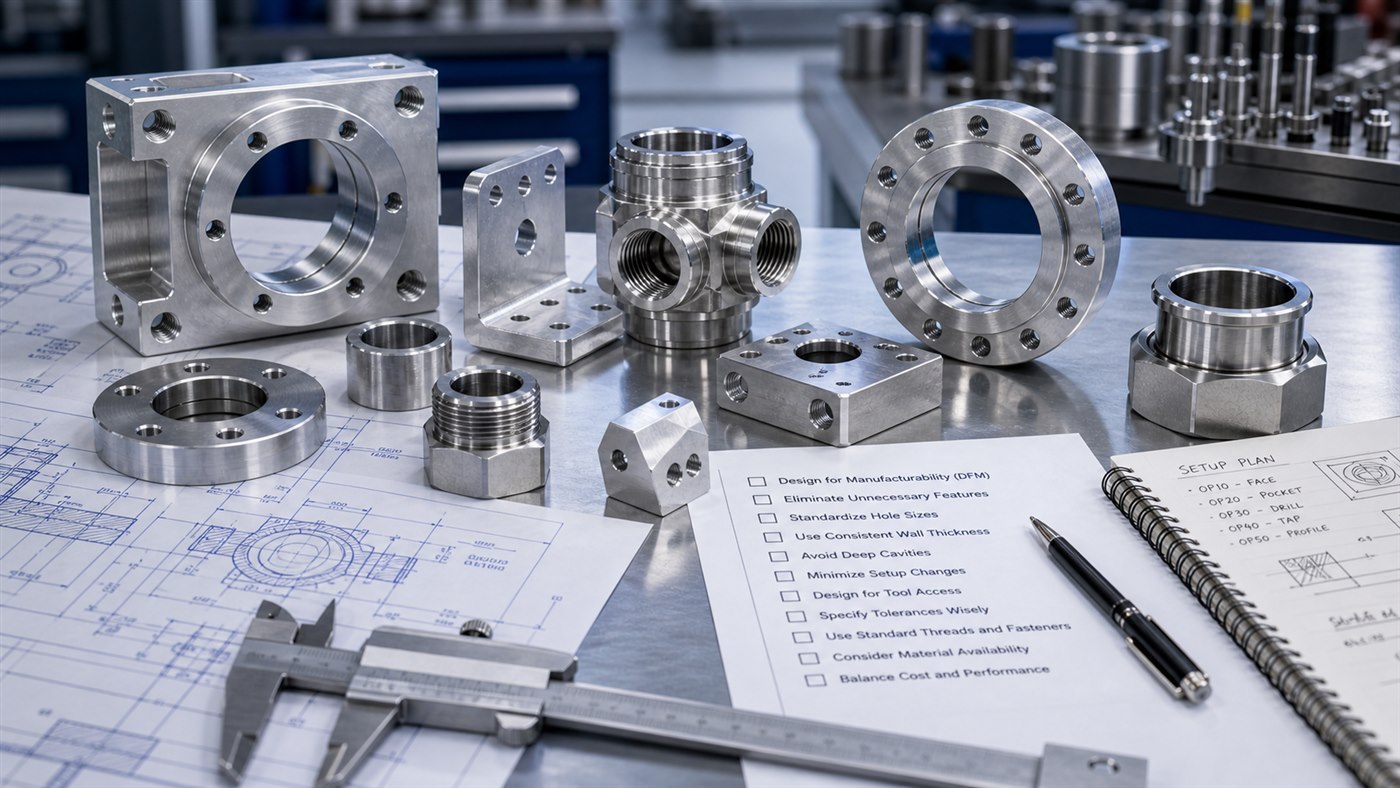
What usually makes CNC machining cost climb
Most expensive quote surprises come from details that look small on the drawing but force extra cycle time, extra tool changes, extra setups or harder inspection.
The right question is not simply how to make the part cheaper. It is how to remove unnecessary manufacturing burden while preserving the requirements that truly matter to fit, function and assembly.
- Tight tolerances on non-critical features often raise machining and inspection cost together
- Deep pockets, thin walls and hard-to-reach features extend cycle time quickly
- Premium materials and secondary finishes can dominate quote price when they are over-specified
- Incomplete RFQs force assumptions, revisions and inefficient review loops
The cost reduction checklist buyers can act on before RFQ
Use this table to decide which design changes usually lower cost fastest without weakening the part.
| Cost lever | What usually raises cost | Lower-cost direction | What to say in RFQ review |
|---|---|---|---|
| Geometry | Deep pockets, thin walls, sharp internal corners and decorative complexity | Simplify features, add realistic radii and remove non-functional detail | Mark which features are truly functional and which can be simplified |
| Tolerance scope | Tight tolerances applied broadly across the drawing | Protect only critical dimensions and relax the rest where possible | Identify fit-critical dimensions instead of treating every feature equally |
| Material | Difficult-to-machine or premium alloys without application need | Use the lowest-complexity material that still meets function | State whether material is fixed or open to recommendation |
| Setups | Multi-side machining with avoidable re-fixturing | Align datum strategy and feature orientation to reduce setups | Ask whether the part can be completed in fewer setups |
| Threads and holes | Excessive thread depth, many unique hole sizes and difficult drill access | Standardize sizes and avoid unnecessary depth | Confirm whether hole and thread callouts can be standardized |
| Finish and inspection | High cosmetic finish and broad inspection scope on non-critical areas | Limit special finish and reporting to what the project actually needs | Separate critical finish and documentation needs from nice-to-have requests |
Where the biggest savings usually come from
Most projects do not need a total redesign to lower quote price. The best savings often come from a few targeted changes made early.
This review path often overlaps with tolerance decisions, finish selection and precision machining needs.

What can be relaxed and what should stay protected
Lower cost does not mean lowering every requirement. The better approach is separating functional demands from legacy drawing habits.
- Keep fit-critical datums, bores, sealing faces and assembly features protected
- Review whether general-profile tolerances are tighter than the application really needs
- Check whether cosmetic finish requirements are broader than the visible or functional area
- For prototypes, avoid production-level reporting unless it is already necessary
This is where a supplier-side review is most useful: it shows which requirements protect performance and which ones mainly increase price.
What to include in a cost-reduction RFQ
- Current drawing and CAD: latest revision with critical features marked
- Cost concern: target reduction, budget pressure or quote comparison issue
- Protected features: dimensions, surfaces or functions that must not change
- Open areas: features, finish scope or material options that can be reviewed
- Project stage: prototype, pilot or low-volume production
This turns a cheaper-price request into a usable DFM conversation.
Frequently asked questions
What usually makes CNC machining expensive?
The biggest drivers are usually machining time, setup count, difficult geometry, tight tolerances, hard materials, special finishes and extra inspection requirements.
Do tighter tolerances increase CNC cost a lot?
They often do, because tighter tolerances can increase both machining time and inspection effort. The best practice is keeping them only on truly critical features.
How do pockets, walls and internal corners affect price?
Deep pockets, thin walls and unrealistic internal corners often force slower machining, special tool choices or more setups, which raises cost quickly.
Does material choice change machining cost significantly?
Yes. Raw material price, machinability and scrap rate all matter, so choosing a tougher or premium material than needed can raise quote cost more than expected.
Can finish requirements increase machining quote price?
Yes. Cosmetic finish, coating, passivation, masking and added inspection steps can all increase price when they are applied more broadly than the application needs.
What should be included in a CNC cost-reduction RFQ?
Include the current drawing, CAD model, protected features, open-to-change areas, quantity, finish expectations and the specific cost concern you want reviewed.
Send the drawing with the cost target and the protected features
If the quote feels high, send the drawing package with the part function, cost concern, protected dimensions and open-to-change features. Use the RFQ page to request a DFM review that focuses on practical savings before machining starts.