Production planning resource
Prototype to Production CNC Machining Guide for Pilot Runs and Low-Volume Scale-Up
A successful prototype only proves part of the job. The next challenge is turning that one-off or early revision into a repeatable batch with stable dimensions, approved materials, controlled finishes, usable inspection output and a release path that does not restart from zero every time the quantity changes.
This guide is built for OEM buyers, engineers and program teams moving custom parts from rapid prototyping into low-volume CNC machining. Use it to decide when the drawing is mature enough for a pilot run, what should be locked before repeat supply starts and how to package a cleaner RFQ into production review.
Four transition stages
- Proof prototype: validate the concept and basic geometry
- Functional prototype: test final-use behavior, fit and interfaces
- Pilot run: confirm repeatability, release logic and inspection scope
- Repeat low-volume production: stabilize supply, finishes and document flow
| Best fit | Programs moving from sample parts into pilot builds and repeat batch release |
| Primary CTA | Plan production run |
| Related pages | rapid prototyping, low-volume CNC machining, quality control, FAI |
Prototype work becomes production planning when repeatability matters more than novelty
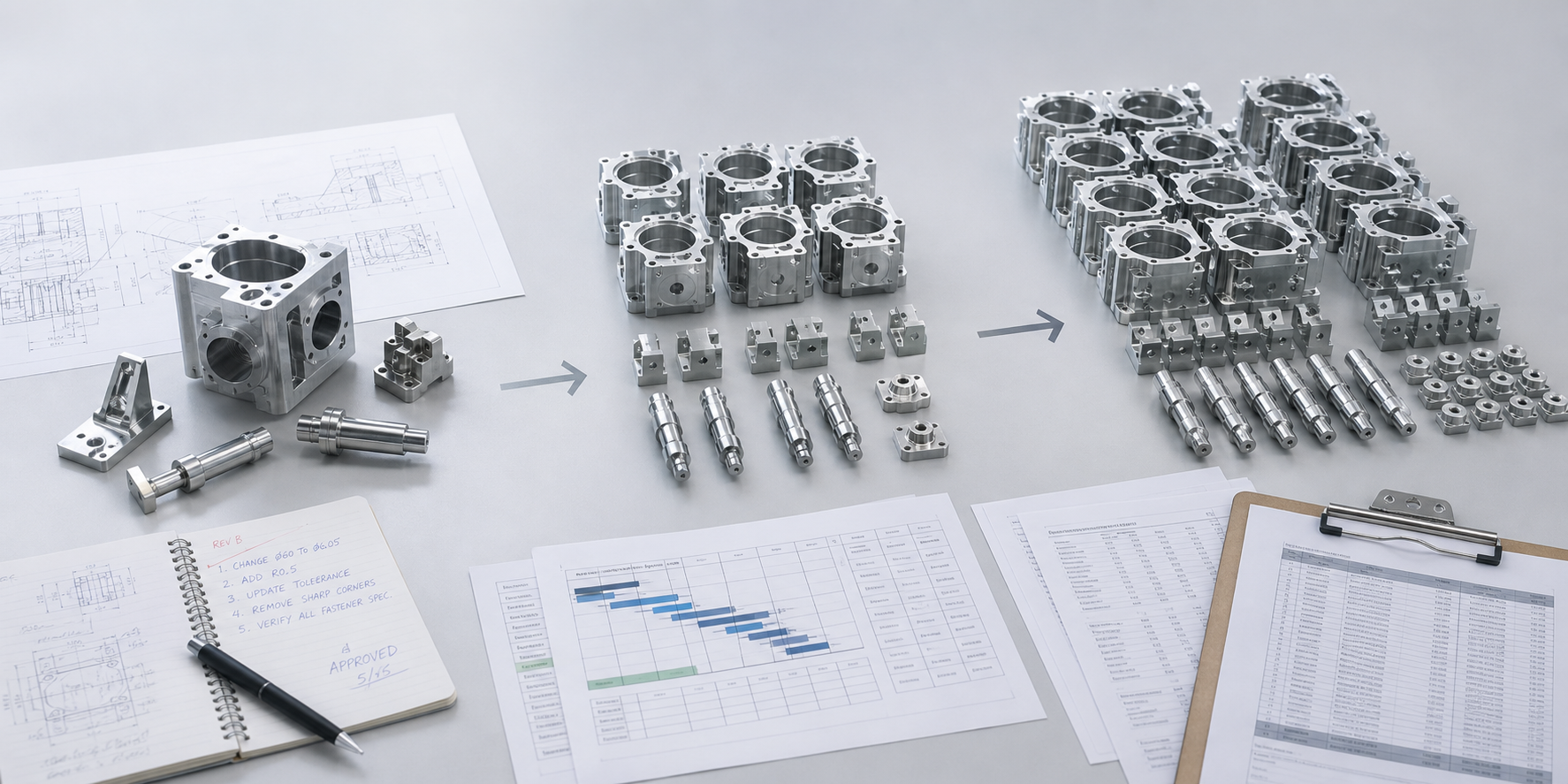
The first build often answers whether the part can work. The next build has to answer whether the same part can be made again with the same material, finish, dimensional behavior and release confidence. That is the point where prototype logic shifts into production planning.
This guide helps teams avoid a common mistake: treating a promising prototype as if it is already release-ready. Before a part moves into repeat supply, the project usually needs a clearer drawing state, a firmer process choice, better control over cosmetic or critical features and a decision on whether the part belongs in CNC machining alone or in a mixed package with sheet metal fabrication, finishing or assembly.
- Useful when prototype revisions are slowing down quoting or release
- Useful when the part count is moving from one-off builds to controlled batch quantities
- Useful when buyers need to add finish, inspection or traceability requirements before repeat production
Prototype-to-production transition matrix
The page becomes more useful when the project stages are explicit. This matrix shows what normally changes as a machined part moves from concept proof to repeat low-volume supply.
| Stage | Primary objective | Typical quantity | Material / finish fidelity | Drawing maturity | Inspection depth | Next step |
|---|---|---|---|---|---|---|
| Proof prototype | Confirm basic geometry, access and concept feasibility | 1 to a few parts | May use substitute stock, simplified finish or relaxed cosmetic logic | Revision still moving quickly | Fit check and key dimensions only | Move into functional prototype review |
| Functional prototype | Validate performance, interfaces, assembly fit and core tolerances | Small development batch | Closer to target material and finish, but still open to change | Key dimensions and interfaces clearer, revision still open | Dimensional checks expand on critical features | Freeze what must stay the same for pilot run |
| Pilot run | Test repeatability, release flow, finish consistency and packaging logic | Controlled batch quantity | Target material and finish should be close to final route | Released drawing set with clear revision and process notes | FAI or dimensional report may become necessary | Stabilize batch handoff into repeat supply |
| Repeat low-volume production | Hold geometry, material, finish and document flow across repeated releases | Recurring low-volume orders | Production material, production finish and stable secondary operations | Controlled revision state with approved release notes | Routine inspection path and requested cert / traceability support | Route into repeat RFQ and replenishment planning |
What should be locked before a pilot run starts
A pilot run should not behave like another loose prototype round. It is usually the point where the team decides which variables are still flexible and which ones must stop moving so repeatability can actually be tested.
Use a controlled CAD model and drawing set rather than a loosely changing prototype file.
Select the actual alloy, temper or grade expected for repeat production.
Separate fit-critical dimensions from general dimensions before inspection begins.
Define finish type, masking notes and cosmetic surfaces early enough to test consistency.
Decide whether the build needs FAI, dimensional reports or traceability support.
Confirm how the part should be packed, labeled and routed for repeat shipments.
If those items are still moving, a pilot run often produces unclear data. That is when the project should either stay in prototype mode or shift into a more deliberate engineering review before the next quote cycle.
Prototype quote review and production quote review are not the same
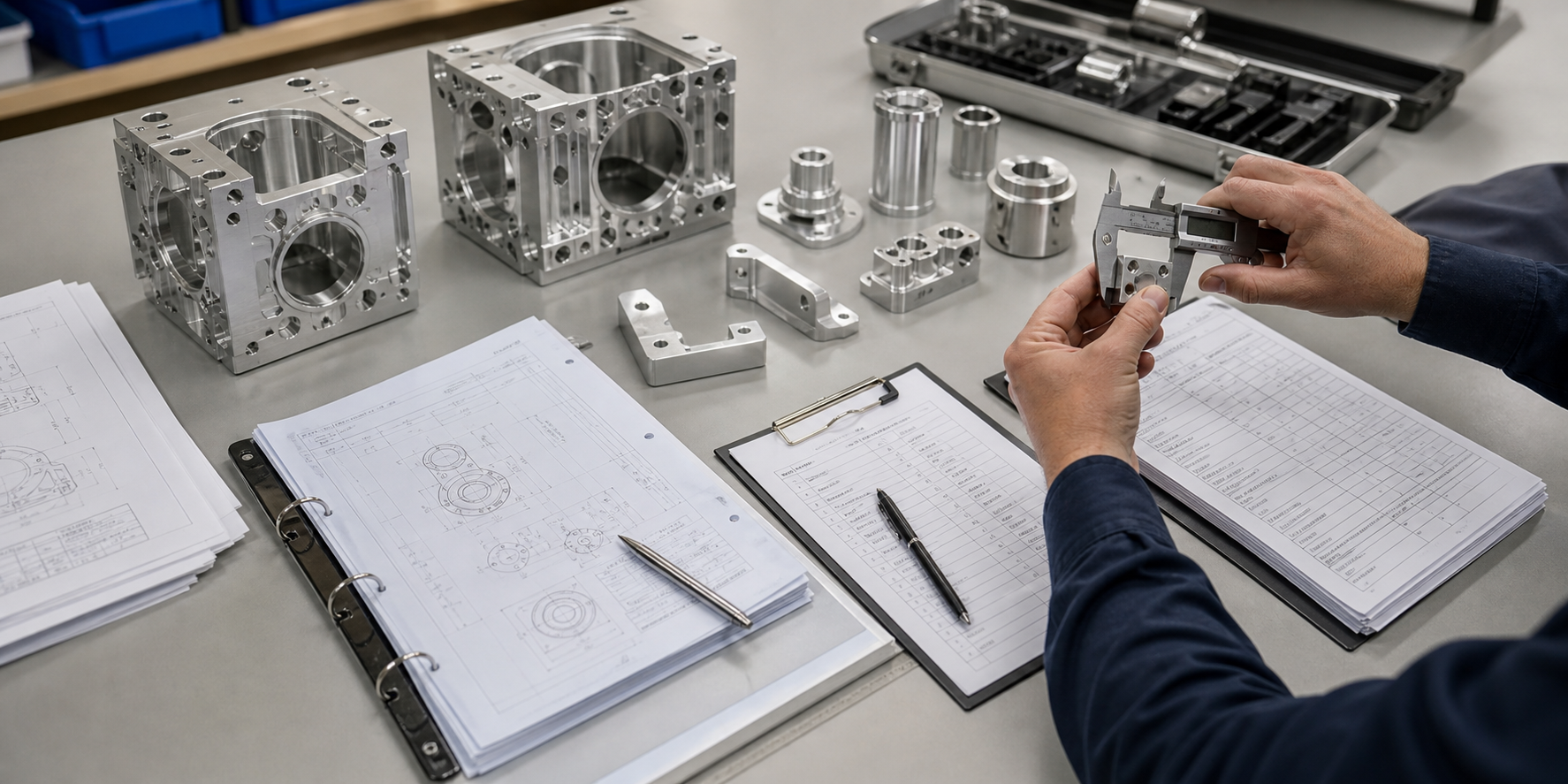
The production transition gets easier when buyers explicitly tell the supplier what has changed since the first sample. That keeps the quote review grounded in release logic instead of repeating every prototype assumption.
| Review area | Prototype review focus | Production review focus | Buyer handoff note |
|---|---|---|---|
| Geometry | Can the part be made and assembled? | Can it be repeated with the same result across a batch? | Flag which dimensions are now frozen |
| Material | Substitute stock may still be acceptable | Production grade and temper should be clarified | State approved grade and any certificate request |
| Finish | Finish may be optional or cosmetic-only | Finish consistency becomes part of release quality | Define finish route and visible surfaces |
| Inspection | Spot checks may be enough | FAI, dimensional reports or traceability may be required | Request documents before quote release |
| Supply pattern | One build or a small concept batch | Pilot quantity followed by repeat low-volume orders | Share batch logic and expected reorder pattern |
Process and sourcing decisions that affect the transition path
Not every prototype should scale through the same route that produced the first sample. Some parts stay cleanly in CNC from first article to repeat supply. Others evolve into mixed-process builds or need a more deliberate split between speed-first prototype work and stable low-volume production control.
Typical routing decisions
- Stay in CNC when geometry, tolerances and material choice already reflect the intended production route
- Shift into low-volume machining when demand is becoming recurring but still below mass-production logic
- Add sheet metal fabrication, finishing or assembly when the validated product includes more than machined solid features
- Use design review when the prototype still solved function but not manufacturability
- Escalate into quality control planning and first article inspection before repeat shipments begin
Production handoff priorities
- Distinguish what is still experimental from what is now released
- Separate cosmetic requirements from fit-critical requirements
- Tell the supplier whether the next build is a pilot run or a repeat order
- Package quality-document needs with the RFQ instead of after pricing starts
RFQ checklist for the move into pilot and repeat production
The easiest way to shorten back-and-forth is to submit the prototype history and the production intent together. Buyers do not need a perfect mass-production dossier for this page’s use case, but they do need to remove the ambiguity that makes pilot runs hard to review.
- Current CAD model and released drawing with revision clearly shown
- Prototype revision history or notes on what changed since the last build
- Target pilot-run quantity and expected repeat order pattern
- Approved material, finish and any cosmetic-surface notes
- Critical dimensions, key interfaces and requested documents
If the project has already crossed into a stable batch route, move directly into Upload CAD for Quote. If the design still needs process cleanup, route first into design guide or tolerance review.
Production-readiness checklist
| Files | Current CAD, drawing set and visible revision status |
| Prototype history | What changed since the last sample and what is now frozen |
| Commercial scope | Pilot quantity, repeat quantity logic, target timing and destination |
| Technical scope | Material grade, finish, critical dimensions, assembly or packaging notes |
| Quality scope | FAI, dimensional report, certs or traceability requests |
| Submission path | Upload the production-planning RFQ package |
Frequently asked questions
Move the part into pilot production with the release logic already defined
Bundle the current files, revision status, target material, finish notes, pilot quantity and requested quality documents into the RFQ package so the review starts from the real production stage instead of repeating early prototype assumptions.